Fit & Fresh Cool Coolers XL (4-Pack) Review: Worth Buying
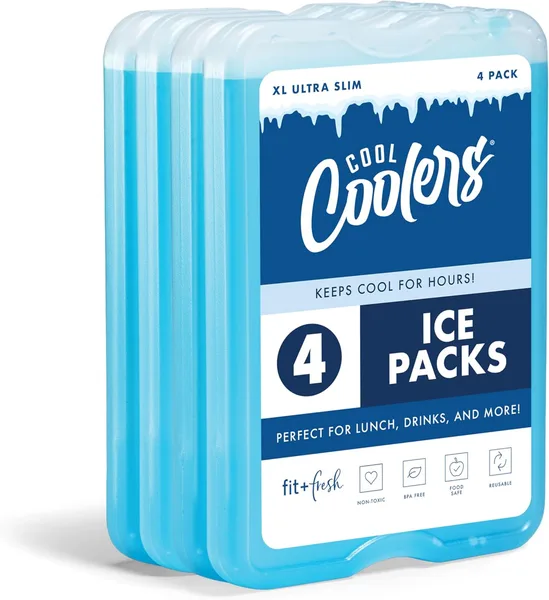
Flat Fit & Fresh XL ice packs are the rare case where shape matters more than content. They don't hold cold any longer than a regular frozen water bottle, but they don't eat up half your cooler bag either. Worth buying if you have a narrow lunch bag or soft cooler — not if you need all-day endurance for a full camping trip.
I had a problem that sounds minor until it hits you every single morning: a standard rectangular ice pack doesn't fit in a lunchbox. Well, it fits, technically, but it takes up the whole space, and your sandwich ends up flattened on top like a pancake. That went on for a year, until I bought these flat things from Fit & Fresh — and honestly, this is that rare product where the marketing promise of "space saving" turns out to be true rather than a label gimmick.
What this actually is
Four thin, flexible pouches, each roughly palm-sized, filled with a non-toxic gel. Toss them in the freezer for a few hours and they set into a flat, near-rigid slab that gives a little when you press it. The key feature isn't the cold itself, it's the thickness: where a standard blue "ice block" from the store is three or four centimeters thick, these are just over a centimeter. So they lie flat against the bottom of a bag or along the side wall, instead of stealing all the usable volume.
The 4-pack sells for about $29.98 — not exactly pocket change for pieces of gel, and your first thought is honestly "$30 for four ice packets?" But once you realize this replaces disposable ice for years to come and saves your cooler bag's shape, the price stops feeling strange.
How it performs in real life
This is where the real conversation begins. People usually compare these to plain ice or classic rigid ice packs like Arctic Ice, or even the DIY option of freezing a water bottle. And here's the catch: in pure cooling capacity (how many hours it holds a temperature), thin packs lose to thick blocks. The physics is simple — less gel mass means less cold reserve. If you have a big rigid cooler for an all-day barbecue with meat, the XL Slims alone won't cut it — they'll thaw faster than a thick block, and you'll open the cooler five hours later to lukewarm food.
But in my scenario — a lunchbox headed to the office, or a small soft bag for baby food — they're ideal precisely because they're not about marathon endurance, they're about efficient use of space. Put one pack on top of the food container and one underneath, and the cold spreads evenly from both sides instead of pressing down from one heavy block. Yogurt, sandwiches, fruit — everything stays cool for about four to five hours, plenty to get through until lunch.
Another thing that pleasantly surprised me: they don't leak. I once had a bad experience with a cheap no-name ice pack that split along the seam and flooded a backpack with gel — not a pleasant afternoon. Fit & Fresh's pouches are made from thicker plastic, with a ribbed texture that adds rigidity, and after six months of daily use, not one of them leaked or deformed enough to stop fitting in a bag pocket.
One downside nobody mentions in the product descriptions: they take longer to freeze than you'd expect. The thin format is great for a bag, but bad for your freezer — fully setting the gel takes six to eight hours, not "a couple of hours" as some reviews claim. If you're the type who remembers the cooler at 6am before heading out, forget it — they'll still be soft.
Who should buy this, and who shouldn't
Buy this if you have a daily lunchbox, a soft cooler bag for work or daycare, or really any container where shape matters more than raw cooling volume. It's also great for anyone transporting medication or insulin who needs stable, moderate cold rather than an ice shock. And it's a solid replacement for disposable ice bags for anyone flying with soft cooler bags — flat packs clear security without issues, unlike actual ice.
Skip it if your goal is keeping drinks cold at the beach all day, or storing fish after a fishing trip in the heat. That calls for mass and volume, not compactness, and a regular thick ice pack — or even a bag of crushed ice from the store — will give you more hours of cold per dollar. Honestly, for a big camping cooler, I'd pick something bulkier myself.
The second real trade-off — the price per gram of cooling capacity is higher than budget thick alternatives. You're paying for the form factor, not the physics. If that works for you, it's a great purchase. If not, look toward classic blocks instead.
FAQ
In a tightly closed cooler bag — roughly four to six hours at outdoor room temperature. In an open lunchbox or in the heat, less, about three hours. This isn't built for long-term storage, it's built for a short window — through lunch or the commute to work.
Depends on your bag. If you have a narrow lunchbox or soft bag where every centimeter counts — yes, the extra cost is worth it, since a thick block simply won't fit alongside the food. If you have a large rigid cooler with plenty of room, no — a thick block gives more cold for the same money there.
In my case, no, not one of the four over six months. The material is thicker than the cheap no-name ones I'd tried before. But as with any gel pack, don't toss them onto sharp corners in a trunk or fold them in half while frozen — a seam is still a seam.
Flat packs are more convenient since they have no sharp edges and sit flush against food containers instead of rolling around the bag. A frozen bottle is cheaper but takes up more space and cools unevenly — heat from the container only reaches it from one side.
Related products and what else to check out alongside this: