Creality 8-Inch Rotating Turntable for 3D Scanning: Is It Worth Buying
A simple motorized 8-inch turntable that syncs with Creality's 3D scanners (Otter, Raptor, Ferret) and spins the object on its own during scanning while you drink your coffee. Costs pennies — around $12 on the marketplace; check the landed price with shipping to your own country on the product page. Worth getting if you already own a scanner from this lineup; if you scan by hand or print on a 3D printer, it's practically useless to you.
Picture the classic scene: you've just unboxed a 3D scanner, set a figurine on the table, and now you have to rotate it by hand every few seconds, trying not to jostle anything or shake the frame. An hour into scanning, you already hate the figurine, the scanner, and your own hands. That's exactly the situation Creality built its turntable for — a small device that takes over the most tedious part of the job.
What this actually is
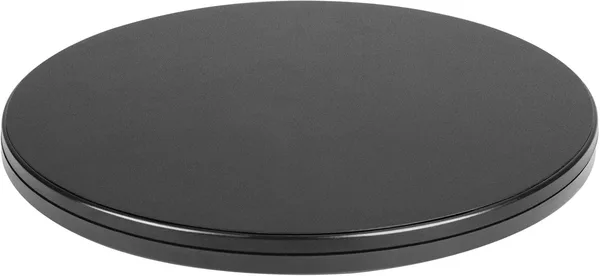
It's not just a stand — it's a motorized 8-inch (about 20cm) disc that connects to the scanner and rotates in sync with the capture process. You place the object, start the scan, and the turntable does a full 360-degree rotation on its own, stopping exactly where the software needs it to grab the next point-cloud frame. No more "spin it a bit more, I didn't catch that." It works with the Otter, Raptor, and Ferret lineup — a genuine official accessory, not some no-name rotator off a marketplace that you have to blindly guess settings for.
That's the whole value right there. If you've ever tried hand-scanning something — a statuette, a part, a cast — you know the scan quality depends directly on how evenly and slowly the object rotates. A human hand simply can't do that, no matter how hard it tries. The turntable spins at a constant speed, no jerks, and the scanner gets clean, predictable frames without blur. The difference in the resulting model isn't cosmetic — it's genuinely noticeable: fewer holes in the mesh, less manual "patching" in post-processing software.
Where it genuinely pays off, and where it just sits in a drawer
The biggest winners here are people scanning small objects in volume — say, makers producing digital copies of parts for 3D printing, or tabletop-game hobbyists scanning miniatures to print copies. Set it up, hit the button, go do something else — that's the entire use case. Compared to manual rotation, the time saved is noticeable by the third or fourth object in a session.
But if you don't own a scanner from Creality's lineup, the turntable is essentially useless — it's built around the protocol of these specific devices, not a universal turntable for photography or 3D printing. Sure, you could theoretically repurpose it for something else — shooting a product photo video, say — but that's improvisation, not the manufacturer's intent. If you're after a turntable for product photography, look at dedicated lighting and photo categories instead of this one.
One more thing that mildly bugs me: 8 inches is fine for figurines and small parts, but something like a medium helmet or a large vase already hangs over the edges. For large objects, you'll either need to find a bigger turntable or scan by hand, same as before.
Compared to the alternatives
Compared to manual rotation, it's night and day — no argument to be had there. Compared to universal motorized turntables for photography (there are plenty, and they cost roughly the same), this one loses on flexibility, since it's locked to one ecosystem. It wins by not requiring any manual calibration: plug it in, and the scanner controls the rotation itself, syncing it with the capture. For someone who just wants a working scan without fiddling with speed and delay settings, that's a real simplification of life.
Price isn't really a point of debate here — it's one of the cheapest accessories in the whole 3D printing category, around $12 on the marketplace; for the full cost with shipping and import duty to your own country, check the landed price on the product page. Even if it doesn't turn out to be a perfect fit, the loss is minor.
Honest verdict
Worth getting if you already own, or plan to get, a Creality Otter, Raptor, or Ferret scanner and you've scanned anything by hand at least once — after that experience, the purchase doesn't need much deliberation. Not worth it if you own a different scanner, or if you're not into scanning at all and were looking for something for printing — you'll just end up disappointed, since this isn't that. The main trade-off is size: perfect for small items, tight for anything bigger than an outstretched hand can comfortably hold. The second trade-off is narrow compatibility, and that's a deliberate choice by the manufacturer, not a flaw specific to this product.
Overall, this turntable is one of those rare accessories where the price is so low and the benefit so specific that there's barely any reason to hesitate, as long as you have the right scanner on hand.
FAQ
Officially, no. It syncs specifically with the Otter/Raptor/Ferret protocol, and on other hardware it would work at best as a plain rotator with no software sync — which largely defeats the purpose of buying it in the first place.
It's borderline. Small to medium objects — figurines, parts, tableware — sit on it perfectly, but anything bigger than roughly two palms' width will hang over the platform's edge, and the scan will come out uneven.
For scanning — this one, since it "talks" directly to the scanner and rotates in sync with the frames. For product photography — the opposite; get a universal photo turntable instead, since the rotation logic that matters there is different.
Here it's actually the reverse: the official option is one of the cheapest on the market, so the question of overpaying barely applies. And compatibility with the scanner's protocol is worth the price on its own.