ELEGOO PLA Basic Refill (no spool) 1kg: is it worth buying
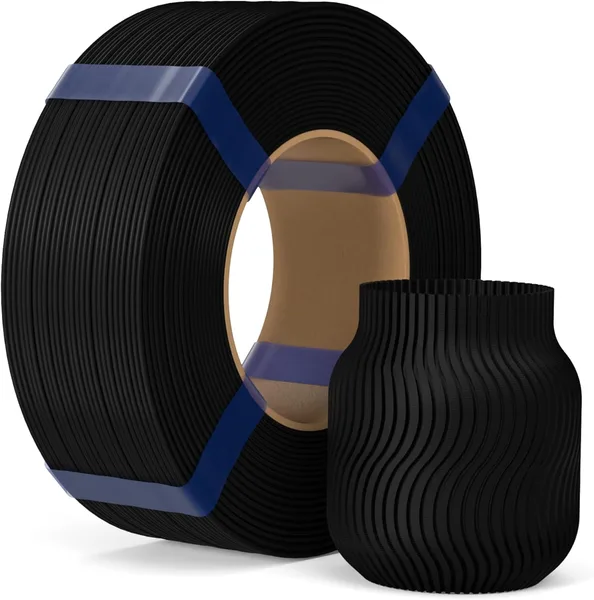
ELEGOO PLA Basic Refill is the same decent budget PLA you already know, minus the plastic spool that's going to end up gathering dust in your garage anyway. It prints exactly like the standard Basic, costs roughly the same, and just needs a bit more care in storage — without a spool, the coil likes to unravel on you. Worth buying if you already have at least one empty ELEGOO spool (or a compatible one) sitting around and you print often enough to make the rewind routine.
How many empty filament spools do you have lying around the house? I've got seven. They sit in a little tower next to the printer like trophies, and none of them ever quite makes it to the trash because "what if I need it." This refill format is exactly for people with that same garage situation — ELEGOO took the PLA Basic formula and shipped it without the spool. You buy the coil, slide it onto an old bobbin you already own, and print. Simple, honest, and a little kinder to the planet if that's a box you like to tick.
What actually changes here
The plastic itself is the ELEGOO PLA Basic everyone already knows — the spooled version has been a default workhorse on FDM printers for a while now, and nothing in the formula changed for the refill. Same 190-220°C nozzle range, same 1.75mm diameter with a claimed ±0.03mm tolerance, same predictable behavior on the bed. If you've printed regular ELEGOO PLA before, there are zero surprises in the actual printing process. Layers lay down flat, no rippling on the walls, retraction works cleanly without stray blobs where they shouldn't be.
The only real difference is the delivery format. The coil ships wound on something like a thin cardboard or plastic core with no rims, and the whole idea is that you rewind it yourself onto a spool you already have. Sounds trivial, but in practice it's either painless or a genuine headache, depending on how neatly the factory wound the coil and how much patience you've got for twenty minutes of fiddling in the evening.
Where it actually gets annoying
Honestly, the rewind is the part that filters buyers. My first coil went smoothly — unrolled it on the table, slid it onto an old Bambu spool, taped down the end, done. The second coil had uneven tension, and a few loops slipped loose partway through, so I had to hold it steady by hand while rewinding. Nothing catastrophic, but if you don't have a motorized rewinder or at least a drill with an attachment, budget fifteen to twenty minutes of hands-on filament wrangling.
And here's the part the manufacturer quietly skips over: without a spool, the coil is a lot more exposed to moisture during storage before you get around to rewinding it. PLA is already hygroscopic, and here you're essentially holding a bare roll of plastic in a bag instead of a rigid frame with rims to protect it. If you're not planning to open the package right away — say you'll get to it in a week or two — toss in a spare silica gel packet, because there's no built-in "house" from a spool to shield it anymore.
Print quality, again, is solid. Bed adhesion on a PEI sheet is no complaint, the bottom layer is flat, stringing stays minimal with normal retraction settings. Compared to Bambu Lab PLA Basic, the only noticeable difference is color depth — ELEGOO's black is a touch less deep, more matte, than the premium lines. But for functional parts, brackets, electronics enclosures — no complaints at all.
Who it's for, and who should skip it
The refill version makes sense in three scenarios. First, if you genuinely have empty spools piling up and want to stop adding to the pile — the environmental argument here is real, not just marketing. Second, if you print a lot and restock PLA regularly — the rewind becomes a five-minute routine rather than an event. Third, if you just resent paying for a plastic part that exists purely to get the filament from A to B.
Skip it if you're a beginner with zero spare spools — you'll either end up buying a separate bobbin (which wipes out any savings) or jury-rigging something out of a cardboard tube, which is one more stress point you don't need on your first print job. Same goes if you don't have a dry storage spot or at least an airtight container — damp PLA crackles while printing and wrecks the bottom surface of your models, and the risk here is higher than with a standard spooled roll.
ELEGOO PLA Basic Refill runs about the same per-kilogram price as the standard spooled Basic, give or take a dollar or two depending on the seller. Check the full landed price to your country — item plus shipping plus any import duty, all in one number — on dede.sh before you decide; it's competitively priced for decent budget PLA, not the cheapest option out there, but not overpriced either.
Bottom line: this isn't a product for everyone, it's a product for a specific habit. If you're already in the ELEGOO ecosystem, or you just can't stand extra plastic clutter at home, grab it without overthinking. If this would be your very first spool of filament ever, go with the classic version that comes with its own spool and skip the extra complication.
FAQ
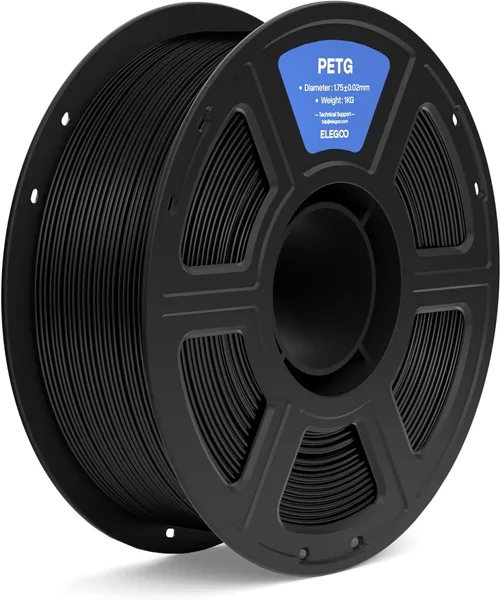
Pretty much, as long as the inner hub diameter matches — standard ELEGOO, Bambu, and eSUN spools all work fine. An oddly narrow-rimmed spool can create some friction during rewinding, but a minute with sandpaper fixes that.
If you've already got spools piling up at home, no — the premium isn't justified, you're just multiplying plastic you don't need. If you have zero spares, do the math: a separate bobbin often costs almost as much as the price difference, so the savings can be an illusion.
Go with the standard spooled version for your first coil. Rewinding filament by hand is a skill that's easier to pick up once you already have some printing experience, not while you're simultaneously learning your printer's first settings.
For printing a handful of functional parts a month, yes — a kilogram of PLA goes a long way unless you're printing large solid models daily. Active hobbyists burn through a kilogram in two to three weeks, which is exactly the crowd the refill format suits best.