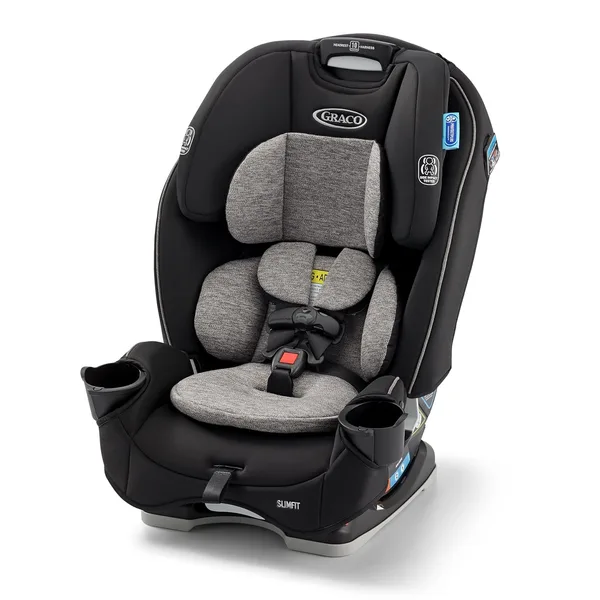
Graco Slimfit 3-in-1 Review: The Car Seat That Actually Fits Three Across
The Graco Slimfit 3-in-1 keeps its one big promise: three of these actually fit side by side on a back seat, which is rare for a sedan or minivan hauling three kids. The trade-offs are real too — a tighter height range in forward-facing mode, and a price that doesn't always justify "one seat instead of three." Worth it if your back seat is cramped or you want to cover every stage without buying new seats along the way.
Picture this: three kids, all still needing car seats, and every single trip turns into a game of back-seat Tetris. Someone's sitting crooked, someone's elbow is jammed against the door, and you're muttering under your breath trying to buckle the kid in the middle. That's exactly the problem Graco built the Slimfit to solve — a seat whose main selling point isn't the padding or the fabric, it's the inches of width it doesn't take up.
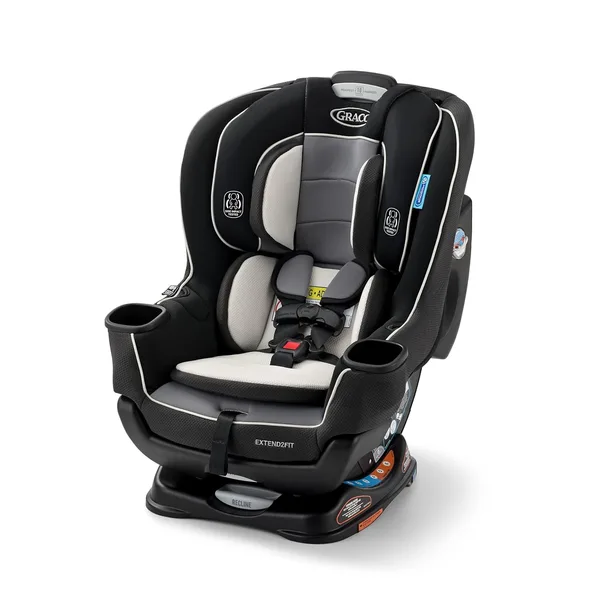
And here's the thing: they're not bluffing. The Slimfit really is narrower than most convertible seats on the market — roughly 2-3 inches slimmer on each side compared to "standard" models like Graco's own Extend2Fit. You feel the difference the moment you try to wedge three seats into one row. In a normal seat, that's basically a math problem with no solution unless you add a slim-profile booster on the side. Here, it's possible — snug, but possible.
What this seat actually is
On paper, it's a genuine "3-in-1": rear-facing from about 5 lbs, forward-facing up to roughly 65 lbs, and a high-back booster up to about 100 lbs for kids old enough to buckle themselves in. That reads like one seat for a decade-plus of use. In practice it's a bit more complicated, and it's worth talking about honestly instead of just repeating the marketing copy.
Switching between modes isn't fast. This isn't the kind of seat where you flip a lever and you're done in sixty seconds. You'll need to re-thread the harness, change the direction of the ISOFIX/LATCH attachment, and probably flip back through the manual because you won't remember where that third anchor point goes on the first try. If you're planning to use one seat for years, that's not really a problem — you'll do this once or twice over its whole lifespan. But if you're renting cars often or shuffling a kid between grandparents' vehicles, simpler single-mode seats will beat it here.
The headrest has 10 positions and adjusts with one hand from the top, with no separate harness buttons to fuss with — one of those rare moments where Graco's engineers clearly thought about a parent holding a kid in one arm while trying to do everything else with the other. Small detail, but you notice it every single day.
Where it wins, and where it doesn't
The main reason to pick the Graco Slimfit 3-in-1 is space. If you've got three kids, or two kids plus grandma riding along, the narrow width solves a real problem. Next to the Chicco NextFit or even the flagship Britax One4Life, the Slimfit wins purely on compactness — those two win on smoother mode-switching or a wider weight range in booster mode.
If you're driving a regular sedan with one or two kids, though, paying extra for narrowness doesn't buy you much. Look at the Graco Extend2Fit instead — it has more legroom in rear-facing mode (handy for taller toddlers) and usually costs a bit less. It's not a worse seat, just built for a different problem.
The fabric cover is practical — machine washable, and it comes off without the usual circus of unscrewing a dozen tiny bolts like some competitors require. The cup holders actually hold a bottle instead of just decorating the seat — a small thing, but after your third seat with a "decorative" cup holder, you learn to appreciate it.
What genuinely gets annoying: in forward-facing mode, the height limit arrives sooner than you'd hope, and an active five- or six-year-old can outgrow the seat faster than the marketing promises. This isn't unique to the Slimfit — almost every convertible seat has this issue — but given the price, you'd expect a bit more headroom, literally.
The honest verdict
If your back seat is cramped, you're hauling three kids, or you regularly need a passenger sitting next to a car seat, buy it — it solves a problem that's genuinely hard to solve any other way. If you're in a normal situation with one or two seats and space isn't tight, the premium for narrowness won't pay off — look at the Extend2Fit or similar seats that don't build their whole pitch around width.
Don't anchor on any single price you see quoted somewhere — check the full landed cost for your country on dede.sh, which bundles the item, forwarding, and import duty into one number, since that's what you'll actually pay once it lands in your hands.
The main trade-off here is mode-switching speed and the forward-facing height ceiling. The second is price — it runs above the market average specifically because of the compact width, not because of extra safety or comfort beyond the standard.
FAQ
No. The slim profile solves one specific problem — fitting three seats across a row — and if you don't have that problem, you're paying for something you'll never use. Look at wider models instead; they're often more comfortable and softer-looking too.
The Slimfit wins on width, the Extend2Fit wins on a longer rear-facing leg range and usually costs a little less. For a tight back seat with multiple kids, go Slimfit. For one or two seats with no width constraints, go Extend2Fit.
That's the idea behind "3-in-1," and technically, yes. In practice, booster mode lasts a long time, but an active kid can outgrow forward-facing mode sooner than expected — go by the manufacturer's height chart, not just weight.
It's not a five-minute job. The first time takes a while as you work through the manual; it gets faster after that. If you'll be switching the seat between cars or modes often, treat that as a downside of this particular model.
Looking for something to compare it against, or just browsing alternatives for other stages? Check the picks below.