Keurig K-Classic Review: Is the Pod Coffee Maker Worth It?
The Keurig K-Classic isn't about how the coffee tastes — it's about speed and zero thinking before 7 a.m.: pod in, button pressed, cup in hand a minute later. If you care about espresso craft or squeezing every cent out of bulk beans, walk on by. If your morning goal is "turn brain on with the least possible ritual," this is the machine to keep on the counter.
There's a certain kind of person for whom a coffee maker isn't a hobby — it's a light switch. Wake up, press the button, go brush your teeth, come back, coffee's waiting. If that's you, keep reading, because the rest of this is written for exactly that person. If coffee is a ritual for you — tamping, timing, weighing beans to the gram — you can close the tab now. The Keurig K-Classic isn't for you.
What it actually is
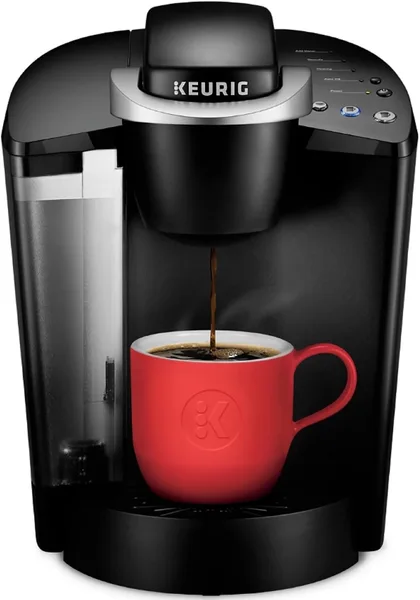
The K-Classic is the entry model in Keurig's lineup, and that's exactly why it exists in this form. No touchscreen, no app pairing, no "smart" temperature profiles for different pod types. There's a 48-ounce reservoir (a bit over a liter and a half, removable — and honestly the only spec sheet number that actually changes your life: you're not refilling water after every cup, one tank covers a two-person household for a few days). There are three cup sizes. There's a button. That's the whole feature list.
And that's the real trick of this machine: it does exactly one thing, but it does that one thing predictably, every single time. It won't pour if the pod isn't seated right (that's happened to me a couple of times — you need to press the lid down harder than feels natural). It doesn't demand weekly descaling unless your tap water is genuinely brutal. It just works.
How it plays out day to day
Weekday morning, kid needs to get to school, you need to be on a call at 8:30 — this is where the difference between the K-Classic and, say, a lever espresso machine becomes physically obvious. With a pod machine, coffee gets exactly as much of your attention as toasting bread does. Press the button, go make sandwiches. With an espresso machine you'd be standing there for a minute or two watching the extraction if you want an actual result instead of sludge.
The taste is where the trade-off the sellers don't mention kicks in. The K-Classic makes coffee that's a lot like a decent gas-station Americano: fine, hot, consistent, but without the depth or crema you get from a real espresso machine and freshly ground beans. This isn't a machine for a barista perfectionist. It's a machine for someone who needs caffeine in the morning, not meditation.
Compared to a French press or a regular drip machine (like the Bialetti stovetop pots in the same category), the Keurig loses on cost-per-cup over the long run — pods run noticeably more expensive than ground coffee. But it wins where the French press always loses: effort. No four-minute wait, no filter to wash, no grind size to think about. Different mornings need different winners.
One more thing worth knowing up front
The K-Classic is built around the K-Cup format — a proprietary US pod standard that's often hard to find on local shelves outside North America. So plan ahead: either stock up on pods when traveling, order them online in bulk separately, or — the most realistic option — get a reusable filter pod that takes your own ground coffee. It's sold separately and effectively turns the Keurig into a plain drip machine with a button. That solves the pod-cost problem but kills a chunk of the "fast and thoughtless" appeal that's the entire reason people buy this machine in the first place. Weigh that before you buy, not after.
On the marketplace this model runs around $101–110 depending on the seller and bundle — and that's before forwarding and import duty get added on your end, so check the full landed price to your country on dede.sh before you commit, not after the fact.
Who should buy it, who shouldn't
Buy it if: you're in a home or office where several people drink coffee at different times and each wants their own cup without queuing at the machine; if your mornings are permanently a race against the clock; if you've already made peace with the idea that pod coffee is a trade for speed, not a hunt for the perfect cup.
Skip it if: you're a specialty-coffee fan willing to spend 5–10 minutes on the process for the payoff; if cost per cup genuinely matters to you (pods lose badly to ground coffee here); if you already own a decent espresso machine — no point duplicating it.
The main real downside worth flagging: pod logistics outside the US can be a genuine hassle. The second, less obvious one — the K-Classic's plastic body looks and feels budget. It's not a showpiece for the counter, it's a work tool. Go in expecting that, not discovering it after unboxing.
FAQ
FAQ
Yes, but only through a separate reusable filter pod (sold separately, not included in the box). Without it, the machine only works with branded K-Cups or compatible third-party pods.
If several people need coffee at the same time, a drip machine is cheaper and more efficient per cup. If you drink one cup at a time throughout the day and don't want a carafe sitting on a warming plate for hours, the K-Classic is more convenient.
For two or three moderate coffee drinkers, yes — it'll cover a day or two without refilling. If four or more people in the house drink coffee, plan on topping it up daily.
The K-Classic already is the entry-level model in the lineup — the real price question is between this and models with bigger screens or Wi-Fi, none of which affect how the coffee tastes. For everyday use without extra bells and whistles, this model covers it.
A few alternatives worth a look if you're comparing options: