Noot Products K11 Kids Headphones Review: Are Cheap Wired Ones Worth It
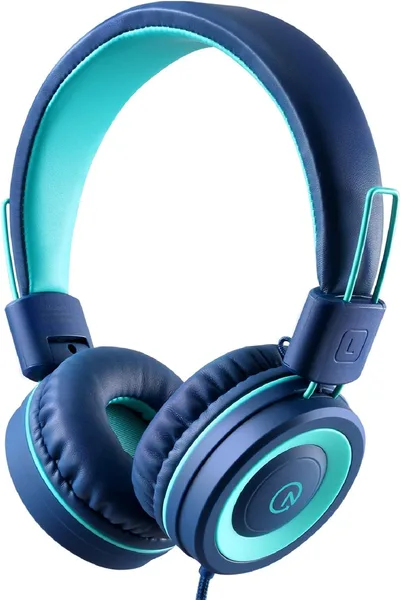
The Noot Products K11 is a cheap wired headset for kids' online classes, tablets, or a laptop on a plane. No Bluetooth, no battery, nothing to lose or run out of charge — just a cord and two speakers. For the price, it does exactly what it promises and nothing more. If you're after a "wow" sound, look elsewhere.
You know the scenario: your kid has an online English lesson in fifteen minutes, and the only headphones in the house are either your good ones — the ones you'd rather not hand over — or some no-name Bluetooth pair that dies mid-lesson and starts beeping. So there you are, googling "cheap kids headphones" at 8:45 in the morning.
That's exactly the gap models like the Kids Headphones K11 by noot products are built to fill. These aren't a dream pair, and the maker seems to know it. The formula is simple: a 3.5mm jack, a wired cable marketed as "tangle-free," a folding design that fits in a backpack's side pocket, and over-ear cushions instead of in-ear buds — which matters for kids, since ear cups are gentler and let you gauge volume just by looking.
What the sound actually is
Let's be honest — you're not buying these for bass or soundstage. You're buying them so your kid can hear the teacher on Zoom and not get tangled up in cords at recess. The sound is fine for speech and cartoons — voices come through clear, no harsh hiss in the mids. Music, though, is a letdown: bass is basically absent, everything sounds flat. But that's not really a fair complaint at this price — expecting home-theater sound here would be unreasonable.
The real selling point is what's missing. No Bluetooth to re-pair every time the laptop reboots. No battery that dies at the worst possible moment. Just a cord you plug in, and it works. For a kid, that's actually simpler than it is for an adult — no buttons to figure out, no explaining what "pairing mode" means.
Where they genuinely earn their keep
A flight or train ride with a kid is where wired headphones win outright — you can plug an adapter straight into the seatback entertainment system, and no Bluetooth pair will ever manage that. Or a school that restricts wireless devices, which still happens, especially during listening exams. Or simply the "this kid will lose or break something within a month" situation, where you'd rather the loss cost you pocket change than a real dent in the budget.
The folding design also genuinely helps — it keeps the headphones from sticking out of a backpack and snagging on everything in a school hallway. Small thing, but it matters.
Now for the downsides, because there are some
First, the cord. Even a "tangle-free" cord is still a cord, and kids manage to tangle it anyway — catching it on desks, yanking a classmate's phone along with the earpiece. That's just physics, not a flaw in the product, and there's no fixing it. Second, these aren't volume-limited headphones — at least the manufacturer doesn't claim that feature anywhere, so if it's a dealbreaker for you that your kid physically can't crank the volume all the way up, look for a model that specifically advertises a volume limiter. Don't assume it's there.
And compared to a cheap Bluetooth TWS pair, you're trading mobility for reliability. A kid can't forget to charge a wire, can't lose one earpiece out of a pair (these are physically joined), and you know for certain they'll work tomorrow morning — no surprises.
Who should buy, who should skip
Get these if you want a second, third, or backup pair of headphones for a kid — for the car, a relative's house, school, just to have on hand. Get these if your child is younger and the whole Bluetooth routine — charging, pairing — is still more hassle than it's worth. Get these if your budget is genuinely tight and the main requirement is "just needs to work."
Skip them if you're looking for your kid's main, only pair of headphones and they're constantly on the move — the cord will get annoying fast. Skip them if a volume limit is a non-negotiable requirement — it's not advertised here. And skip them if you're expecting anything remarkable from the sound — this is an honest workhorse, not an audiophile toy.
As for what they'll actually cost you landed — item, shipping, and any import duty combined — check the full price breakdown for your country on dede.sh; it beats guessing at a sticker price that won't match what you pay at checkout.
Similar products worth a look


Preguntas frecuentes
The manufacturer's spec sheet doesn't list this feature. If it's a must-have for you, look for a model where a volume limiter is explicitly called out as a feature — don't assume it's built in just because the headphones are marketed for kids.
For daily use by an active kid, wireless is usually more convenient — less tangling. But for a backup pair, travel, or any situation where rock-solid reliability without charging matters more than convenience, wired wins. The K11 is built for that second case.
Yes, that's basically their whole job. Voice comes through clearly, though there's no built-in microphone, so if you need to talk back, you'll need the laptop's or tablet's own mic.
The folding hinge gives them a bit more durability than a non-folding model, which is a plus. But it's still budget plastic underneath, so treat them with some care — these aren't built for years of rough daily abuse.