Lenovo IdeaTab 11 (2.5K, 90Hz): Should You Buy It Instead of a Laptop for College?
The Lenovo IdeaTab 11 isn't trying to be a MacBook killer, and it doesn't pretend to be. For nearly pocket change, you get a tablet with a genuinely sharp 2.5K display and smooth 90Hz scrolling—perfect for note-taking, reading PDFs, and binge-watching shows in the dorm. But if your plans involve anything heavier than Google Docs and Chrome with twenty tabs open, prepare for disappointment.
Picture this: first week of classes, your professor drops a 400-page PDF in the group chat, and you're stuck squinting at it on a 6-inch phone screen. Sound familiar? That's exactly the scenario this tablet addresses—not a flagship iPad killer, but a workhorse for anyone who needs a big screen and light weight without horsepower for video editing.
The first thing you notice when you hold it is the display. The 11-inch IPS panel with 2.5K resolution and 90Hz refresh rate looks significantly more expensive than its actual price. Text is crisp, colors aren't pushed toward that sickly acidic tone some budget brands love, and the 90Hz smoothness is immediately noticeable—scrolling through notes or feeds feels buttery compared to the characteristic jank of budget 60Hz screens. Honestly, for reading and note-taking, this is probably the single most important spec on the entire device, and Lenovo didn't cut corners here.
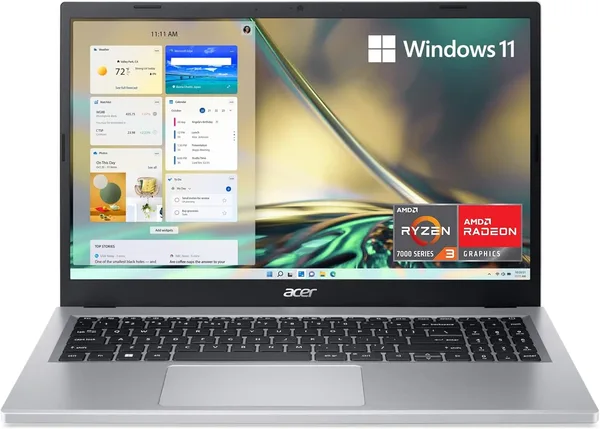
Inside, though, you've got a MediaTek Dimensity processor, and that's where the compromises start. For note-taking, a browser with a handful of tabs, Zoom classes, and evening TV, this chip is more than enough. But the moment you open something demanding—heavy Excel files with macros, video editing for a multimedia class, or keeping Photoshop-like apps open simultaneously—the processor starts to sweat nervously. This isn't a laptop with an Intel or Ryzen chip, and it's not trying to pretend it is. Compared to, say, an Acer Aspire 3, which students also often grab as their workhorse, this tablet loses on raw power but wins on weight, battery life, and how pleasant it is to just lounge on the couch with a textbook.
And here's the key question you need to ask yourself before buying: what's it really for? If the answer is "take notes with a stylus, read academic papers, watch Netflix in bed, and occasionally check email," this is probably the perfect scenario for the Lenovo IdeaTab. A keyboard and stylus typically sell separately, so if you're planning to write papers, budget for that upfront—typing on a glass screen for long periods is an experience you'll want to avoid, trust me.
Battery life is another point worth mentioning. A tablet with this processor and display, no discrete graphics, naturally lasts longer than a compact laptop: a full day of classes without hunting for an outlet is genuinely real, not a marketing promise. On the flip side, the battery isn't magical—if you stream video all day on maximum brightness with 90Hz enabled, it'll be tapped by evening.
Price-wise—around $199 on most marketplaces—this is probably the strongest argument for the IdeaTab. For that money, it's hard to find anything with a comparable screen; most competitors in this price segment either stick to 60Hz or offer questionable TN panels. The marketing isn't lying here: the display really is top-tier for its class.
Who absolutely shouldn't buy it? Anyone planning a true "laptop replacement"—programming, heavy Excel work, specialized Windows software that only runs on a specific platform. A MediaTek tablet running Android or a stripped-down OS just won't cut it, and no online reviews will change that. If you're in engineering or a technical program, look toward a proper laptop instead.
Who Should Buy and Who Shouldn't
Get it if you're a humanities or social sciences student who reads and takes a lot of notes, loves a lightweight device you can throw in a backpack without feeling it, and don't need power you won't actually use. Skip it if your coursework demands heavy software, Windows-specific apps, or if you're counting on this device as your only tool for serious work. In that case, check out our full laptop catalog—there are budget Chromebooks and more powerful options available.
The main compromise here is honest and clear: you're trading raw power for screen quality, weight, and price. For most humanities students, that's a swap that makes sense. For everyone else, it isn't.
Preguntas frecuentes
For typing in Google Docs or Word Online—yes, no problem, especially with a separate keyboard. But if your paper requires heavy calculations, specialized software, or working with large databases, you'll need a real laptop.
If reading, notes, and mobility are the priorities, the tablet wins on display and weight. If you need a real "desktop" experience with a file system, full applications, and peripheral ports, the laptop is your only choice.
If you're reading and scrolling a lot, 90Hz is noticeable immediately, and going back to 60Hz feels worse. For occasional tasks, the difference isn't critical, but at this price, it's almost a freebie, so why not?
If you're planning to handwrite notes or draw, yes—and it's better to buy it upfront because finding a compatible one separately later is a hassle. If you mainly read and type, you can skip it.