Angelcare Baby Bath Support Review: Is This Bath Sling Worth It
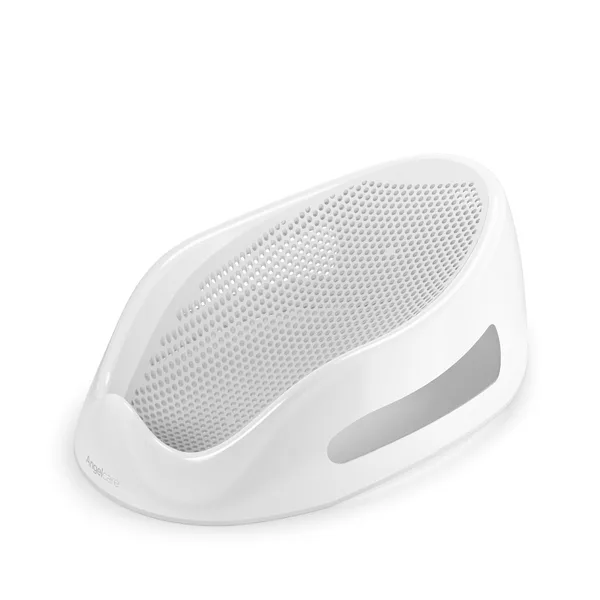
The Angelcare Baby Bath Support is a soft mesh sling stretched over a plastic frame that holds a newborn in a reclined position at bath time, until the baby can sit up on their own. The big win: your hands are free instead of clamped around a soap-slick infant. The catch: the mesh doesn't hold its shape forever — after a few months of steady use it starts to sag. For roughly the first four to five months, it earns its keep.
The first bath at home is always a small panic attack. The baby is slippery as a bar of soap, water is splashing everywhere, one hand is holding the head, the other is trying to wash, and the third hand — the one you desperately need — doesn't exist. That's the exact moment you remember that grandmothers somehow managed without any of this gear, and generations survived. Try holding a two-month-old with one arm in a full-size bathtub for five minutes, though, and the question "why buy yet another plastic gadget" answers itself.
The Angelcare Baby Bath Support isn't a bathtub or a bath seat — it's a piece of soft mesh fabric pulled tight across a horseshoe-shaped plastic frame. You set it inside your own bathtub (or a baby bathtub, if it's roomy enough), lay the baby down in a reclined position, and water flows straight through the mesh. Basically a hammock for bath time. It's mostly sold in gray, which is where the "gray" in every listing title comes from.
How it actually works in practice
The first time you lower a baby onto this thing, there's a half-second of doubt — it looks like the kid is about to sink straight through the mesh into the water. It doesn't happen. The fabric is dense enough to spread the weight across the back and bottom, and the curved frame holds its shape so the head naturally ends up a little higher than the body. That's the whole trick: the baby lies in a natural position, and both your hands are free — for washing, for rinsing, for catching that exact moment when the baby decides bath time is best accompanied by screaming.
The fabric dries fast, which is a real plus compared to those anatomical plastic seats with foam inserts that end up smelling faintly of mildew for weeks if your bathroom doesn't have great ventilation. There's no foam or sponge in the Angelcare sling to soak up moisture — just mesh and plastic. Wipe it down, hang it on a hook, done.
Here's the honest downside: the fabric stretches. Not right away — usually after two or three months of regular use (and bath time can mean every day, or every other day) it starts sagging in the middle. The baby no longer lies flat; they sink a little into the center of the hammock. It's not dangerous — the frame still holds, the baby isn't going anywhere near actually submerging — but the comfort factor drops noticeably. The maker also sells an all-plastic version with drainage holes and no fabric, which sidesteps the sagging problem entirely, but that comes with its own downside: cold, bare plastic against a naked newborn back is a hard sell in winter.
Compared to a popular alternative — a rigid anatomical seat like the Summer Infant My Bath Seat — the Angelcare sling wins on compactness. You can roll it up and tuck it in a cabinet, or even pack it in a bag if you're traveling with the baby and plan to bathe them somewhere else. A rigid plastic seat doesn't fold; it just occupies real estate in your bathroom permanently, until the baby outgrows it.
One thing nobody mentions in the product listings: this sling really shines in a full adult tub with water at waist height. If you're working with a small baby bathtub, the frame might simply not fit widthwise — measure your tub before ordering, because returning something that's crossed an ocean isn't cheap.
Who should buy it, and who shouldn't
If you have a newborn and you bathe them in the family tub, buy it without overthinking. It genuinely erases that "what if they slip out of my hands" fear that seems to hit every new parent. It works well up until the baby can sit up confidently on their own — after that the sling becomes unnecessary, which is fine, because it was only ever meant to cover one short but important stretch.
Skip it if you're using a narrow, compact baby bathtub — look at classic anatomical inserts sized to your tub instead. And once the baby can sit up and hold their head steady on their own, the sling is redundant; regular bath seats or non-slip mats take over from there.
Rather than quoting one price that won't match your currency or customs rules, check the full landed cost for your country — item, shipping, and any import duty rolled into a single number — on the Angelcare Baby Bath Support product page. It's not exactly pocket change for a piece of fabric on a frame, but given how much stress it saves in those first months, it's not money wasted either. You'll also see listings priced well below the going rate — treat those with suspicion; a discount that steep usually means a used unit or a knockoff rather than new stock from a reputable seller.
FAQ
No — and that goes for pretty much any infant bathing product. The sling holds shape and weight, but it's not a substitute for your attention. The baby is always wet, always slippery, and the water is always right there. A moment's distraction is all it takes.
If your bathroom is small and you want something you can stash away, go with the sling. If space isn't an issue and you don't mind a plastic seat living in your bathroom permanently, the rigid seat holds up longer without sagging and usually costs less.
The manufacturer claims up to six months. In practice it depends on how early your baby learns to sit. For most families it's four to five months of regular daily use before the fabric starts sagging noticeably.
Not always. The frame has a fixed width, and it can simply be too wide for the edges of a compact baby bathtub. Measure your tub before buying if that's where you plan to use it.
Looking for a few more things to round out bath time or outings with a newborn? Check the related picks below — a mix of small practical items and the kind of gear that makes the first year noticeably easier.