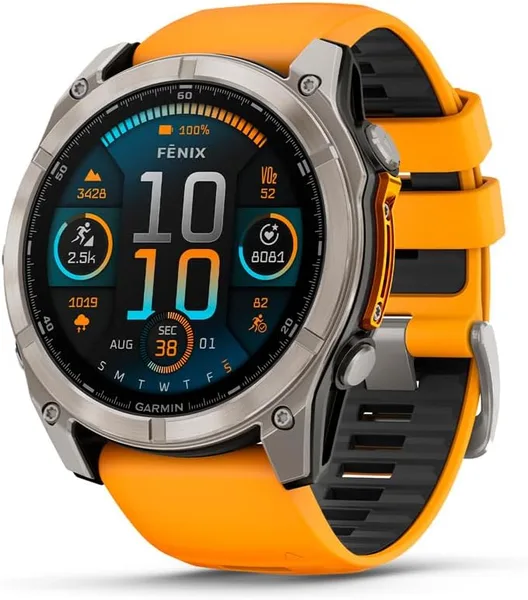
Garmin Fenix 8 51mm AMOLED Sapphire Review: Is It Worth Buying in 2026
The Fenix 8 is Garmin's flagship multisport watch, now with an AMOLED screen and sapphire glass that finally fix the biggest complaint about earlier Fenix models: a dull display. Battery life is deep enough that you never worry about it dying mid-adventure — but you'll pay flagship-smartphone money for that peace of mind. Buy it if you actually run, climb, or dive. Skip it if you just want a good-looking watch on your wrist.
There's one telltale sign of someone who bought a smartwatch without thinking it through: they charge it every night like a phone, then wonder a year later why the battery seems to drain faster than it used to. With the Fenix 8, that drama simply doesn't happen — and that's the whole point of this watch.
I tested the top-spec version: 51mm, AMOLED panel, sapphire glass. It's not the cheapest option in the lineup, and Garmin isn't shy about the price tag here either. Skip the sticker shock, though — check dede.sh for the full landed price to your country (the watch itself, forwarding, and any import duty, all folded into one number) before you decide whether this is a "want" or a genuine budget conversation.
A screen you're no longer embarrassed to show people
Earlier Fenix watches with MIP displays were about function, not beauty. You wore one and quietly told yourself "but the battery lasts two weeks" to make peace with it. The AMOLED Fenix 8 mostly erases that trade-off: the picture is bright, colors are punchy, and route maps are readable at a glance even in direct sunlight on the trail. Next to an Apple Watch, the screen doesn't lose on quality — and it wins by a mile on stamina, because Garmin isn't chasing an always-on display at max brightness the way Apple is.
The sapphire glass isn't a marketing gimmick, either. I clipped the watch against a rock edge on a hike and braced for a scratch. There wasn't one. If you actually climb, run technical trails, or are just clumsy like me, this is the kind of quiet bonus you only appreciate the day it saves you.
Battery life — this is where the magic happens
The real reason to buy a Fenix over an Apple Watch or a Samsung Galaxy Watch is the battery. In smartwatch mode with AMOLED active, it runs about a week. Switch to battery-saver GPS mode for a long day in the mountains or an ultramarathon, and you're looking at tens of hours of continuous GPS tracking. That's the difference between "I charge it every few days" and "I charge it every night or the screen's dead by morning."
For a trail runner planning a 20-plus-hour effort, that's not a nice-to-have, it's a requirement. A friend of mine tried running an ultra on an Apple Watch Ultra and ended up hauling a power bank, plugging in a cable mid-race. With the Fenix 8, that whole ordeal just doesn't exist.
Sensors and features: more than 90% of people need
Heart-rate monitor, SpO2, barometer, compass, multi-band GPS, detailed topographic maps, training metrics like recovery status and training readiness — it's all here, and it all works about as accurately as a wrist-only watch without a chest strap possibly can. There's also a flashlight now (yes, an actual LED flashlight built into the case) — something you underrate right up until you're digging through a backpack in a dark tent and suddenly need it.
But let's be honest: if you run three times a week around the park and swim on weekends, 80% of this feature set is going to sit untouched in the menus. That's not the watch's fault — it's just not who this thing was built for.
What's annoying
Garmin's menu system still isn't iOS. Navigating with physical buttons is genuinely great in gloves or rain — where an Apple Watch's touchscreen just gives up on wet fingers — but new owners will need a day or two to learn where everything lives. Smart features like notifications, payments, and third-party apps work fine, but they're clearly a secondary story here compared to an Apple Watch or Galaxy Watch, where that's the main use case.
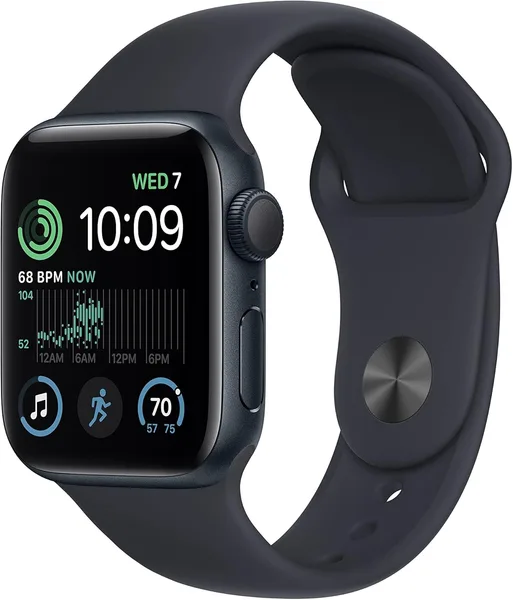
And then there's the price. For this kind of money you could buy a decent laptop or fund a real vacation. Line it up against something like the Apple Watch SE, and the gap is obvious immediately — whether the battery life and sport-specific features justify it is a call only you can make.
Who should buy it, and who shouldn't
Get the Garmin Fenix 8 51mm AMOLED Sapphire if you regularly run long distances, hike mountains, dive, or generally live an active outdoor life and want one device that survives everything from rain to a rock strike. This is a tool, not an accessory.
Skip it if your main wish list is phone notifications, looking sharp at a party, and tapping your wrist to pay for coffee. Plenty of cheaper, more touchscreen-friendly options do that job better — an Apple Watch or Galaxy Watch will handle it for less money.
The trade-off is simple: pay more, live with a less "smartphone-like" interface, and get battery life and durability that nothing else in this class comes close to.
FAQ
If the display matters to you — maps, color graphs, readability in sunlight — yes, the difference is obvious from the first glance. If maximum battery life at any cost is the priority, the MIP version still lasts longer and costs less.
For daily notifications and smart features, the Apple Watch wins. For long training sessions, battery endurance, and precise GPS tracking without a frantic search for an outlet, Garmin is comfortably ahead.
In battery-saver GPS mode, the watch delivers tens of hours of continuous tracking — enough for most ultra distances and multi-day trips without a recharge, which is more than you can say for an Apple Watch Ultra in the same scenario.
If the watch is genuinely coming with you into the mountains, onto rock, or into rough daily use, sapphire pays for itself the first time it dodges a scratch. For a mostly desk-bound life, you can save money and skip it.