Infinno Baby Wrist Rattle Socks Review: Will It Actually Help Your Baby Notice Their Own Hands?
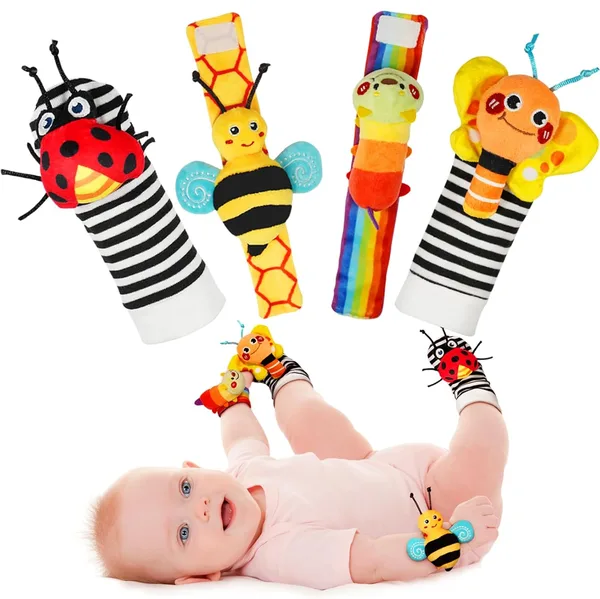
Infinno Baby Wrist Rattle Socks is a set of wrist bands and rattle-toe socks meant to nudge babies into noticing their own limbs. Nothing groundbreaking here, but it's cheap and it genuinely works as a "wait, what's that noise" trigger. Worth buying if your baby is around 2-5 months old and still gets confused by their own hands. Not worth it if you're expecting anything close to a real developmental toy — this is a bell on velcro, and that's the whole story.
There's a moment in a baby's development when they suddenly spot their own hand and just stare at it for thirty straight seconds, like they've spotted an alien. It's actually a meaningful milestone — this is how a baby learns those limbs belong to them and respond to their commands. And at some point, somebody figured out that strapping a rattle to a wrist would speed that process up with sound.
Turns out it's not just a marketing gimmick — pediatricians genuinely recommend sensory rattles for hands and feet as a way to encourage what's called "hand regard" and "foot regard," the deliberate act of a baby studying its own limbs. The Infinno set is exactly that kind of tool, just packaged two ways at once: velcro wrist bands with a bell for the hands, and socks with a built-in rattle for the feet.
How it actually works
There's no trick to it. Baby jerks an arm, the little rattle on the wrist shakes — usually shaped like a striped cat, elephant, frog, or bee, since the set ships in a few pairs with different faces. The sound grabs attention, the baby tries to find the source, focuses on the hand — and slowly connects the dots that it's their own movement causing the racket. Same story with the feet: the sock actually stays put (the elastic is decent, one of the few places the manufacturer clearly put in effort), and the rattle on the toe responds when the baby kicks or tries to get a foot into their mouth — which, as any parent knows, becomes a favorite pastime around month three.
Compared to a standard play gym with dangling toys, the key difference here is that the sound source moves with the baby instead of hanging still overhead. That pushes the baby to actually move their limbs rather than just stare upward. Parents who've tried both often say the play gym gets old faster — babies get used to a static picture above their heads, while the rattles "reset" every single time the baby starts a new movement.
The obvious downside shows up fast: a newborn's wrist size changes quickly. On a fresh newborn, the band can be too loose and just spins without doing anything, but by three or four months it fits perfectly. So despite the "0-12 months, works the whole first year" claim on the box, the real active window is more like two or three months, until the baby outgrows the fascination with simply moving an arm and moves on to consciously grabbing objects.
Who it's for and who should skip it
If your baby is somewhere between two and five months old and doesn't yet have much control over their movements or interest in objects around them, this is that rare case where a cheap toy actually matches a developmental need instead of just looking good in a marketplace photo. Most people buy it as an add-on to a broader toy set rather than as a standalone gift — which is the right call, since on its own the set looks pretty modest.
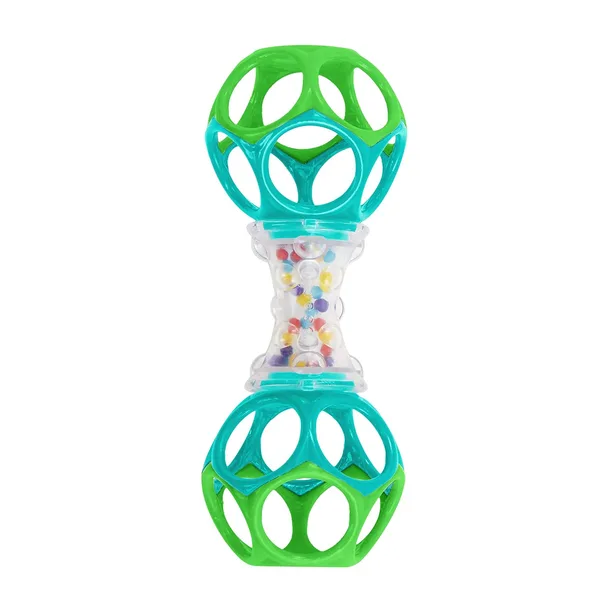
Who should definitely skip it: if your baby is already seven or eight months old, sitting up, reaching for things, and grabbing everything in sight, that "staring at my own hands" phase is behind them, and wrist rattles will more likely get in the way of grabbing other toys than help. Also don't count on this being your only sensory toy — pair it with something suited to a slightly later stage, once the baby starts deliberately grabbing objects, like the classic Oball shaker rattle — though that's a different stage with a different kind of play.
One more thing sellers don't mention: the volume isn't adjustable, and for some babies a sharp, loud sound right next to the ear (and the wrist ends up right by the face whenever the baby pulls a hand toward their mouth) triggers a startle instead of curiosity. If you've got a sensitive baby who already flinches at loud noises, start with just one wristband and watch the reaction before strapping on the whole set.
What it costs, and whether the brand name is worth paying for
This isn't the kind of item you order on its own to save on shipping — it's more of a "toss it into the cart with a bigger order" purchase. Honestly, dozens of no-name brands sell essentially the same rattle sets, and Infinno isn't reinventing anything here — it just uses slightly better stitching and softer materials than the rock-bottom local alternatives. If certified, low-odor materials genuinely matter to you (and for a baby who puts everything in their mouth, that's a fair concern), the extra cost is justified. If you don't care and just want something that rattles, you can find it cheaper elsewhere — check the full landed price to your country, item plus forwarding plus import duty in one number, on dede.sh before deciding.
Verdict
This isn't a toy that's going to "raise a genius baby," whatever the product description claims. It's a small, cheap tool built for one specific developmental window — the short stretch when a baby is learning that hands and feet belong to them. It works great if you buy it at the right time, around 2-5 months. It's a waste of money if you buy it too early to grow into or too late to matter. The main trade-off is a short window of relevance and non-adjustable volume, so watch how your particular baby reacts before committing to the full set.
FAQ
Technically from birth, but the real effect shows up closer to two months, once the baby starts moving hands and feet on purpose rather than just reflexively twitching. Before that age, the rattle just dangles with no reaction from the baby.
Better to take it off for sleep — the sound can wake a baby with every movement, especially during the light-sleep early weeks. For active time on a play mat or in a playpen, though, it's ideal, since it specifically encourages kicking.
They're not really alternatives, more like complements. A play gym gives visual stimulation and tummy-time space, while the wristbands and socks give tactile and audio feedback tied directly to the baby's own movements. If you have to pick just one to start with, the play gym is more versatile; the rattles are cheaper and more narrowly focused.
The soft fabric parts are designed for contact with a baby, but the bell itself is a small hard piece sewn inside the fabric. Check the seams regularly for wear, especially if your baby is an aggressive biter and chewer, and retire the toy immediately if a seam starts to come apart.