3D Printer Nozzle Cleaning Kit (40-Piece): Worth Buying?
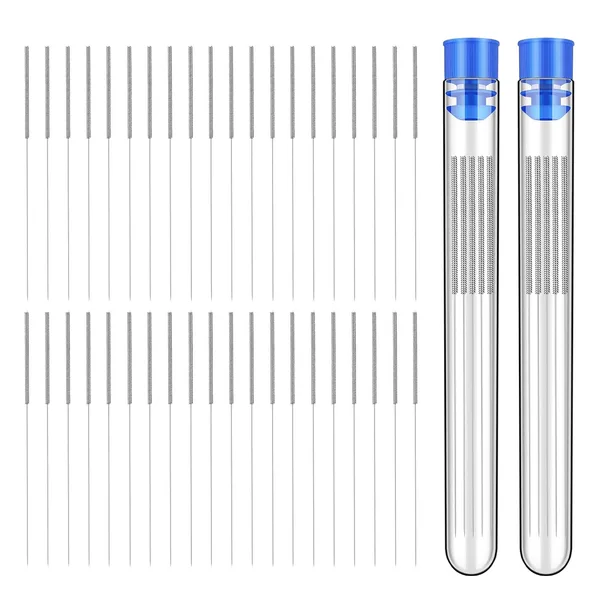
The EILKBLA 40-piece kit is a bundle of 0.2-0.4mm needles, wire brushes, and a few extra tools for clearing gunk and stuck filament out of a 3D printer nozzle. It costs almost nothing and does exactly what a properly-sized piece of stainless wire should do. It's not a miracle cure for a fully clogged nozzle — it's cheap prevention that saves you a nozzle replacement every few months.
The print stops mid-layer. The extruder clicks, pulls filament, and out of the nozzle comes... a thin trickle, or nothing at all. Anyone who's printed for more than a couple of weeks knows this scene. And the first instinct is to dig through a drawer for a syringe needle or a straightened paperclip — something that's either too thick or bends the second it touches hardened gunk. That's where a kit like the 40 Pcs 3D Printer Nozzle Cleaning Kit comes in: a pile of correctly-sized needles instead of one mangled wire from the toolbox.
What's in the box, and why so many pieces
Forty pieces sounds like a marketing number designed to impress, and honestly, it partly is — a good chunk of the set duplicates the same thicknesses. But the underlying logic holds up: home FDM nozzles come in 0.2, 0.3, 0.4, 0.5, 0.6, and 0.8mm, and a 0.4mm needle will either jam or not fit at all in a 0.2mm nozzle. The kit covers that spread of sizes, throws in wire brushes for the outer surface (where scorched plastic tends to build up and drip onto your finished part), and a couple of flat scrapers for cleaning the bed or the top of the nozzle when you need to strip off stringing after a filament swap.
The needles are stainless steel, and that matters: ordinary hardware-store wire or a straightened paperclip is softer, bends against hardened ABS or carbon buildup, and can leave metal fragments inside the channel that clog things up even worse. This steel is stiffer, so it pushes the blockage out instead of deforming on contact.
What it's actually like to use
Classic scenario: you switch filament from a dark color to a light one, and gray streaks start showing up in the output. That's leftover plastic hiding in the nozzle's dead zones. Heat the nozzle to working temperature, push in a needle of the right diameter, turn it a few times, and the residue comes out with the next bit of extruded filament. Five minutes of work versus buying a new nozzle for a few bucks plus the time to strip and rebuild the hotend.
The second scenario where this kit earns its keep is partial clogging when printing PETG or flexible filament (TPU), both of which love to leave carbon buildup at the slightest overheating. Here a 0.4mm needle works as quick maintenance — run it through the hot nozzle every couple of weeks instead of waiting for a print to fail six hours into a big part.
There's plenty to compare it against. The simplest alternative is the small needle set that ships with some Creality printers, but that's usually just 3-5 pieces in one or two sizes, and they vanish from the workbench fast. There's also the "cold pull" method — no tools at all, just heat the nozzle, let it cool partway, and yank the filament out along with whatever's clogging it. It works, but it takes longer and doesn't always clear a localized blockage, especially if the clog isn't spread through the whole channel. A needle is simply more targeted and faster.
The honest downsides
There's no engineering marvel here — it's essentially bits of wire and cheap brushes sorted into a case. Needle-tip sharpness varies within a batch; some units arrive with a slightly dulled point that struggles more with fresh buildup, though on already-hardened plastic you barely notice. And, honestly, you'll never touch about half of the forty pieces — in practice you'll use three or four sizes matched to your actual nozzles, and the rest just sit there as backups or for when you inevitably lose the ones you use.
Second point: this isn't a substitute for regular hotend maintenance. If a nozzle is clogged badly enough that the PTFE tube or heat break is also dirty, a needle alone won't cut it — you'll need to strip the assembly down. And if you print with metal-filled or abrasive filament (carbon fiber, wood-filled composites), plain steel needles dull fast against the abrasive material — at that point you're better off going straight for a hardened nozzle instead of trying to rescue a soft brass one through cleaning.
Who should buy it, and who shouldn't
Get it if you own a home FDM printer and have ever dealt with a partial nozzle clog — sooner or later, everyone does. The price is basically symbolic, the kit sits in a drawer for years, and you'll reach for it once every month or two. It's especially worth having if you print with multiple colors or materials in rotation, since that's exactly when clogs happen most.
Don't expect miracles if your extruder already has a real mechanical problem — play in the drive gear, plastic leaking through a loose heat break, or a worn feed mechanism. A needle clears the channel; it doesn't fix the mechanics. And if your nozzle is already chewed up from abrasive filament, just replace it rather than trying to restore the old one.
As for cost, this kit is priced low enough to be a rounding error — cheaper than a single coffee at the shop down the street. To see the exact landed price to your country (item, shipping, and any import duty combined into one number), check the listing on dede.sh. At that price, keeping a stash of needles in a drawer is just rational: a print ruined by a clogged nozzle costs you more in time and frustration than the kit itself ever will.
שאלות נפוצות
Related 3D printing gear worth a look: