ANYCUBIC Wash and Cure 3 review: is this resin wash-and-cure station worth it
The ANYCUBIC Wash and Cure 3 takes over the two messiest, dullest steps in resin printing: washing the raw resin off a fresh part and curing it under UV. Get it if you print regularly and you're tired of babysitting a jar of isopropyl alcohol on your kitchen counter. Skip it if your printer only comes out of the closet once a month — hand-washing is cheaper and the results are nearly identical.
The first time I pulled a freshly printed figure out of an IPA bath and found it still tacky, like it had just been dipped in honey, I understood something nobody warns resin-printing beginners about: printing is only half the job. The other half starts after the printer shuts off. And that's exactly where most people either get used to isopropyl fumes taking over the apartment, or go looking for something like this station.
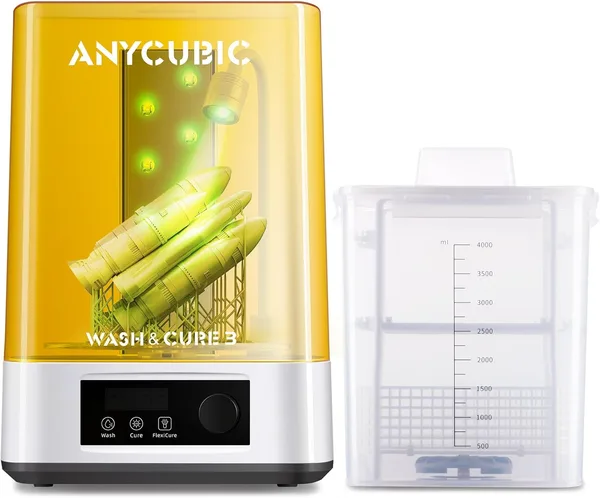
The ANYCUBIC Wash and Cure 3 is essentially two machines stacked in one housing: a rotating platform with a solvent basin on the bottom, and a UV-LED curing chamber on top. The idea isn't new — ANYCUBIC has shipped a few generations of these stations already — but the third version bumps up the working volume and keeps the flexible, illuminated gooseneck light that reviewers liked in earlier models. That light is genuinely useful: you can peek inside and check whether a part is clean yet without popping the lid and letting solvent fumes escape.
How it actually works
You set the platform with your printed model into the basket, pour in isopropyl alcohol (or a dedicated cleaning solution, budget permitting), close the lid, and start the rotation. The station spins the part in liquid for a few minutes, rinsing the uncured resin off the surface. Then you pull the part out, let it dry, and move it back into the same housing — this time switching to cure mode, where the UV LEDs finish hardening the resin.
The real practical difference versus doing it by hand is repeatability. Scrub with a brush or shake the part in a jar yourself, and the result varies every time — sometimes you under-wash it, sometimes you leave it in the alcohol too long and fine details start going soft. The station runs exactly as long as the timer says, every single time. For a one-off figure that consistency barely matters. But once you're printing in batches — tabletop miniatures, jewelry masters, small technical parts — that consistency is what actually saves your sanity.
Curing is its own story. Without a UV chamber, most people just set the part on a windowsill and wait for sunlight, which in winter can mean waiting days. Or they buy a cheap UV nail lamp and improvise. The built-in ring of LEDs delivers even exposure from all sides at once, so the part cures uniformly instead of hardening only on the side facing the lamp. For parts with thin protrusions — a figure's arms, the antennas on a model drone — that evenness really shows: without it, those thin bits stay brittle and snap at the slightest touch.
Where it disappoints
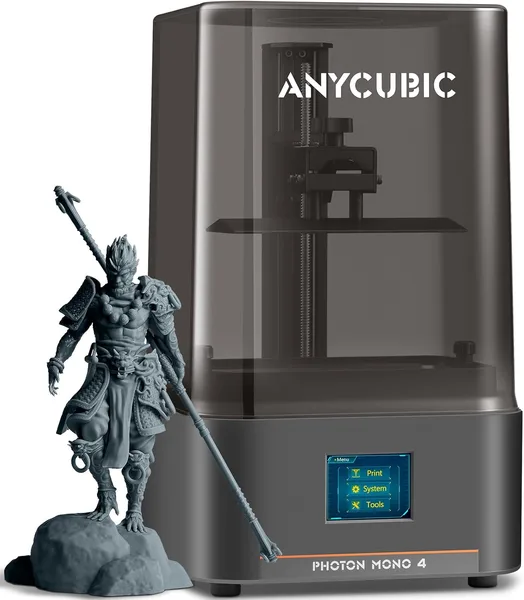
The working chamber is bigger in this version, and the box makes a big deal of that, but for large-format printers like the Anycubic Photon Mono 4 with their generous build plates, you'll still be juggling part layout to fit everything in — this station is really sized for Photon Mono-class printers, not the flagship large-format machines. The second issue is smell. Yes, the lid seals tighter than an open bowl would, but this isn't an airtight, filtered enclosure, and if you're printing in a small apartment with no balcony or vent, isopropyl fumes will still drift through the room — just less aggressively than an open jar.
One more thing: the station doesn't actually save alcohol, and can burn through more of it, because the basin is sized for fully submerging the platform rather than for a minimal fill. People used to hand-washing parts in a small jar are sometimes surprised how much alcohol the first run eats.
How it stacks up against the alternatives
The most obvious alternative is a DIY rig: an old rotisserie slow cooker or pot fitted with a rotating basket and a manicure UV lamp. Plenty of people start out that way, and honestly, for occasional printing it's good enough. But once you settle into printing weekly, DIY setups start to grate — the inconsistent results and constant fiddling wear thin.
The direct competitor is Elegoo's Mercury line, sitting in roughly the same price bracket and working on the same "wash plus cure in one box" logic. The differences are mostly in the details: ANYCUBIC's gooseneck light is handier, Elegoo's platform mount is slightly different. Pick based on which printer is already on your desk, since platform fittings vary between manufacturers.
Instead of quoting one figure here, the honest move is to check the full landed price on dede.sh — item, forwarding, and import duty combined into a single number for your country — before deciding whether it's worth waiting for a better deal on the ANYCUBIC Wash and Cure 3. Prices swing noticeably between marketplaces, so patience pays off if you're not in a rush. And for anyone who's already sunk money into the printer itself and consumables, this station is far from the biggest line item in the whole hobby.
Who should buy it, and who shouldn't
If you own a Photon Mono, a Mars, or a similarly sized resin printer and you print at least once a week, buy it without overthinking — this is the kind of accessory that stops being a "nice to have" and becomes part of the workflow. If your printer only comes out of the box twice a year for a kid's birthday project, save the money; hand-washing will serve you fine. And if you own a large-format printer with a genuinely huge build plate, measure first — check whether your parts will actually fit inside the chamber, because nothing stings quite like "doesn't fit" disappointment.
שאלות נפוצות
Sure, and plenty of people do exactly that for their first few months. The results are less predictable — you can under-wash or over-soak a part — but for occasional printing the difference barely matters. The station earns its keep once you're washing parts regularly.
Functionally they're nearly identical. Choose based on the printer you already own — platforms and mounts differ slightly between brands, and a matching-brand station usually fits more precisely.
You can use dedicated water-washable resin cleaners — they're cheaper than IPA and far less smelly, but they don't give equally clean results with every resin, so check compatibility with your specific resin before running a big batch.
For standard Photon Mono-class printers, yes, with room to spare. For flagship printers with very large build plates, check the dimensions ahead of time — big parts may simply not fit in the working chamber.
Worth checking out if you're putting together a full resin-printing kit: