Apple AirPods 4 Review: Are They Worth It Over the AirPods Pro?
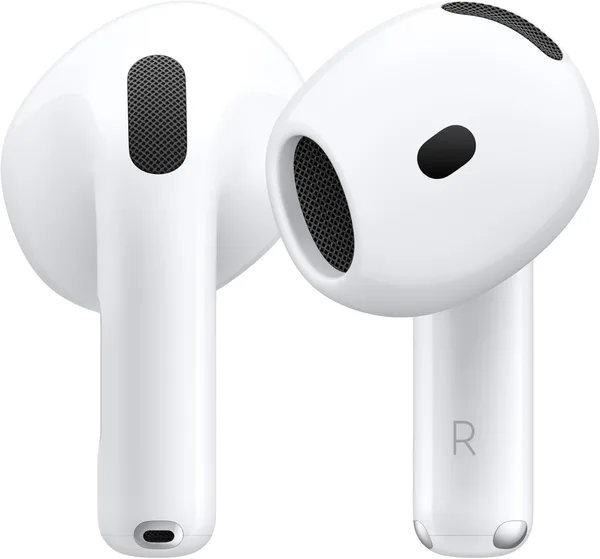
The AirPods 4 aren't a "budget AirPods Pro" — they're their own thing, built for people who actually want an open-fit earbud instead of silicone tips wedged in their ear canal. Sound and iPhone pairing are a real step up from the previous generation, and the base model skips noise cancellation entirely — which is exactly where people either fall in love or walk away disappointed. Buy them if you've made peace with open-fit earbuds and you're already living in Apple's ecosystem.
Here's something nobody mentions in reviews: the third-generation AirPods were, by Apple's own standards, a slow seller in this category. People complained about the fit, the sound, the price that never quite delivered the iPhone magic. Apple listened — and the AirPods 4 are basically an apology, shaped like earbuds.
The first thing you notice pulling them out of the case is that they sit differently. Not deeper, no ear tips — just more natural, like the stem got shorter and the angle changed. My ears aren't exactly standard-issue, and the third-gen buds fell out on runs on a regular basis. The fourth gen — not once in two weeks of testing, including a workout on scorching July pavement where sweat was literally dripping into the driver. That alone is reason enough to upgrade if you're active and sick of catching an earbud mid-fall.
Sound: finally not embarrassing to compare with the Pro
This is the real headline. Apple reworked the driver and acoustic system enough that the difference from the open-fit AirPods 3 is immediate — the bass is tighter, not just "louder," and vocals stop sounding flat on mid-range tracks. It's still an open fit, so you're not getting the deep bass of a sealed, tip-based earbud — there's no getting around the air gap around your ear canal. But within its own category, this is the best sound Apple has ever shipped in an open format.
Spatial Audio with dynamic head tracking works surprisingly well with movies on Apple TV+ and shows on your iPhone — the "sound comes from where you're looking" effect is real, not a marketing gimmick. With music it's more of a taste thing: some people love it, some find it distracting, and you can switch it off with one swipe in Control Center.
Touch controls — the thing that was missing for years
The stem now responds to touch, not just squeeze gestures. Swipe up and down for volume. It sounds like a small thing, but it fixes a real annoyance: before, you had to pull out your phone just to turn the volume down on the subway. Now you don't. It sounds trivial, but details like this are exactly what decide whether earbuds "just work" or keep reminding you they exist.
What about ANC?
Here's where the confusion starts, so let's clear it up right away. The base AirPods 4 (the model this review covers) has no active noise cancellation — just an adaptive EQ and a bit of passive isolation from the shape of the bud. There's a separate ANC version with a wireless-charging case that costs more. If you commute by metro every day and want silence, that's not this model — look at the ANC version, or keep the base AirPods 4 for home, the gym, and walks, where full isolation from the world outside isn't even desirable — there are plenty of everyday situations where you actually want to hear what's happening around you.
iPhone pairing is where Apple is, as usual, unmatched. Connection is instant, switching between devices in the ecosystem (iPhone → MacBook → iPad) happens with zero menus, and it automatically detects whether you're on a call or listening to music. It works with Android too, over plain Bluetooth, but you lose the extras — Apple's "Find My" network, automatic voice detection, and the rest of the ecosystem tricks. If you're on Android, honestly, look at other brands — the ecosystem premium here won't pay off.
Battery life sits around 4–5 hours of music on a single charge, with the case good for a few more full cycles. That's average for 2026, not a record. Sony and some budget brands squeeze out more, but they do it with ANC modes that trade off sound quality.
Who should buy, and who'll regret it
Base price on the global market is around $99 per unit at the time of this review — for the full landed cost to your country, item plus forwarding plus import duty in one number, check the listing on dede.sh. Compared with official Apple Store pricing the savings are noticeable, if not dramatic.
Worth buying if: you're already in Apple's ecosystem, you like an open fit, and you're not willing to pay for ANC you might not even need. Skip it if: you're after noise isolation on public transport — then either pay up for the ANC version or look at a completely different, tip-based model, where noise cancellation is physically more effective simply because the seal is tighter.
The honest trade-off: for an open, lightweight fit, you give up deep bass and full silence around you. That's a deliberate design choice from Apple, not an oversight — and if it's not for you, better to admit that now than get disappointed after buying.
שאלות נפוצות
If you commute by subway, bus, or plane every day — yes, the upgrade is worth it: noise cancellation genuinely cuts through transit noise. If you mostly listen at home, at the gym, or on a run, you won't notice the difference, so save the money and get the base version.
The Pro give you deeper bass, real isolation, and a customizable fit with ear tips. The AirPods 4 are lighter, more familiar in shape, and cheaper. If you wear earbuds for hours and want to forget they're even in your ears, the fourth generation is physically more comfortable.
Yes, noticeably better than the third generation — the stem shape and fit angle were changed specifically to fix this. In heavy rain or serious sweat, keep in mind they're not built for full submersion.
Technically yes, over standard Bluetooth — music and calls both work fine. But half the extra features (instant pairing, automatic device switching, Find My) are tied to iOS and simply won't work on Android.