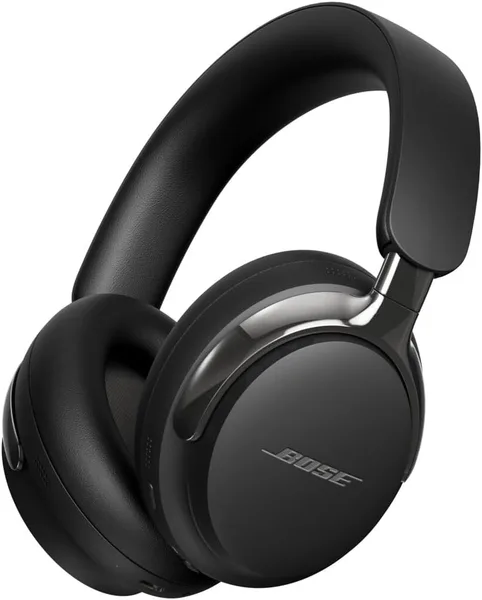
Bose QuietComfort Ultra (2nd Gen) Review: Worth Buying in 2026?
The second-generation Bose QuietComfort Ultra is the best noise cancelling you can buy for your head right now, and the most comfortable headphones I've worn for more than two hours straight. There are downsides too: the price bites, and Spatial Audio is a nice bonus rather than a reason to buy. If you live in headphones six to eight hours a day, they're worth the money. If you just want to stop hearing your neighbors, look at something cheaper.
Picture a weekday morning commute: a kid screaming somewhere in the carriage, someone watching reels at full volume with no headphones (yes, that's still a thing), and all you want is to finish a chapter of an audiobook in peace. That's the scenario I tested the Bose QuietComfort Ultra 2nd Gen in for three straight weeks — and honestly, these are the first headphones in a long time that made me not want to go back to my old pair.
What's actually different from the first Ultra
The second generation looks almost identical to last year's model — Bose isn't really about design revolutions, they're about polishing what already works until it's close to perfect. But under the hood there are two things you genuinely feel. First, the battery lasts longer, and it's not a marketing number pulled from the box — I got a real 30-plus hours with ANC on, confirmed over a week of daily commutes. Second, Immersive Audio (their name for spatial sound) feels a lot less "experimental" than before. It's something you want to leave on, not switch off after five minutes like with the first version.
Noise cancelling is the whole reason to pay Bose prices instead of going with a Sony or Sennheiser. I compared them side by side with the WH-1000XM5 on a train platform the same day, and the difference isn't in how many decibels get cut — both are excellent there — it's in how what's left behind actually sounds. Sony has that faint "pressure in the ears" feeling typical of active noise cancelling. Bose barely has that at all; the sound just fades away, like someone turned down the volume on the whole world instead of building a wall around you.
How it holds up in real life, not in a lab
Outdoors is where the Ultra genuinely stands out, thanks to Aware mode with what Bose calls CustomTune, which lets voices through while cutting wind and traffic noise. It's the rare case where you can walk down a busy street with headphones on and still hear someone calling your name without taking them off every time. Small thing, saves a lot of frustration.
Calls are a different story. The mics here aren't the best in class — AirPods Pro still reliably beat them for voice clarity in wind — but they're perfectly fine for a Zoom call from home or a coffee shop. If your job means constant calls outdoors or in the car, read reviews specifically about the mic before you buy, don't just trust the brand's reputation.
Comfort is where Bose has always led, and nothing's changed here: soft ear cushions with some kind of special memory-foam filling that don't dig in even after a long evening watching a movie. I've owned headphones that start reminding you they exist after an hour because your ears ache — that never happened once in three weeks of testing, even wearing glasses.
The sound itself is warm, bass-forward, but controlled rather than "smeared." This isn't an audiophile monitor and doesn't pretend to be one. It's for someone who wants to enjoy music, not analyze a frequency response chart. Immersive Audio adds a real sense of space, especially noticeable on live recordings and concert tracks — but I turned it off for podcasts and audiobooks, where the effect is unnecessary and even a bit tiring.
What else to consider
The real competitor here isn't Sony, it's Bose's own older sibling, the Bose 700, which is still on sale and often discounted. The price gap is justified if comfort and battery life matter most to you. If your budget is tight and you just want noise cancelling "for the sake of it," something like a Skullcandy Crusher Evo, or even a decent wired pair, covers the basics for a lot less money, minus the ANC magic.
The honest verdict
For the exact number that matters — the full landed cost with shipping and import duty to your country — check the live price on dede.sh rather than trusting any figure printed elsewhere; it moves by color, seller, and destination, and you want to know it before checkout, not after. For that money you get the most comfortable active noise cancelling on the market and headphones you'll actually want to wear all day instead of just tolerating.
Who should skip it: if you're after headphones purely for workouts or running, there's no sweat or water protection here, so this isn't the product. If your top priority is the most precise, "studio" sound, skip this too — Bose always sounds a bit like itself, tuned for comfortable listening rather than accuracy. And if $300-plus is real money to you, start with a cheaper model; the noise-cancelling gap exists, but it's not dramatic enough to justify the premium for a casual listener.
Who should buy it: frequent flyers, business travelers, people working in an open-plan office, or anyone who just lives somewhere loud and wants silence on demand. This is an investment in daily comfort, not in spec-sheet numbers.
שאלות נפוצות
If the QC45 works for you and you have no complaints about comfort or sound, stick with them. The Ultra adds somewhat better outdoor noise cancelling and Spatial Audio, but it's not the kind of leap that justifies replacing a perfectly good pair without a real reason.
On raw noise cancelling they're close, with Bose sounding a touch more natural outdoors. Sony wins on app customization and is often cheaper. If long-wear comfort is priority number one, go with Bose.
With ANC on, a full charge lasts well over a day of continuous listening, so any flight is covered with room to spare, even without a power bank on hand.
For concert recordings and some films the effect is genuinely noticeable and pleasant. For podcasts, audiobooks, or calls, it's better left off — it just gets in the way of understanding speech.
Similar products, if you want to compare options before buying: