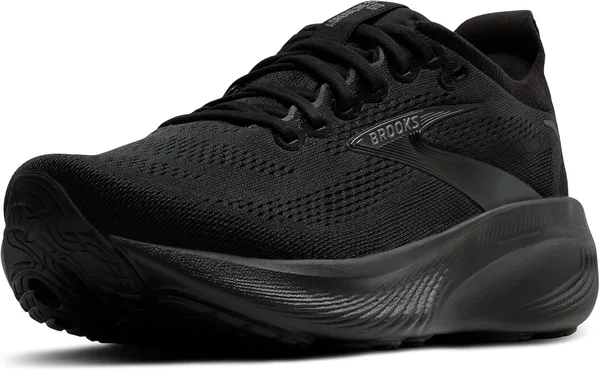
Brooks Adrenaline GTS 25 review: are these the right running shoes for you
The Brooks Adrenaline GTS 25 is for people whose foot rolls inward when they run and who've already been burned by soft, neutral shoes that let it happen. They're not the lightest or the cheapest option out there, but they hold your foot in line with quiet discipline, year after year, without changing character. If you have flat feet or a physio has ever told you to get a "stability" shoe, buy these without overthinking it. If your gait is neutral and you chase that floaty, weightless feeling, this isn't your shoe.
You know the story: you buy a pair of running shoes because they look good and everyone raves about them, and a month later your knee starts aching and your feet feel wrung out after 5K. I know it because that's exactly how I ended up crossing over from "whatever running shoes" to something with real support. The GTS in Brooks Adrenaline stands for "Go-To Support," and that's not a marketing line — it's literally why this model has existed for twenty-odd years and is still going strong at generation 25.
What this shoe actually is
The Adrenaline GTS isn't a race-day flyer for chasing a 10K PR, and it's not a minimalist barefoot-style shoe either. It's a workhorse built to control overpronation — when your ankle rolls inward more than it should while you walk or run. Brooks handles this with GuideRails, a technology that doesn't jam a rigid wedge under your arch the way shoes did a decade ago. Instead, it softly steers the leg's motion from the outside, and only kicks in when needed. In practice, it feels like this: you're running along, and the moment your stride starts to drift, the sole gives you a gentle nudge, like "hey, not that way." Subtle. Nothing like the old orthopedic monsters that basically clamped your foot into moving in a straight line.
The Adrenaline GTS 25 got an updated DNA LOFT v3 foam — softer than its predecessor, but without that "sinking into a pillow" feeling you get from maximalist cushioning like Hoka Bondi. It's a compromise, and honestly, a good one: there's real cushioning, your feet won't wear out even after an hour on your feet, but the shoe never feels like a trampoline underfoot.
Living with them day to day
I tested these not just on runs but in regular everyday rotation, and that matters, because plenty of people who buy the GTS aren't runners at all — they're people whose doctor or physical therapist told them to "get something with support" because of flat feet or knee pain. That's where the shoe shows a different side of itself: on a long walk around town, it behaves predictably, doesn't shift around on your foot, and the lacing holds snug without choking your instep. Next to the New Balance 990v4, another popular pick for everyday comfort, the Brooks feels stiffer through the heel and a lot less "fashion" — the 990 reads as streetwear, the GTS 25 reads as exactly what it is: sport-orthopedic footwear. If looking good at a coffee shop matters to you, that's a real downside, no point pretending otherwise.
Breathability isn't the strong suit either: in real summer heat, the toe box gets a bit steamy after an hour-long run. Not a dealbreaker, but lighter shoes like the Nike Pegasus win that particular battle. What Adrenaline gives back is durability — a typical lifespan of 600-800 km before the sole noticeably breaks down, which is solid for a stability shoe, since these usually wear out faster thanks to their stiffer construction.
Sizing deserves its own paragraph. Brooks traditionally runs a bit narrow through the forefoot compared to something like the New Balance 992, so if you have a wide foot, size up half a size — that's not just my opinion, it's the most common complaint in reviews and matches my own experience. You end up with roughly a thumb's width of room at the toe, which is actually a good thing on long runs, since a swollen foot after 15K won't be jammed against the front.
The honest verdict
Who needs this: people with overpronation (flat feet, an inward-rolling stride when running), anyone a physical therapist has pointed toward a stability shoe, and people who just want a pair that'll survive a season without surprises. This isn't a flashy race-day toy — it's a working tool.
Who should skip it: if your gait is neutral with no inward roll, GuideRails does nothing for you, and you'd just be overpaying for tech that's irrelevant to your feet. Also skip it if your top priority is weight and that "flying" feeling on speed workouts — the Adrenaline was never built for that, look at lighter models instead. And yes, if you wear a size 44-45 with a wide foot, try them on first or at least check the seller's size chart carefully, because returning shoes across borders is its own headache.
Rather than one price in one currency, check the full landed cost to your country on dede.sh — item price, forwarding, and import duty rolled into a single number, so you know exactly what you're paying before you order.
שאלות נפוצות
The easiest check: look at the sole of your old shoes. If the inner edge is worn down more than the outer edge, that's overpronation. If the wear is even, you likely have a neutral gait, and GuideRails won't do much for you — the money would go to waste.
They're different categories despite the similar price. The 990v4 is an everyday shoe with a neutral sole and cult status style-wise; the GTS 25 is a narrowly focused stability shoe. If you need foot support, go Brooks. If you just want a comfortable daily shoe, the 990v4 wins on style.
Technically yes — plenty of people run half and full marathons in the GTS, that's exactly what it's built for, and it has the endurance. But it's not the fastest shoe out there, so if you're chasing a time rather than just finishing, a lighter shoe will serve you better.
If you have a wide foot or plan to run long distances (feet swell), yes, half a size of extra room won't hurt. With a narrow foot and shorter workouts, your normal size will be fine.
If the GTS 25 doesn't quite sound like your shoe, it's worth comparing it to its closest neighbors in the category — a few models below get picked often for a similar balance of support and price.