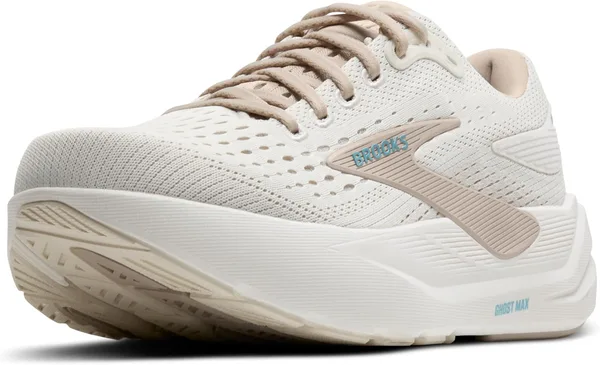
Brooks Ghost Max 3 women's review: is the max cushioning worth it
The Ghost Max 3 isn't built for tempo runs — it's a couch for your feet that you happen to wear all day. The thick, soft DNA LOFT v3 midsole absorbs impact better than most rivals, but you pay for it in weight and a slightly "bloated" feel on faster efforts. Get these if your knees or heels ache, or if you're on your feet more than you're chasing pace. Skip them if you want a light shoe for tempo work or you've got a narrow foot.
You know that feeling — you've been on your feet all day at work, then you go for an evening run anyway, and by the end your knees feel like they've been through a meat grinder? That's exactly the problem Brooks built the Ghost Max to solve. Not for a marathon PR, not for setting records — just so you can get to the finish line without your joints filing a complaint.
I tested the third generation for a few weeks, and I'll lead with the headline: this is the thickest, softest "Ghost" Brooks has ever made. The midsole isn't just tall — it's almost comically tall next to a standard Ghost 16. And it's not just for show. Underfoot, it genuinely feels like walking on a trampoline — except this trampoline doesn't bounce you back, it just absorbs the hit and lets you move on in peace.
What it actually feels like on foot
First impression: "wow, soft." Second impression, about a kilometer in: "why do my feet feel like they're swaying a bit." DNA LOFT v3 paired with the nylon GlideRoll plate adds some stability, but it doesn't fully kill that "walking on jelly" sensation — especially in the first few runs, before you adjust. That's normal for max-stack shoes like this; the Hoka Bondi and New Balance More v4 do the same thing, though the Brooks version is a touch less pronounced thanks to that plate.
The upper is engineered mesh, breathes reasonably well — my feet didn't cook even in high-30s heat. Lacing is classic, no surprises, and the heel holds firm, doesn't slip even on a brisk walk, which for me personally was criterion number one, since that's exactly where my old pair of Ghost 14 let me down.
Who will actually get along with the Ghost Max 3: neutral runners (no overpronation, which needs a stability shoe instead), anyone who runs slow-to-moderate and values comfort over splits, and anyone who's on their feet a lot during the day and wants one shoe that does it all. Nurses, teachers, anyone logging 20,000 steps at work — that's exactly your crowd.
Speed demons chasing sub-5-minute kilometers, though, have no business here. The thick sole adds weight and eats the road feel you need for a fast turnover — you won't get the ground feedback that quick running demands. For that, Brooks makes the Hyperion. This isn't it.
How it stacks up against the competition
The obvious rival is the Hoka Bondi 8, and honestly, the two are chasing the same idea — maximum cushioning for everyday miles. The differences show up in the details: the Hoka sits narrower through the heel and has a wobblier ride thanks to its very rounded rocker sole, while the Ghost Max, with its flatter platform and GlideRoll plate, feels a bit more planted. If you've had stability complaints with Hoka, the Brooks is worth a try — it often solves exactly that problem.
New Balance's Fresh Foam More v4 is another maximalist option, usually cheaper, but its cushioning breaks down faster — the foam starts to feel tired somewhere around 300-400 kilometers. Brooks holds up longer, though you pay for that durability.
One thing that mildly annoys me: the Ghost Max sizing runs true-to-size, but because of the stack height your foot sits higher in the shoe, so if you have a high instep you might need to size up half a size to avoid pressure across the laces.
The honest verdict
Buy it if you need one pair of shoes to cover walking, easy runs, and standing all day, and you're willing to pay for comfort over speed. Skip it if you're training for a result or you like to "feel the road" — that sensation simply isn't here, and that's a deliberate design trade-off, not a flaw.
Marketplace price runs around $145 — but that's before shipping and duty, and those add up differently depending on where you live. Check dede.sh for the full landed cost to your country — item, forwarding, and import duty rolled into one number. It's not the cheapest pair in the category, but it's not flagship-running-brand pricing either — pretty typical for a top-tier cushioned model.
שאלות נפוצות
If your knees and feet don't bother you and you run regularly at a decent clip — no, the regular Ghost 16 is lighter and feels livelier. The Max version makes sense as almost a "therapeutic" shoe for people who feel discomfort from impact loading.
Both are good, but if you've had complaints about instability or "wobble" on the Hoka, the Brooks sits more stable thanks to the GlideRoll plate. If you actually like that rolling rocker effect the Bondi gives you, stick with Hoka.
Yes, that's exactly their strong suit. The cushioning holds up well under daily use, and the sole outlasts a lot of the competition in this category.
Yes, this is strictly a road/pavement shoe. For trails, Brooks has a separate line — the Cascadia — the Ghost Max will just slide around off-road.