Casio W219H review: is this digital 'brick' worth wearing
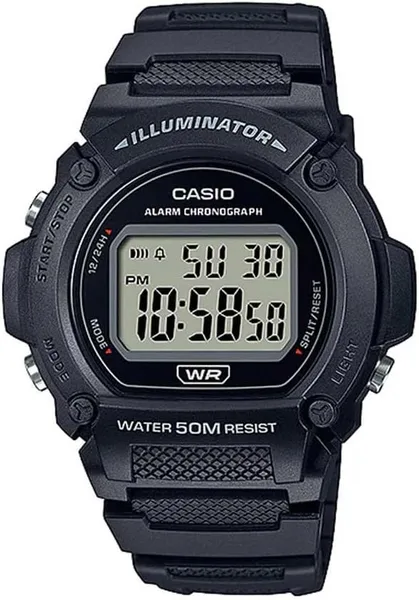
The Casio W219H isn't a dream watch, it's a common-sense watch: it costs about as much as lunch, runs for years on a single battery, and shrugs off rain, construction dust, or a dog's water bowl. Get it if you just want to know the time without thinking about it. Skip it if you want a watch that shows people something.
There's a category of things you buy not because you want to, but because you have to. A spare tire. A $3 umbrella you won't cry over leaving on the bus. And somewhere in that same drawer, a simple digital watch you can strap on for a weekend at the cottage, a gym session, or a fishing trip without worrying about what happens to it. That's exactly what the Casio W219H is.
I know what you're thinking: "another plastic Casio, how many of these have there been." Fair enough — the W219H doesn't reinvent anything, it just carries on a lineup that's existed almost unchanged since the nineties. But that's the whole point: Casio has spent decades polishing the same formula because it simply works.
What this beast actually is
Shape-wise, the W219H is the classic "brick": rounded edges, a big negative display, and buttons that click like you're punching numbers into a 1990s calculator. That's not a flaw — it's Casio's signature sound, and if you've ever owned a G-Shock or a classic A-series, you'll recognize it instantly.
The main practical feature is the LED backlight. Not the dim greenish glow you get from a phone flashlight at 2% battery, but an actual light that illuminates the dial at night. Wake up at 3am wondering what time it is, press the button, see it, fall back asleep. Small thing, but it matters.
The 100-second chronograph sounds unserious on paper and turns out to be handy in everyday life: timing a boiled egg, a warm-up set, or how long your kid actually brushes their teeth. It's not a marathon stopwatch, it's a household timer that's always on your wrist.
And 50 meters of water resistance doesn't mean "go scuba diving," as some people assume — it means "wash your hands, get caught in the rain, wash the car, and the watch won't care." Fine for swimming on the surface too, not for diving, and Casio is upfront about that in every model in this line.
What it's like to actually live with
Here's where I get a little sentimental. I had almost the exact same Casio decades ago — lost it on a construction site, found it two weeks later under a pile of bricks, wiped it off, and it was still showing the right time. You won't get that story from any smartwatch, I promise.
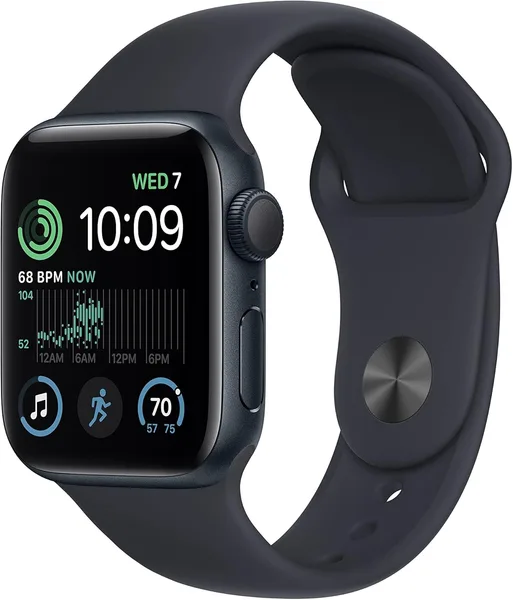
Comparing the W219H to an Apple Watch is like comparing a can opener to a Swiss Army knife — different jobs entirely. The Apple Watch SE is a tiny computer on your wrist that needs charging every night and protecting from every bump. The Casio W219H doesn't need charging at all — the battery lasts years, not hours. If you want notifications, heart rate, and tap-to-pay, look elsewhere. If you just want to know the time without thinking about a charger, this is it.
The comparison with classic mechanical watches like Seiko is more interesting. Quartz accuracy is objectively better — mechanical movements drift by a few seconds a day, while a digital Casio holds time almost perfectly for years. But mechanical watches offer something plastic never will: status, tactility, that satisfying click of a winding crown. The W219H isn't even trying to compete in that league — it's playing a completely different game, dirt-cheap practicality.
The strap is standard rubber and will stiffen up a bit in the heat over time — a known "sin" of budget Casios. But it's a few dollars to swap at any watch kiosk, and it's not the kind of compromise that should stop you from buying.
Who should buy it, and who shouldn't
Get it if: you want a second, "beater" watch for the cottage, fishing, workouts, a construction site, or as a replacement for one you lost; you want a gift for a teenager or a parent — the kind you won't feel bad about; you hate charging gadgets every night.
Skip it if: a watch is a status accessory for you and you want something to show off at a meeting; you need smart features — heart rate, notifications, GPS; or you're a mechanical-watch person and a digital face on your wrist just doesn't do it for you aesthetically.
This sits firmly in the budget category — check dede.sh for the full landed price to your country (item, forwarding, and import duty rolled into one number) before you decide, but expect it to land closer to a decent lunch than a purchase you need to lose sleep over. That's the whole pitch: a low entry price paired with a genuinely long service life.
There are really just two compromises. First, it looks plain, no design flourishes, so it's not the gift that's meant to impress. Second, the rubber strap isn't forever, though it's cheap to replace. Everything else just quietly works for years without asking for attention.
שאלות נפוצות
Yes, easily. 50 meters of resistance is exactly about everyday moisture: rain, hand-washing, splashes. A sauna or deep diving is a different story — the seal weakens over time and with heat, and Casio says so plainly in the manual.
If you're doing sports with real impact risk, or work where the watch could actually get knocked against something hard, yes — a G-Shock takes more abuse. For everyday "just tell me the time," the W219H is more than enough, and the extra ruggedness isn't always worth the premium.
For interval training, warm-ups, home workouts — plenty, most sets are shorter than that anyway. For long-distance running or professional timing, it's not the right tool; you'd want a dedicated sports stopwatch or a GPS smartwatch.
That's a matter of taste, not specs. The Casio's quartz movement is more accurate and needs no servicing; the Seiko gives you the tactile pleasure and status of a "real" watch. I'd wear the Casio every day and save the Seiko for when I want to feel a bit dressed up.