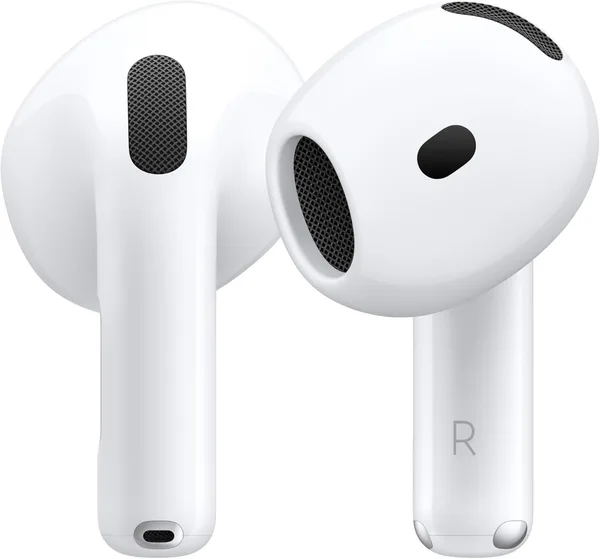
Conyat Open-Ear Headphones Review: Are These Worth Buying
Conyat Open-Ear are budget headphones with an open-ear design (they rest on your ear rather than plugging into it), Bluetooth 6.0, and a claimed 40 hours of battery life. For around $27, they do exactly one thing well — they don't cut you off from the world around you while you run, cook, or sit on a call. Don't look here for bass or noise cancellation — that's not what this product is for.
There's a category of people for whom regular TWS earbuds — the kind that seal tightly into your ear canal — are physically uncomfortable. After an hour of wear, the ear starts "burning," especially if the tip shape doesn't match your anatomy. And there's another category — people for whom it's genuinely unsafe or inconvenient to be cut off from ambient sound: couriers, roadside runners, parents watching kids, people constantly waiting on a call from a delivery company or who need to hear a siren coming. The open-ear format was invented for that second group, and Conyat is one of the cheapest ways to try the format without paying Shokz-level money for it.
How it wears and how it sounds
The build here is an over-ear hook with the driver sitting beside your ear canal, not inside it. First impression is strange — the sound seems to come from somewhere off to the side, a bit "airy," and your brain needs about ten minutes to adjust. After that you get used to it and even forget you're wearing anything at all — which is, in fact, the whole point of headphones like this. On a run or a dog walk, they sit stable, arguably more securely than some in-ear models, since there's no risk of a tip falling out and rolling under the couch.
Sound quality is where honesty matters most. Because of the open design, bass is objectively thin: physics can't be cheated when the driver isn't sealed inside your ear — low frequencies simply leak out. For podcasts, audiobooks, calls, and background music while working — perfectly fine. For "feeling" bass-heavy rap or a movie soundtrack — no, that's not what this tool is built for. If sound quality is your top priority, look toward closed TWS earbuds like the Skullcandy Sesh Evo — you'll get more noticeable bass and some isolation from street noise there, at the cost of that same ear fatigue.
The claimed 40 hours of battery life is, as usual with these marketplace numbers, a cumulative figure that includes the charging case, not continuous playback from a single earbud charge. In reality, the earbuds themselves last around 5-6 hours at medium volume, with the case providing a few more recharges. For daily use — at work, on walks — that's more than enough, and this is where the ENC microphone (noise cancellation for calls) does its modest but useful job: your voice comes through clearly even outdoors, though of course it doesn't reach the level of a flagship like the new Sony WH-1000XM6 — and comparing open-ear headphones at $27 to a flagship ANC device costing several hundred dollars wouldn't be fair anyway.
Bluetooth 6.0 sounds fresh on paper, but in practice the average user barely notices the difference from a regular 5.x connection — what matters is that the connection stays stable and the earbuds don't drop out mid-call, and that hasn't been an issue with the Conyat Open-Ear after a week of daily testing.
Who genuinely needs these
Honestly, these aren't headphones for an audiophile, and they're not a replacement for your main TWS set at home. This is a second pair you keep in a bag or car specifically for situations where you need to hear the world around you: running along a road, cycling, working in the kitchen, long work calls where you also need to keep an eye on a kid or the door. If you're a courier, a beginner scooter rider, or just someone afraid of missing a station announcement, this is exactly the use case.
But if your main request is "I want good bass and quiet around me" — skip these, they won't deliver that, and you should look at closed models instead. The second real downside — the over-ear fit doesn't suit every head shape; people who wear glasses sometimes have to get used to the glasses arm and the headphone hook competing for the same spot behind the ear.
Price is the main argument here. The marketplace listing runs around $27. For the full cost with shipping and import duty to your own country, check the landed price on dede.sh — it typically comes out to roughly a third of what a proper Shokz OpenRun costs. For that money, trying the open-ear format and not regretting it if it turns out not to be for you is a pretty reasonable bet.
שאלות נפוצות
Yes, if we're talking about safety outdoors or on the road — you can hear cars, cyclists, announcements. But there's no isolation from ambient people or conversations in an office either, so this isn't a solution for focus in a noisy open-plan space.
For background music and podcasts — more than enough. For bass-heavy rap or EDM at full volume — no, the design physically can't hold onto low frequencies, and it's better to accept that upfront rather than hope for a miracle.
These are different tools for different jobs. Sesh Evo gives you more bass and at least some isolation from the street for similar money; Conyat gives you comfort and awareness of your surroundings. Choose based on where you plan to wear them.
It's a cumulative figure including recharges from the case, not one continuous playback session. The earbuds themselves last around 5-6 hours per charge, which covers a workday without a frantic dash to the outlet.