Heltec Nerd Miner Review: Is a 310 KH/s USB Bitcoin Miner Worth It?
The Heltec Nerd Miner isn't an investment — it's a toy for people who like watching numbers go up. At 310 KH/s you will never claw back the price of a coffee, but you do get a live screen showing your hashrate and a shot (tiny, but real) at finding a Bitcoin block. Buy it if you know that going in and you're doing it for fun, not profit.
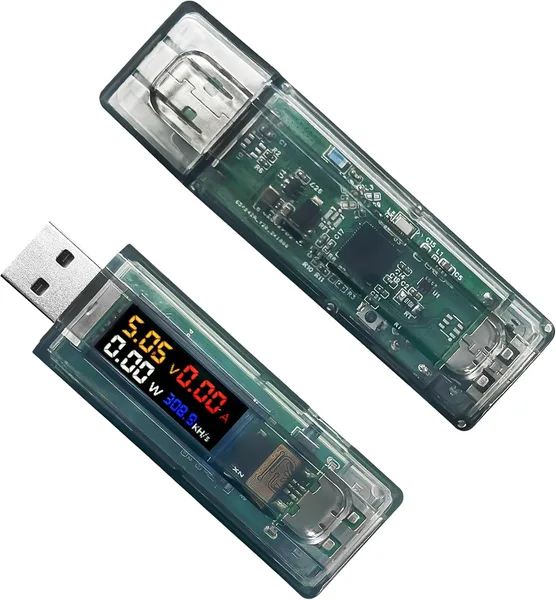
Picture a box labeled "Bitcoin Crypto Miner Machine." Your brain immediately conjures fans roaring, heat pouring off it like a space heater, and satoshis trickling into an exchange somewhere. Now forget that picture entirely — the Heltec Nerd Miner looks and behaves nothing like that. It's a little board the size of a pack of gum, with a screen, quietly squinting at the Bitcoin network and crunching hashes at a rate a modern ASIC blows past in a fraction of a second. Which is exactly why this review isn't about "how much I earned" — it's about why people buy this thing anyway.
What this actually is
310 KH/s isn't a typo or a marketing lowball. That's genuinely the speed. For scale, an industrial ASIC humming away in some warehouse runs at terahashes — millions of times more. So calling the Nerd Miner a "miner" in the usual sense is a bit like calling a kick scooter a Formula 1 car because both have wheels. This is a soft-miner built on an ESP32 that honestly connects to a public solo pool and genuinely participates in the real hash race for the Bitcoin network. It's just that your odds of finding a block are the kind where winning the lottery twice sounds like the easier bet.
And here's the thing — the device doesn't hide any of this. Quite the opposite: the little display constantly cycles through your current hashrate, the blockchain height, chip temperature, and the best "difficulty" you've hit so far (basically, how close you got to solving a block). It's a rare gadget that shows you the actual math behind your odds instead of burying it under a slick app interface.
Living with it day to day
Set it on your desk, plug it into a wall outlet or a power bank over standard USB, walk through the Wi-Fi setup in a couple of minutes, and it just runs. Power draw is so low you can leave it on around the clock and never notice it on your electricity bill, whatever your rates look like. That's the real practical difference from "grown-up" mining rigs: no noise, no heat pumping into the room, no worrying about outages — a modest power bank will keep it going for hours on its own.
Compared to how most people "try" crypto — buying a token on an exchange and staring at a chart — this device feels different. You're not speculating, you're literally taking part in the process that keeps the Bitcoin network alive. It's more about curiosity and aesthetics than money. A friend who put one on a shelf in his office says the scrolling block counter beats any screensaver — people notice it and ask what it is.
The downside is obvious, and it's worth saying plainly upfront: run it 24/7 for a year and your odds of finding a block and pocketing a reward worth millions of dollars are close enough to zero that you might as well round down to "never." That's not a flaw specific to this device — it's just how solo mining at a low hashrate works, full stop. If you ever see an ad promising "payback in a month" for something like this, it's either dishonest or doesn't understand proof-of-work math.
Who it's for — and who should skip it
Buy it if: you're the kind of person who wants to show kids or friends how mining actually works without sinking thousands of dollars into hardware; you like desk gadgets that display something and quietly live their own life; you value simply being part of the network more than any payout. At roughly ten dollars, it costs less than a decent lunch out, which is exactly why the risk is minimal even if it ends up just being a curiosity sitting on a shelf.
Skip it if you're expecting any financial return whatsoever. Honestly — there isn't one. Also skip it if you're actually shopping for storage — despite where this item landed in the catalog, it's not a drive or a flash storage device, it's a computing gadget built for entertainment. If you need real storage, look elsewhere in the category — there are portable SSDs and standard flash drives there too.
When you check the landed price to your own country, factor in the full number — item plus forwarding plus any import duty — rather than just the sticker price; for a small piece of electronics shipped internationally, that combined total is what actually matters. You can see that full breakdown for your country right on dede.sh.
Bottom line
This is a niche gadget for people who understand exactly what they're buying: not an investment, but a toy with real math running underneath it. Go in with the right expectations and you'll enjoy it. Go in expecting profit and you should walk right past it.
שאלות נפוצות
Theoretically, yes — find a block and collect the reward. In practice the odds are so small that treating this device as a source of income isn't realistic at all. Think of it more as a lottery ticket you happen to leave plugged in permanently.
No, and that was never the point. ASICs run at terahashes — millions of times faster. The Nerd Miner exists to demonstrate how mining works, not to compete in industrial-scale extraction.
Very little — it runs off a standard USB port or a power bank, drawing about as much as charging a phone. You won't notice it on your electricity bill.
No, these are completely different product categories despite sharing a spot in the catalog. If you need data storage, look at portable SSDs or USB flash drives instead — the Nerd Miner isn't built for storing files.