Honey Stinger Organic Honey Waffle Review: Worth the Money?
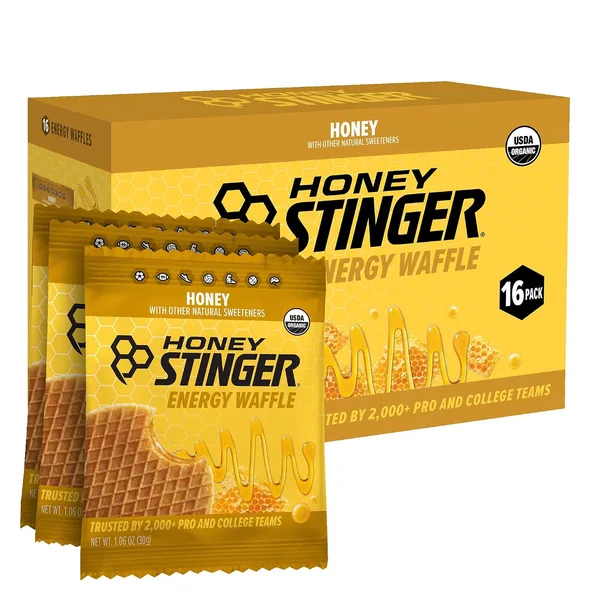
The Honey Stinger honey waffle is a quick, genuinely pleasant-tasting source of carbs for long training sessions, and it's a lot easier to choke down mid-run than a classic gel. But it's not a cheap habit: on price it loses to a plain Clif Bar or even a handful of dates, and on calories-per-dollar it's an outright straggler. Buy it not to save money, but because your stomach has given up on gels.
You know the scene: kilometer twenty of a race, three gels stuffed in your pocket, and every single one goes down with the face of someone being forced at gunpoint. A sticky sweet mass you have to chase with water or it just glues itself to the roof of your mouth. That's exactly where the stroopwafel-style waffle steps in — a thin wafer with a honey layer you actually chew instead of swallowing whole. On the course, that difference matters more than any number on the label.
Honey Stinger built the whole product around that comfort. Inside: organic honey, a bit of flour, brown sugar, and not much else. It genuinely tastes like a warm waffle off a Dutch market stall, just dry and compact — palm-sized, pencil-thick. Gone in two or three bites, no water needed, no creeping nausea from another hit of sugar. If you've ever run a marathon on gels and hit that "I cannot look at this thing anymore" wall, this is a different experience entirely.
There's a real catch, though. This isn't a sprint product. It works slower than a gel — the carbs absorb more gradually, because it's food, not a liquid maltodextrin concentrate. On a short session — a 10K, an hour of intervals — it barely has time to do anything useful. But on a long ride or a mountain trail, where there's time to chew and your gut has time to work, it really comes into its own. Next to a classic GU or SiS gel, this isn't a replacement, it's an alternative for the moment your stomach flat-out refuses anything else sticky and artificially sweet.
The main problem is cold. In freezing weather the honey inside firms up and the waffle turns into something between a cookie and a small rock — you end up carrying it in an inner pocket, close to your body, just so you don't crack a tooth on it at kilometer thirty. In summer and spring none of that applies; it stays soft and pliable. If winter outdoor training is on your calendar, that's worth knowing ahead of time, not discovering five kilometers from the finish in the cold.
Price is where the real conversation starts. Honey Stinger Organic Honey Waffle runs around $19.90 in the US — but that sticker price never tells the whole story once shipping, forwarding, and import duty land on your doorstep. Check dede.sh for the full landed price to your country, item plus forwarding plus duty in one number, before you decide it's cheap. For comparison, a bag of plain dates or a homemade nut-and-honey mix costs a fraction of that and delivers the same carb hit, just without the polished marketing. What you're actually paying for isn't a unique formula — it's the convenience of eating something on the run without thinking, and a taste you genuinely want to repeat.
Honestly, most people don't buy this for cost-per-calorie. They buy it for the psychological comfort on a long effort. When your body says "no" to yet another gel at kilometer thirty, a small honey waffle is the thing you can still talk yourself into eating. That's not nothing.
Who should buy this? Long-distance runners and cyclists who are sick of gels, trail runners on extended mountain outings, and anyone who wants something that tastes and reads more like real food. Who should skip it: anyone counting every cent per calorie, short-distance athletes, and anyone planning winter runs without a pocket close to the body. The trade-offs are simple — higher price per gram of energy than a standard bar, and slower-acting than a gel. Neither is a dealbreaker, but you want to know both going in, not find out mid-race.
שאלות נפוצות
Not better, not worse — different. A gel kicks in faster and is more convenient on a short course; the waffle is gentler on the stomach and more enjoyable on long efforts once you're sick of gels. Plenty of experienced runners carry both — gels early in the race, waffles closer to the finish, when the body wants something less chemical.
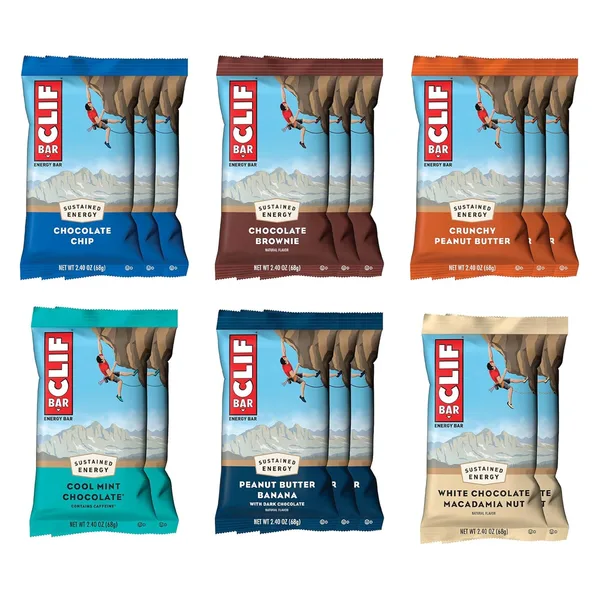
If cost-per-calorie is critical for you, no — a plain Clif Bar or even a banana delivers the same carb load for less. The premium here buys taste, texture, and the fact that you'll actually want to eat this waffle even at kilometer thirty-five, when sweets have stopped sounding appealing.
One waffle is more of a mid-race snack than full fueling for the whole distance. For a marathon, most people take two or three and combine them with gels or an isotonic drink — sustaining your energy balance over 42K on waffles alone is a tough ask.
Heat makes the honey softer and stickier rather than actually spoiling it — not a real problem, just a bit fiddly to unwrap with sweaty hands. Cold is the bigger issue: it firms the waffle up noticeably more, and that has a much bigger effect on how pleasant it is to eat on the run.
Looking for something to compare it against or pair with it on a long effort, check these out too: