Honeywell TurboForce review: is this desk fan worth buying
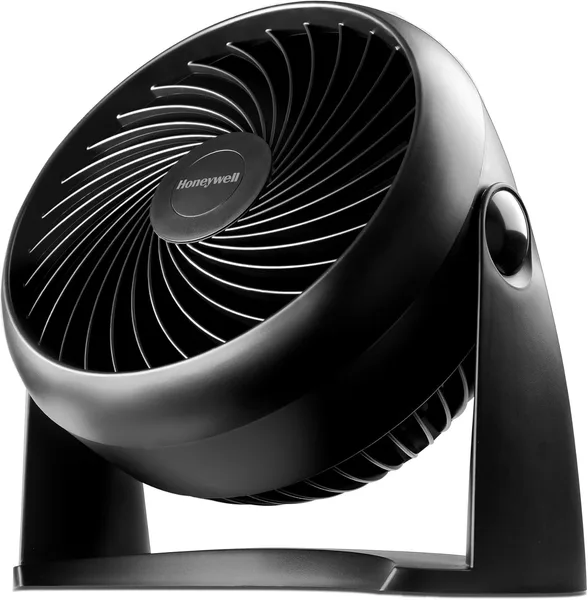
The Honeywell TurboForce isn't about quiet, and it isn't about looks. It's about pushing air at one exact spot in a room for next to nothing. Need to blast a desk, a bed, or that stuffy corner by the stove? It delivers. Want a quiet background fan for sleeping, or something that cools a whole room? Look elsewhere.
It's July, it's 32°C outside, there's no AC (because who actually gets around to installing one before summer hits), and you're melting at your laptop in your own sweat. Sound familiar? It happens to me every single year. And every year, what saves me isn't some fancy $150 smart gadget — it's a small plastic box that you could easily mistake for a space heater if nobody told you it was a fan.
The Honeywell TurboForce is exactly that box. It isn't a classic fan with visible blades behind a grille — it's a compact circulator: air comes in from the side and shoots out the front in a tight, almost tangible column. The difference is the same as between a shower head and a garden hose on full blast. A regular desk fan sort of waves air around the room; the TurboForce hits one spot, hard. It's a fundamentally different approach to cooling.
Living with it
Three speeds, a mechanical switch, manual 90-degree tilt — that's the whole feature list. No remote, no app, none of the "natural breeze" modes you see in marketing brochures. On speed one it's basically background noise — you barely notice it a meter away. On speed three, it's no longer something you want anywhere near your head at night. It hums loud enough that if you're a light sleeper, that top speed is a sentence to insomnia, not comfort.
At 75 watts, it sips power — you can run it around the clock without noticing the electricity bill, which feels great next to what an AC unit chews through. There's no thermostat, obviously — this isn't climate control, it's a directed stream of air. You set it on a table, aim the head, and it pushes air wherever you point it: at your face while you work, at the stove while you cook in summer, into a bedroom corner where warm air pools under the ceiling.
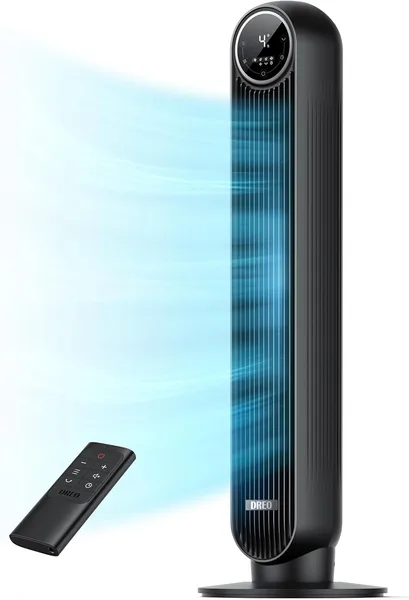
Compared to a classic desk fan — the kind sold at every corner shop for a few bucks — the TurboForce wins on sheer density of airflow. It feels like standing in front of an open car window on the highway, not just catching a light breeze. Where it loses is coverage area. It doesn't spread air evenly through a whole room the way a tower fan does. Speaking of which — compared to a DREO tower fan, that one is quieter at low speeds, taller, takes up less desk space (since it sits on the floor), and cools an entire room instead of one spot. But it also costs meaningfully more and needs more floor space. The TurboForce is built for one desk or one bed, not a whole room.
The housing is plain plastic — nothing premium here. At 1.48 kg it sits solidly on a table and won't tip over from a draft or a stray elbow bump, which matters more than people think until they've dealt with a fan that does tip over.
Worth a quick note on the model number: HT-900-4PK. The "4PK" in the name hints at a four-pack, but on marketplaces the same listing often sells single units and multi-packs both — check the quantity in the specific offer's description carefully before buying, because it trips people up constantly.
The fan itself runs around $44, and that's a fair price for what it does. Not a bargain-bin basic fan, but not a premium smart circulator either. It sits in the middle, and it earns that price through function, not status — check the full landed price to your country, item plus shipping plus duty, on dede.sh before you commit.
Who should buy it, and who shouldn't
Buy it if: you work at a desk and want airflow aimed straight at you, you cook in summer and struggle by the stove, or you live in an apartment with no AC and just need to survive the worst weeks of the year without any fuss. It's compact, simple, and honest about the one thing it does — push air exactly where you point it.
Skip it if: you're a light sleeper who plans to run it all night on high — go for something quieter, like a tower fan with a DC motor. Skip it too if you want to cool an entire room evenly rather than one spot — that calls for either a tower fan or a portable AC unit. And don't expect silence on speed three — physics doesn't bend for marketing copy; strong airflow and silence don't coexist.
The core trade-off here is simple: you get a strong directional stream, or you get quiet. Getting both means a different price bracket and a different design altogether.
שאלות נפוצות
No, and don't expect it to. This is a circulator with a narrow, directed stream, not a fan built to move air evenly through a space. For a 15-20 m² room, look at a tower fan instead, or a standalone AC unit.
The tower fan, especially with a DC motor, is noticeably quieter at low speeds. The TurboForce is perfectly fine on speed one, but on speed three it's genuinely loud and not something you want running while you sleep.
Three speeds is the minimum for real flexibility: the lowest for background use, the highest for a quick cooldown after work or a workout. Single-speed fans save you pocket change but take away the choice exactly when you need it.
Only on the lowest speed, and ideally not right next to the bed. On the highest speed, the hum will keep light sleepers awake.
Looking for alternatives, or want to compare it against other ways to stay cool? Check the picks below.