HP 910XL Black: is it worth it over the standard cartridge in the box
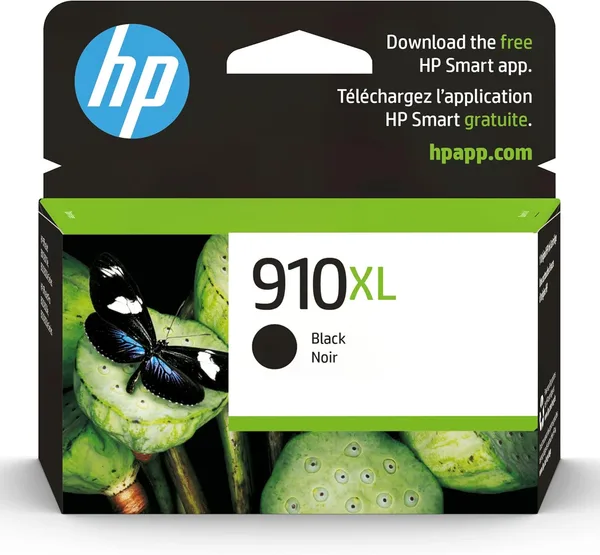
The HP 910XL Black is the exact same black cartridge that ships inside the OfficeJet 8010/8020 box — just filled to the brim with more ink and paired with a chip that knows it. You're not buying better print quality (it's identical); you're buying fewer trips to "low ink" purgatory. For a household that prints a handful of pages a week, it's overkill. For a home office pushing out invoices and contracts, it's a genuinely smart time-saver.
Check the full landed price to your country — item, forwarding, and import duty combined — on dede.sh before you buy.
You know the scene: it's 9 p.m. on a Wednesday, your kid needs a form printed for school tomorrow, and the printer picks that exact moment to start dying of thirst. The light's blinking, the print queue is stacking up, and the nearest store that sells cartridges closed an hour ago. If you own an HP OfficeJet 8010 or 8020 and you've lived through this ritual even once, the 910XL conversation isn't abstract for you.
What this thing actually is
The 910XL isn't a separate product — it's the same 910 black cartridge, just carrying two or three times the ink and a chip that tells the printer "relax, I've got plenty of pages left." That's the whole trick. Same ink formula, same print quality: text is just as crisp, black is just as deep, and there's no secret "contrast boost" hiding in the XL version no matter what the box implies. Buying the XL buys you time between store runs, not better output.
The HP 910XL Black fits the entire OfficeJet 8010 and 8020 lineup, Pro variants included — the same printers that show up in small offices precisely because the hardware itself is cheap. And that's where the real story hides: the printer is a bargain, but the consumables are a whole separate conversation, one every inkjet HP owner eventually has.
What it's actually like to use
Installation takes about a minute — pull the old one, drop in the new one, the printer runs its own calibration and gets to work. No fiddling required. The first page after a swap tends to look a touch heavier on ink than usual; that's normal for a fresh cartridge and evens out within a print or two.
Yield is where the whole XL premium either makes sense or doesn't. The standard 910 is rated for roughly 300 pages at 5% coverage (that's the industry-standard test page — mostly text, not a solid block of ink). The XL version is rated around 825 pages. Do the math: if you print regularly — bills, contracts, homework — the XL ends up cheaper per page despite the higher upfront cost. But if your printer only wakes up once a month for a receipt, you're paying extra for ink that will dry out before you ever use it up. That's a real issue with inkjet HPs specifically: ink sitting unused in the nozzles tends to start drying out after roughly six months of inactivity.
Stacked against Canon or Epson in the same segment, HP holds its own on text sharpness but loses ground on cost-per-page for color photo printing — though that's beside the point here, since we're talking about a black cartridge. For office documents, invoices, and forms, it does exactly what it needs to, no fuss.
The real pain point isn't the cartridge itself — it's that this generation of HP printers tends to lock down harder on official cartridges than most competitors. Compatible third-party cartridges frequently clash with the chip, throwing errors or refusing to print altogether. Cutting corners with off-brand cartridges here is riskier than it looks; you can end up burning more patience than money.
The honest verdict
Get it if you're running an actual working home office on an OfficeJet 8010/8020 and you're tired of swapping cartridges every month. The XL premium pays for itself in fewer replacements and, honestly, fewer "wait, where's the spare" moments.
Skip it if the printer only gets used occasionally — for once-or-twice-a-week home printing, the regular 910 is both cheaper upfront and won't sit around long enough to dry out before you use it up. One more thing that rarely gets mentioned: the XL holds more ink, but it's physically the same size cartridge — it's not some oversized unit that won't fit the tray, it's just packed more efficiently.
There's one real tradeoff worth flagging: the per-unit price stings, and if you total up a year's worth of printing for a moderate user, the gap versus the non-XL version isn't as dramatic as it first looks. Buy the XL deliberately, matched to your actual print volume — not because "bigger is always better."
שאלות נפוצות
No. Ink left unused in the nozzles tends to start drying out after around six months of inactivity, so you likely won't burn through the XL's full yield before that happens. For occasional printing, the regular 910 makes more sense.
Essentially, yes — the ink, the chip, and the print quality are identical. The only difference is ink volume, which drives page yield and price.
Technically you can find them, but this printer generation is known to clash with third-party chips — you may see errors or the printer may simply refuse to print. The risk here is higher than with many competing brands.
At typical text-heavy usage (5% page coverage), the yield runs to roughly 825 pages — plenty for a small office churning out dozens of documents a month, as long as you're not printing solid fills or heavy graphics.
Related picks worth a look for home and office: