JBL Junior 320BT review: are volume-limited kids' headphones worth it
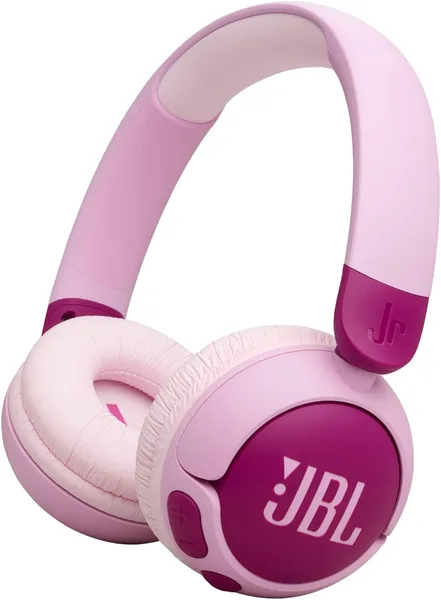
The JBL Junior 320BT isn't "regular headphones, just pink." The whole point is a hardware volume cap at 85dB that you genuinely cannot bypass, even at max. The sound is basic, but your kid won't blast their eardrums with cartoons all day. If you're after a first pair of headphones for a school-age kid, buy them. If you want something "universal, the kid can use it and so can I," skip it.
There's a moment most parents hit around the second year of remote schooling: a kid wearing headphones at full volume is a slow-motion disaster that doesn't show up right away. First it's just "what did you say?" more often than you'd like. Then it's an appointment with an audiologist and a conversation about how hearing damage doesn't reverse. I went through this with my own kid, and that's exactly when I stopped caring about headphone brands and started caring about the dB number in the spec sheet.
The JBL Junior 320BT is a direct product of that exact parental paranoia, and credit where it's due, it's built by people who understood the problem instead of just slapping a kid-friendly color on an existing SKU.
What these actually are
These are on-ear Bluetooth headphones with JBL's Safe Sound tech, which hard-caps output at 85dB. Not a "please don't exceed this" suggestion, a physical ceiling the drivers cannot cross. For reference, that's roughly the level of a loud conversation or a vacuum cleaner, which happens to be the threshold where WHO guidelines say cumulative hearing damage starts kicking in with prolonged exposure. Adult headphones almost never have this limit at all, on the assumption that grown-ups are responsible for their own ears. That logic doesn't hold with a kid: they'll crank the slider to max simply because they can, not because it actually sounds better to them there.
The other thing you notice right away is the size. This isn't a shrunk-down copy of adult headphones, it's a separate build designed around a kid's head, with a soft adjustable headband that doesn't pinch or slide off mid-sprint around the living room. They also fold flat, so they pack into a backpack without jabbing anyone with a corner.
Living with them day to day
The fair way to judge these is not to compare the sound against $100 adult headphones, because that's a different category entirely. The drivers in the Junior 320BT deliver a perfectly decent, balanced sound for cartoons, audiobooks, and kids' songs, which is what they'll actually be used for 90% of the time. There's bass, modest bass, and obviously none of the detail you'd get from flagship gear. The obvious rival here is Puro Sound Labs, which makes something similar, just pricier, and without Bluetooth on the base models, wired only, which to a modern kid looks like a relic from another century.
Battery life sits right where you'd expect from a budget Bluetooth headset: enough for a long trip or a few days of school breaks between charges, depending on how much your kid actually listens. Pairing with a tablet or phone is stable, no dropouts, which matters a lot when the sound cuts out mid-show and a meltdown follows.
There's a mic on board too, good enough for calls to grandparents or online classes, though don't expect studio quality.
What actually gets annoying: the "one size" fit is aimed at roughly ages 4-12, and for really small heads the band can run a bit big, so you end up cinching it all the way down. And while the plastic looks sturdy, it's still kid-grade plastic. It'll survive twenty falls off a table, but it'll pick up scratches along the way, which is fine, honestly, because that's exactly what you're buying it to endure.
What it costs and whether the premium is worth it
JBL Junior 320BT lists at around $40 on the marketplace. Check dede.sh for the full landed price to your country, item plus forwarding plus import duty in one number, before you decide. It's not pocket change, but it's nowhere near the range where "maybe just get adult budget headphones instead" starts making sense. And that's the trap worth naming out loud: adult budget headphones at the same price will sound better. They just won't have the volume cap, and the cap, not the sound, is what you're actually paying for here.
Who should buy these, and who shouldn't
If your kid is somewhere between 4 and 12 and genuinely lives in headphones, online classes, audiobooks, cartoons on car and plane trips, this is an honest, well-thought-out purchase. Especially if you've already lived through the moment where your kid cranks the volume to max and doesn't respond when you tell them to turn it down.
Skip it if you're shopping for a teenager, 13 and up, who cares about sound quality and status more than hearing safety. The kid-focused design and the volume cap will annoy them more than help. Also don't buy these thinking "the kid can use them now and I'll inherit them later." You won't. The sound is too basic for adult expectations.
There's really one trade-off here: you're consciously giving up sound quality in exchange for hearing protection. The second, less obvious one, is that this is a niche product, so color and feature options are more limited than with mass-market kids' headphone lines.
שאלות נפוצות
Per the published spec, yes, the cap is hardware-level, not a software slider buried in an app. That's the entire point of buying these. If all you want is "quieter by default," regular headphones plus parental volume controls on the device will do the job.
It'll comfortably cover a flight or a long car ride if charged before you leave the house. If you're planning a full day of nonstop listening, though, pack a power bank just in case, and that advice applies to pretty much any kids' Bluetooth headphones, not just these.
Puro sounds better and leans harder into "adult-grade" build materials, but it costs noticeably more, and the base versions are often wired. If you specifically need wireless at a reasonable price, JBL is the more sensible pick.
Yes, they're built for exactly that: lightweight, foldable, and they survive falls off a desk. The one thing to explain to your kid is that they're not a toy for a tug-of-war with a classmate.