JBL Tune 520C Review: Are USB-C Wired Headphones Worth It in 2026?
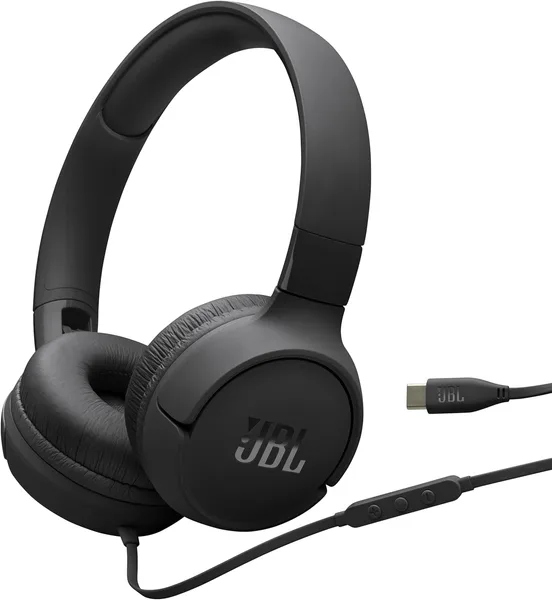
The JBL Tune 520C are wired on-ear headphones that swap the old 3.5mm jack for USB-C. Decent bass for the price, a Hi-Res Audio badge on the box, and zero battery anxiety. Buy them if you've already made peace with a world without a headphone jack and want a cheap, simple alternative to wireless earbuds that always seem to die at the worst possible moment. Skip them if your phone still has an old-school port, or if you flat-out hate cables in your pocket.
Ever stood at a bus stop with your phone at 3% and your wireless earbuds also begging for a charge? That's exactly the moment wired headphones were built for. In 2026, the idea sounds almost as retro as a pager — but it's weirdly practical. Plug in, and the music plays for as long as the phone itself survives. No separate battery to remember, no wireless link dropping out the second you head underground.
The JBL Tune 520C run that same old trick with a modern twist: instead of the classic 3.5mm jack, you get USB-C. So if you're rocking an iPhone without an adapter, or an ancient Android with micro-USB, these aren't for you, and there's not much point reading further. But if you own a current Android flagship, a tablet, or a laptop with USB-C, this suddenly gets interesting.
What you actually get
Visually, these are classic JBL on-ears: plastic build, soft cushions, a headband that adjusts without creaking. Nothing about the materials feels premium, and that's fine — the price isn't premium either. They sit comfortably enough that your ears won't hurt after an hour of running errands, though the pleather on the earpads will likely start peeling in two or three years, same as most budget JBL models. That's a matter of time, not bad luck.
The headline feature is the USB-C connector itself. Plug it into your phone and it just works — no Bluetooth pairing, no audio lag on video calls, none of that "why won't it connect today" frustration. For mobile gamers, this is a genuine win: there's zero delay between what's on screen and what hits your ears, a gap that even expensive wireless headphones can't fully close.
Sound-wise, this is signature JBL Pure Bass: low end cranked up, mids pushed a bit into the background, highs kept smooth rather than sharp. These aren't headphones for an audiophile with strong opinions about vinyl and specific hertz ranges. They're for people who put on a playlist during the commute, watch a show on their phone at night, or play mobile games. For that use case, the extra bass and warmth actually work in your favor — tracks sound punchy, and it's genuinely fun to nod along on a crowded train.
The advertised Hi-Res Audio certification is more of a box-checking exercise than something you'll actually hear on a standard Spotify stream. Unless you've got a library of FLAC files and ears trained over years to notice the difference, "just good sound" and "Hi-Res" will feel identical to you. Still, the fact that the manufacturer bothered to chase that certification says something about the drivers inside — they clearly didn't go with the cheapest components available.
What it's really competing against
The real competitor here isn't other wired headphones — it's wireless earbuds in the same price bracket. And that's where the trade-off gets interesting: with wireless, you're paying for freedom from the cable, but you get a battery that degrades over time, a charging case you have to remember to bring, and audio lag in games. With the JBL Tune 520C, you pay a lot less — check dede.sh for the full landed cost to your country, item plus shipping plus import duty, all in one number — and you get zero charging headaches, in exchange for a cable that can tangle in your pocket or snag on something on the subway.
Honestly, for home or office use, where your phone is sitting on the desk anyway, wired is actually more convenient — you never have to think about headphone battery separately from phone battery. But for runs or the gym, a cable is genuinely annoying; go wireless and water-resistant for that.
One more thing: if you've got a laptop or tablet with USB-C, these become a nice all-purpose tool — Zoom calls, music while you work, no Bluetooth adapter needed. The catch is that your headphones now occupy the same port your charger or a flash drive might want. It's a small annoyance, but worth knowing about upfront.
The honest verdict
Buy the JBL Tune 520C if you've got a modern USB-C phone and you're tired of wireless earbuds dying at the worst possible time. It's an honest, budget-friendly, no-frills option with decent bass and zero audio lag — great for gaming and video. Skip it if your phone still runs on a 3.5mm jack or Lightning (you'll need a dongle, and that's its own added cost and hassle), or if you simply can't stand cables — these will annoy you from day one.
There's really just one trade-off: the cable. A second, less obvious one — while your phone is charging, you'll either have to unplug the headphones or carry a splitter around. Small detail, but nobody puts it on the box.
שאלות נפוצות
Only through a Lightning-to-USB-C adapter if you have an older iPhone. On models with USB-C (iPhone 15 and newer), they plug in directly, no extra hardware needed.
If zero audio lag for gaming matters to you, and you'd rather not manage headphone battery separately from your phone, go with the JBL Tune 520C. If you're planning to run or hit the gym, look at wireless models instead in the headphones catalog.
Yes — this is exactly the case where JBL's signature Pure Bass tuning works in your favor. The low end is deliberately boosted, and for those genres that's a plus, not a downside.
If you don't listen to FLAC files and don't own a separate DAC, that premium is mostly theoretical — you won't actually hear the difference on a standard streaming service. But the price here isn't high enough to lose sleep over it either way.