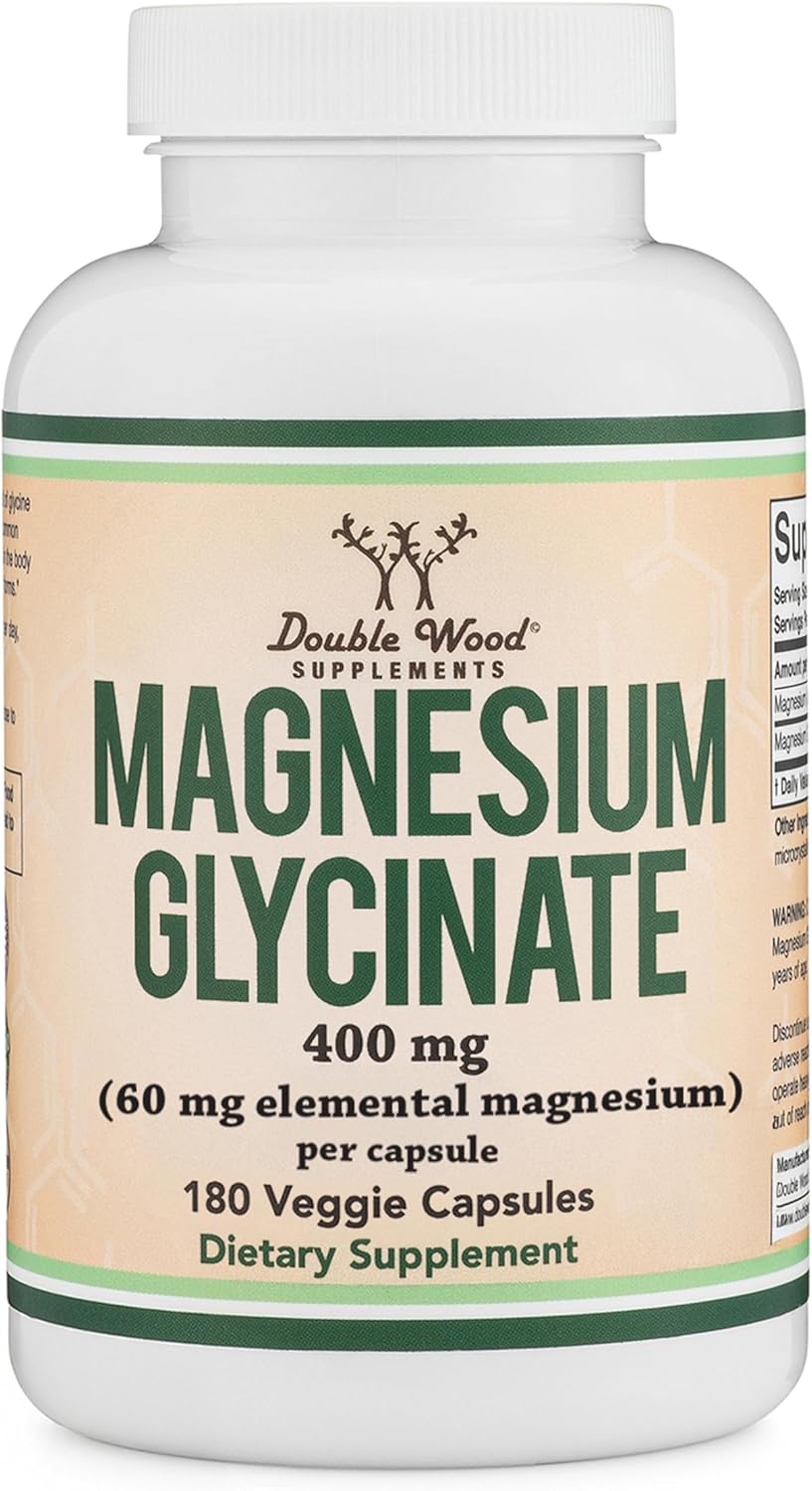
Double Wood Magnesium Glycinate 400 mg: Does It Really Help You Sleep?
Double Wood magnesium glycinate is one of the gentlest magnesium options: it doesn't cause laxative effects, doesn't upset your stomach, and you really do fall asleep easier than with cheap magnesium oxide from a drugstore. 180 capsules last a solid two months or more even at full dose, and the price around $17 makes it one of the more reasonable options in the category. But it's not a sedative and not anxiety medicine—if your insomnia is from stress rather than magnesium deficiency, the capsules won't work miracles.
Try explaining to a colleague why you're taking magnesium before bed, and sooner or later you'll hear: "isn't that just placebo?" The honest answer—it depends. Most city dwellers really do lack magnesium: coffee, stress, sleep deprivation, processed food—all of it depletes it. And when your body chronically lacks something and you finally add that "something," the effect can be quite real, even if it's not instant.
I decided to test glycinate specifically because it's the form most recommended for sleep and the nervous system—as opposed to magnesium oxide (that cheap one in every drugstore that mostly just acts as a laxative with minimal absorption) or citrate, which is slightly more energizing and better for those with constipation rather than insomnia. Glycine, the amino acid that magnesium is "bonded to," has a slight calming effect on its own—so the combination works in two ways at once.
How It Actually Works, Not According to the Instructions
The first few days—nothing special. This isn't melatonin that knocks you out in twenty minutes. Magnesium works cumulatively: your body fills in the deficiency, and somewhere around day four or five, I noticed I was falling asleep without thirty minutes of scrolling through my phone. Not "collapsing into sleep," but rather calmly entering it—a subtle difference, but noticeable if you actually pay attention to yourself.
The second noticeable effect—nighttime leg cramps. I get them after long runs, and they became noticeably less frequent on magnesium. This is classic, by the way: athletes and people who sit at a desk or stand a lot at work often take magnesium specifically for this, not for sleep.
The capsules are large but not giant—easy to swallow without that "like swallowing a horse pill" feeling you get with some calcium-magnesium complexes. No smell or taste, which is a plus for magnesium supplements since magnesium oxide is often bitter even in capsule form.
The main practical issue—dosage. The 400 mg on the label—is it elemental magnesium or glycinate total, and manufacturers like to play with words here. With Double Wood it's stated honestly: elemental magnesium per capsule comes out to less than 400 mg, so for a full daily dose, some people take two capsules instead of one—and a bottle of 180 lasts not half a year, but two to three months with active use. This is normal, just plan ahead, and don't be surprised when the bottle empties faster than expected.
What to Compare It With
The most obvious competitor in this category—magnesium citrate—and if you have no sleep problems but have constipation or need faster absorption before a workout, citrate is objectively the better choice. Glycinate is specifically "for the nervous system and muscles," not a universal magnesium for all cases. Another popular option on the market—magnesium threonate, which is marketed as "for the brain," but it's substantially more expensive and has a thinner evidence base than marketing suggests you believe.
Compared to pharmacy options, magnesium glycinate is actually rare—there's mostly oxide or that citrate in effervescent tablets. So an imported form like this Double Wood Magnesium Glycinate often simply fills a niche that doesn't exist in the local market at all.
The marketplace price—roughly $17 per bottle—is one of the more reasonable prices in the glycinate segment: similar brands like Doctor's Best or Nature's Bounty in this form often cost more for less product. For the final price with shipping to your country, you'll need to add forwarding and import duties—the sum will grow, but the base price still remains competitive.
Who Should Buy, Who Shouldn't
If you have poor sleep due to actual magnesium deficiency (muscle cramps, irritability, muscle tension, frequent headaches)—this is one of the smarter first steps, cheaper and safer than prescription sleeping pills. Athletes and people with sedentary or very physically demanding work also benefit from it for muscle recovery.
But if your insomnia comes from anxiety, disrupted sleep schedule, or simply because you're on your phone until two in the morning—magnesium isn't a cure-all. It will help your nervous system work more calmly, but it won't break the habit. And honestly: if you need an effect of "take it—fall asleep in five minutes," look elsewhere, try melatonin or see a doctor if insomnia is chronic.
Compromise number one—the actual dose of elemental magnesium is lower than the advertised round 400 mg, so calculate how many capsules you actually need. Compromise number two—it's not a fast effect but a cumulative one, so for the first one to two weeks expect modest results.
שאלות נפוצות
For sleep, glycinate is better: it irritates the digestive tract less and has an additional calming effect from the glycine itself. Citrate is faster, cheaper, but more often gives a slight laxative effect, especially on an empty stomach.
Yes, if the goal is specifically sleep and nerves, not just replenishing magnesium at any cost. Oxide is absorbed worse and more often upsets the stomach—meaning part of the dose just "passes through" without giving an effect.
It depends on how much elemental magnesium you need—often it's one or two capsules, not one, as you'd intuitively think from the "400 mg" on the label. Check the composition on the bottle and calculate for your daily needs.
At one capsule per day—six months; at two—three months. For most adults who are actually filling a deficiency rather than taking it "just in case," it works out closer to two to three months.
If you're looking at related sleep and recovery supplements, it's worth checking out probiotics and ashwagandha too—different mechanisms, but often taken together.