Balacoo Clip-On Pocket Watch for Nurses: Worth Buying?
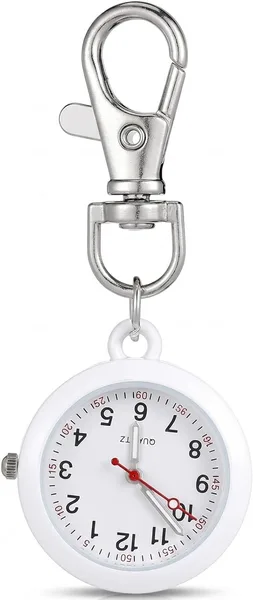
A tiny clip-on watch for about the price of an airport coffee — and that's honestly the nicest thing you can say about the Balacoo Clip-On Pocket Watch. It does one job: shows the time on your chest when your hands are gloved and glancing at your wrist just isn't happening. But it's an analog movement that costs a couple of bucks, so leave your expectations about accuracy and longevity at the door.
Picture a shift in the ICU: gloved hands, wrists buried under a gown to the elbow, and you need to count a pulse in seconds, not spend a minute digging a phone out of your pocket. That's exactly the problem the clip-on pocket watch was built to solve — nurses were wearing these long before smart bands with SpO2 sensors existed. Balacoo apparently decided the old idea still has legs, and shipped its own version for next to nothing.
First impression: this thing is genuinely small. The clip hooks onto a scrub pocket or a badge lanyard, and the face swivels on a little hinge so you can angle it for an easy glance. There's a second hand — and that's the whole point, because that's what you're actually buying, not the styling. Counting a pulse or respiration rate over 15 seconds is a lot easier this way than fishing a phone out from under five layers of clothing.
Now, let's be honest about the materials. This isn't a watch you hand down to your grandkids. The case is light alloy, the crystal is plastic, and the movement is a Chinese quartz unit — the same kind that goes into millions of budget products. That's not a knock on it exactly, just don't expect the smooth sweep of a mechanical second hand. This one ticks like a cheap office clock. Someone's going to say "what did you expect for that price," and they'd be right.
Stacked against the alternatives, the picture gets interesting. You could go with a smartwatch like the Galaxy Watch 4 and get a pulse oximeter, step counter, and notifications thrown in. But on a hospital shift you're sanitizing your hands 40 times a day, and alcohol-based sanitizers don't play nice with silicone bands and touchscreens over the long haul. Wipe the clip with a tissue and it's good as new. This is one of those rare cases where the dumber tool is genuinely more practical than the smarter one.
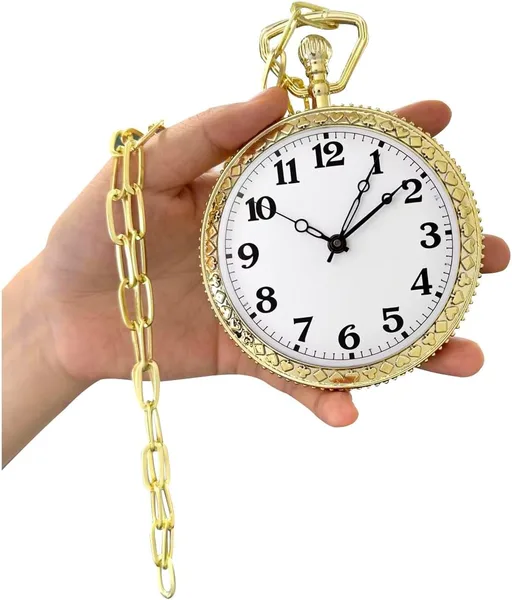
The second alternative is a classic chain pocket watch, grandpa-style, or a mechanical piece like a vintage Seiko 5. That's a completely different category — about aesthetics and longevity, not a cheap work tool, and both the price and the mindset are worlds apart. The Balacoo is more like a pen or a notepad: you buy it, use it for a year or two, lose it or snap the clip, and buy another one without a second thought.
And that's exactly where its weak spot lives. The clip is a plastic-and-metal spring assembly, and it's the first thing to fail. If you're unclipping and reclipping it several times a shift — which is exactly what nurses do, off before a procedure, back on after — that spring mechanism wears out faster than the watch movement itself. The same story shows up again and again in buyer reviews: everything's fine for the first few months, then the clip starts sagging or snaps off entirely. That's not a bad batch, that's just physics catching up with cheap spring steel under constant load.
The battery is a standard coin cell, easy to swap, and that's a genuine plus — no charging it every night like a smartwatch. Clip it on and it'll run for months, maybe years, until the cell finally dies. For some people, that alone is the deciding factor: one less thing to think about halfway through a night shift.
Who should actually buy this watch: nurses, orderlies, caregivers, lab techs — anyone who needs a quick glance at a second hand without strapping more gadgets to their wrist. It also works as a gift for a nursing student: cheap, on-theme, and no big loss if it vanishes in a dorm room. Who should walk right past it: anyone who needs day-to-day precision to the second, years of durability, or a status piece — none of that is on offer here. This is a consumable, disposable-in-a-good-way accessory, not a watch for life.
The price sits right where you'd expect for something like this — figure a few dollars at the marketplace before shipping and duties; check dede.sh for the full landed cost (item, forwarding, and import duty rolled into one number) to your own country. Honestly, at that price there's no point holding the movement to any real standard — the only real question is whether you actually need a clip-on watch on your chest in the first place.
FAQ
No, there's zero point. It's the same quartz movement inside — the only difference is the artwork on the face. If you want a branded look, buy the standard version and stick your own badge or pin next to it.
For counting a pulse by hand, the clip wins — your eye catches a big second hand instantly instead of small digits on a tiny screen. But if you also want sleep tracking, step counts, or notifications, that's a completely different product category and budget.
Honestly, probably not. The spring mechanism in the clip is the first thing to wear out, and with heavy daily use, one to two years is a realistic lifespan. Keep a spare on hand if this is something you genuinely rely on at work.
You can, but it's a niche choice. It reads as functional rather than fashionable, and it's really built for work clothes with a pocket or a badge — not for everyday outfits.