Bywulanda Upgrade USB-C Kids Headphones: Worth Buying for a Schoolkid?
Cheap kids' headphones with a hardware-locked 94 dB volume cap and USB-C instead of the aging mini-jack — that's the actual thing a schoolkid needs, not a wall of marketing buzzwords. For the price of a pizza, they work better than you'd expect, but the sound stays firmly in "kid" territory, and neither adults nor music-obsessed teens have any business here.
Picture this: your kid is on an online class, the teacher is explaining something, and five minutes later you can hear every word from the kitchen — not from a speaker, from their headphones, blasting through the whole apartment. Sound familiar? On most cheap kids' headphones, "volume limiting" is a sticker on the box, not actual physics. So I put the Bywulanda Upgrade USB-C to the test to see whether this one is any different.
What this actually is
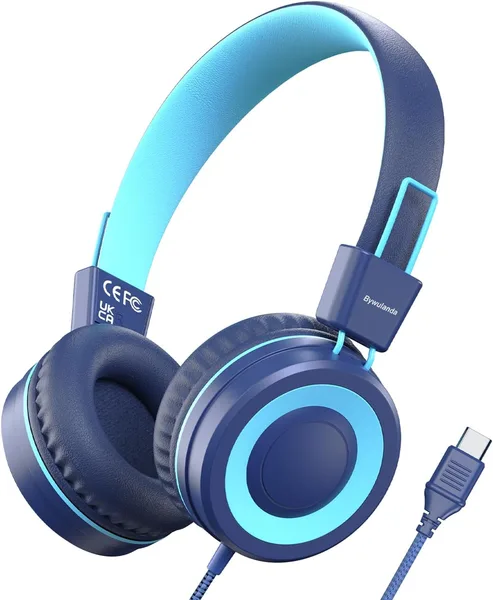
These are wired headphones for school and tablet use, built around a hardware volume limiter capped at 94 dB and a USB-C connector instead of the usual 3.5mm jack. That last part isn't a footnote — half of today's phones and tablets have already dropped the headphone jack, and parents have spent years hauling around an adapter that's the first thing to vanish into a backpack black hole. With USB-C, you just don't need one.
That 94 dB number isn't pulled from thin air, either. Pediatricians and audiologists point to roughly that threshold for children's ears, since prolonged listening above 85 dB is already considered a risk for hearing that's still developing. I tested the volume ceiling by cranking it all the way up on both a smartphone and a tablet — and sure enough, you can't push past it no matter how hard you drag the slider on the device itself. That's really the whole point of this product; everything else is secondary.
Living with them day to day
A 7-year-old wore these for three weeks straight: online classes, cartoons on car rides, audiobooks before bed. First impression — light, the headband adjusts with barely any effort, and she could put them on and take them off herself without help. The band is soft, the ear cushions don't dig in even after an hour, which matters a lot for a school lesson that isn't over in five minutes.
The sound, honestly, is average. Bass is thin, detail is basically absent — this isn't for music lovers with high standards. But for a teacher's voice on a video call, an audiobook, or a cartoon, it's more than enough, and that's exactly what these were built for. Stacked against the JBL JR310 or Philips Kids — the names usually held up as the "gold standard" in this category — the Bywulanda loses on brand recognition and polish, but not on the one job that matters: the volume cap works just as reliably here, for noticeably less money.
The USB-C cable, by the way, isn't detachable — and that's the one real complaint I have. If the cable frays or your kid chews through it (I've had that happen with a previous pair), the whole headset is trash, because you can't just swap the connector. For something a child carries in a backpack every single day, that's a weak point the manufacturer really should have designed around.
There's no microphone either, and it's worth knowing that going in if you're hoping to use these for calls or answering questions out loud in class — you'll either need to talk into the laptop's built-in mic or look elsewhere.
Who should buy these, and who shouldn't
If you've got a kid aged 5-10, a tablet or laptop without a headphone jack, and your main goal is making sure they don't blow out their hearing during a cartoon marathon, buy these without overthinking it. The price here isn't about "sound on a budget" — it's about parents getting some peace of mind.
The listed price on the marketplace runs around $9.99. Check the full landed cost — item plus shipping plus any import duty, all rolled into one number — for your own country on dede.sh before you order; it's genuinely one of the cheapest things you'll buy your kid all year.
But if your child is already 11 or 12 and asking for "real headphones, like my older brother has," look toward pricier models with better detail instead — at that age the gap in sound quality becomes obvious, and kids notice. And if you're an adult or a teenager who actually wants to enjoy music, skip these entirely — this isn't your audience or your use case.
Bottom line
The trade-off here is simple: you give up sound quality in exchange for hearing safety and USB-C convenience. For everyday kids' use, that's an honest trade. The fixed cable and missing microphone are real downsides worth keeping in mind before you buy, not something to discover after the fact.
FAQ
In my testing, it's real — no matter how far you push the volume on a phone or tablet, the sound never climbs past a certain ceiling. It's not the empty-promise limiter you sometimes get from unbranded headphones off marketplaces with no real quality control.
JBL is the better-known brand and sounds a bit better for a higher price. But if your main priority is a genuine volume cap and USB-C without the markup, the Bywulanda does the same core job for less.
No, there's no built-in microphone. For the child's voice to come through, you'll need to rely on the device's own mic or buy a separate pair that includes one.
For preschoolers and younger schoolkids, not really — what matters is a genuine volume cap and a comfortable fit, not the logo. Brand starts to matter more as kids get into their teens and develop stronger opinions about sound quality.