Casio F91W Review: Is the Cult Classic Digital Watch Still Worth Buying
The Casio F91W isn't really a watch — it's an artifact. For the price of a pizza you get a movement that will outlive you, your kids, and probably a couple more generations of batteries. It has zero pretension: no style, no "smart" anything, and that's exactly why it's still relevant.
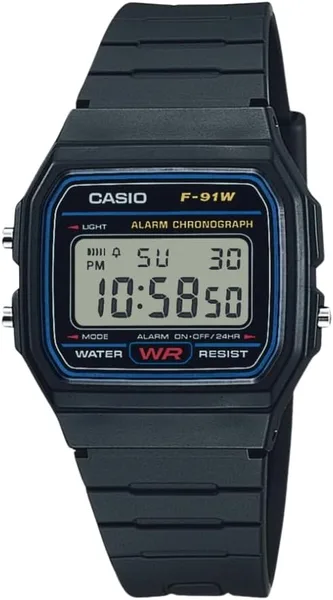
Some things just refuse to die. Floppy disks, cheap '90s Nikes, and the Casio F91W. This model has been in production since 1991, basically unchanged, and if you've ever spotted a square black watch with a grey backlight button on your dad's wrist, your uncle's, or your old gym teacher's — that was almost certainly it.
I bought myself an F91W not because I needed a watch (my phone already tells the time, thanks), but out of pure curiosity: how does something that costs less than a decent lunch survive for decades, and why is everyone still talking about it? Spoiler — I get it now.
What this watch actually is
There's no pretense here. Plastic case, LCD screen, a strap that squeaks for the first couple of weeks until it breaks in. Three buttons. That's the whole story. The F91W shows the time and date, has an alarm, a stopwatch accurate to a hundredth of a second, and that backlight — the green one that glows in the dark like a tiny flashlight from another decade. No heart-rate sensor, no Bluetooth, no app nagging you for a weekly update.
And that, oddly enough, is its biggest strength. You put it on and forget it exists. No nightly charging — the battery here lasts years, actual years, not "until evening if you don't touch the crown too much." A friend of mine has been wearing his since he pulled it out of his dad's drawer, seven years now, and he's never once replaced the battery. That's a level of reliability modern gadgets simply can't compete with.
Water resistance is basic — shower or rain, fine, scuba diving, no. Worth being honest here: this was never a dive watch, despite every meme about the F91W "surviving a nuclear blast." It's everyday splash-and-sweat protection, nothing more.
Where it genuinely shines, and where it annoys you
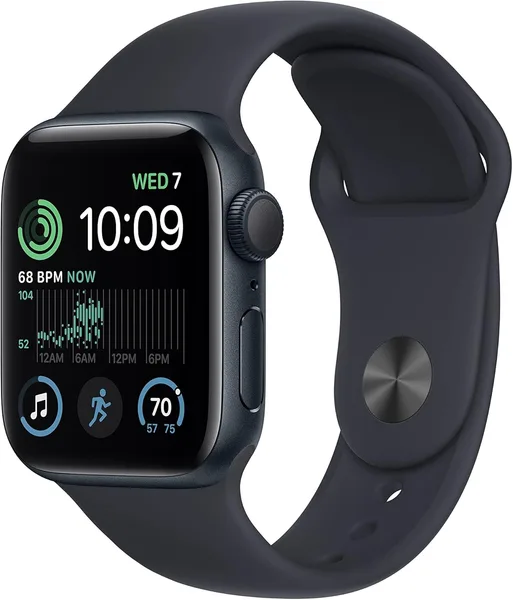
Wearing the F91W for a run or at the gym is pure pleasure: light, unobtrusive, stopwatch right there when you need it. It's that rare piece of gear so unnoticeable you forget it's on your wrist. Compare that to an Apple Watch, where two days of active use has you hunting for an outlet — the F91W sits at the opposite end of the spectrum: zero worries, no screen washing out in sunlight.
But it has its own ways of annoying you too. The buttons are small and stiff — try hitting the alarm button wearing gloves in freezing weather, it's a whole ordeal. The strap is plastic, and if you have sensitive skin or live somewhere hot, it can start irritating you after a few months — this is the single most common complaint among owners, and it's a fair one. You'll likely be swapping the strap periodically, though at least it costs next to nothing and takes five minutes to replace yourself.
Comparing the F91W to something like a Timex Ironman or a Casio W59 doesn't really get you anywhere — they're all in the same "cheap digital watch that just works" category, differing mainly in looks and a feature or two. Step up to automatic mechanical watches like a Seiko, though, and you're in a different philosophy entirely: there you're paying for the movement and the aesthetics, here you're paying for practicality and zero fuss.
The honest verdict
Buy the F91W if what you actually want is a watch — simple, honest, one that just tells the time and asks nothing in return. It's great for daily wear, for work, for the gym, as a backup, or even as a gift for someone who hates charging gadgets. The price is almost a joke, and it's one of those rare cases where paying extra for a "brand" genuinely buys you nothing — check the full landed price to your country, item plus shipping plus duty, on dede.sh before you decide.
Don't get it if you're expecting smart features, a sharp look for a night out, or serious water resistance for swimming laps. And if you have sensitive skin or a plastic allergy, read the strap complaints carefully first — that's a real pain point with this model, not just internet skepticism.
The trade-off here is simple: you give up style and "smarts" in exchange for reliability and price. For some people that's an obvious downside. For others, it's exactly what's been missing among a pile of smartwatches that all need charging every single day.
FAQ
Yes, it's not just marketing. The movement is so power-efficient that the factory battery often lasts 3-7 years depending on how much you use the backlight. That's the main reason behind the model's cult status.
For basic running or gym sessions, the F91W does the job — it has a stopwatch, it's light, it stays out of your way. But if you need heart rate, GPS, or sleep tracking, this isn't the watch for that — look at fitness bands or smartwatches instead.
A genuine Casio guarantees a reliable movement and accurate timekeeping. Clones do show up, and the difference in reliability becomes obvious within the first few months — this isn't the place to save a few extra dollars.
Most owners do, sooner or later — the plastic cracks over time or starts irritating the skin. Replacement straps are cheap and snap on without tools, so it's less a real problem and more routine upkeep.