Clorox Toilet Plunger with Hideaway Caddy: Is It Worth Buying
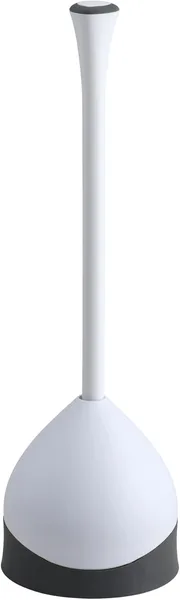
This isn't a plumbing revolution, just a genuinely well-thought-out plunger: a compact head with a non-slip rubber rim that actually builds pressure in the pipe, plus an enclosed stand that keeps it out of sight and stops it from pooling water on the floor. If you have a small bathroom and hate the look of a regular plunger sitting next to the toilet, get this. If you deal with serious clogs or an oddly shaped toilet bowl, this isn't the right tool.
There are things nobody wants to talk about until they become a problem at 11pm on a Saturday. A plunger is exactly that kind of thing. It sits in the corner, collects dust, drips something onto the floor, and you only remember it exists the moment it's too late to choose — you just need it to work. I lived for years with a classic wooden-handled plunger with a black rubber cup, the same one sold on every corner and looking identical since the 1970s. It works, but it looks terrible and is always damp underneath.
So when the Clorox Toilet Plunger with hideaway caddy showed up, I got curious — could this grim, mandatory household item be made a bit less unpleasant.
What's different about it (in a good way)
First impression — the head is smaller than a classic plunger and has a non-slip rim. Sounds trivial until you try pressing a regular plunger against a toilet at an angle and feel the rubber slide across the ceramic instead of gripping. Here the edge grips more tightly, and pressure builds even when the approach angle isn't ideal — and it's rarely ideal, since every toilet bowl is shaped a bit differently.
The second feature, honestly the whole reason people buy this specific model — the caddy. A plastic base with a flip-top lid where the plunger tucks away after use. Water drains into the container instead of onto the floor around it. It doesn't eliminate cleanup entirely — some dripping still happens, you can't cheat physics — but compared to a wet rubber cup just lying on the tile leaving a dark stain, it's a noticeable step forward. Guests walking into the bathroom no longer see a bare plunger sticking out of a bucket — and oddly enough, that really does affect how well-kept a bathroom feels.
The size is compact, so it fits easily into a tight corner behind the toilet — unlike bulky industrial plungers with a long wooden handle that have nowhere to go in small apartments.
Now, honestly, the downsides
The compact head cuts both ways. Yes, it seals better, but it also covers less surface area, so for a genuinely serious clog — when the pipe is packed tight and you need real force — it noticeably lacks power. For everyday minor situations, where something's draining slowly or slightly stuck, it handles things beautifully. For the "someone flushed a whole pack of wet wipes" scenario — no, you need a good old heavy plunger with a large cup, or a proper auger.
Second — the caddy doesn't fit every toilet perfectly. The base is designed for a standard shape, and if your toilet has an unusual base or a narrow space to the side, the stand may not sit as level as you'd like and can wobble a bit. Not a dealbreaker, but I wouldn't call the fit universal.
And third — it's plastic, not a premium material. It doesn't look cheap, but it doesn't claim industrial-grade durability either. For home use, it'll last for years; in a rental with a lot of turnover, you might need to replace it sooner than you'd like.
How it behaves in real life
I have two kids at home and one toilet that occasionally sees things it shouldn't. Over several months of use, this plunger has been predictable and free of surprises — exactly what you want from a plumbing tool. Pull it out, press, it works, tuck it back into the caddy, nobody saw a thing. Compared to the old plunger just standing there wet in the corner, tripping up a kid now and then, this is a different level of everyday comfort, even if it's a cheap item at its core.
Compared with a plain rubber plunger with no stand, which costs far less, yes, you're paying more for essentially the same working principle. But you're not paying for the physics of plunging — you're paying for it no longer being an object you want to hide from view.
Who should buy it, and who shouldn't
Get this if you have a small bathroom, care about a tidy look, and your clogs tend to be everyday minor ones, not major blockages. It's the ideal "keep it ready and don't feel embarrassed about it" option.
Skip it if you live in an old building with narrow pipes and clogs aren't rare — they're a regular occurrence. You need a tool with more serious capacity there, and skimping on head size isn't worth it.
The listing price is around $28, which isn't the cheapest plunger on the market, but it's not premium-segment either — the price matches what you get: thoughtful design plus a practical caddy. For the full cost with shipping and import duty to your own country, check the landed price on dede.sh before ordering — that's normal for any international order, so it's worth knowing upfront.
FAQ
Honestly, no. For minor everyday situations, the head handles things well thanks to its tight seal, but for a major clog, you're better off having a classic plunger with a large cup or an auger on hand.
If you don't care how the corner near your toilet looks, and you're fine with a wet spot on the floor, it's not worth it. If your bathroom is small and guests use it regularly, the caddy noticeably changes how the space feels.
It fits most standard toilets fine. But if your toilet has an unusual base shape or a very narrow space to the side, the stand might not sit perfectly level.
With normal home use, it'll last for years without issue. It's not a premium material, so in a rental with heavy use, you may need to replace it sooner.
Worth checking out a few other home essentials alongside this one: