Dixie Ultra Large Paper Bowls 20 oz (56 Count): Review and Should You Buy?
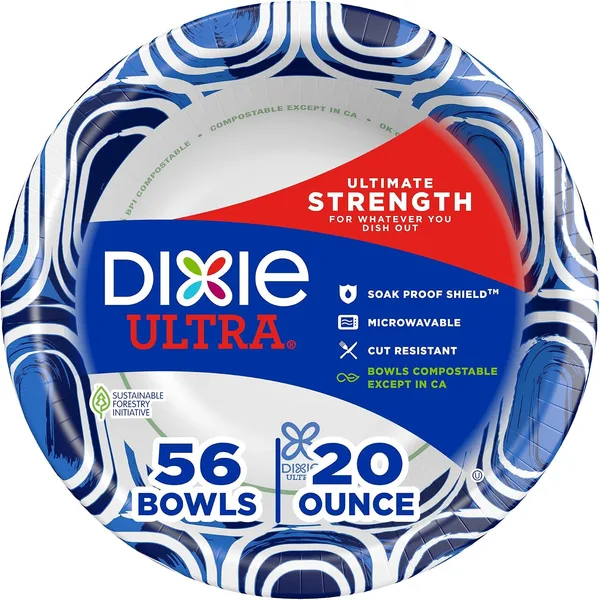
Dixie Ultra 20 oz isn't your typical "paper plates for a picnic"—it's something sturdier, built specifically for liquids: soup, sauce, stewed meat. Hold their shape even when full of hot and wet food, work in the microwave. The downside is significant but real—these are consumable, and when you factor in shipping and import duty from the US to your country, the price per pack multiplies. Worth buying if you have big gatherings, a cottage without a dishwasher, or you're tired of washing massive pots after every barbecue.
Picture a classic scene: thirty people at a birthday party, everyone wants soup, but the sink can handle maybe ten plates at a time. Or a cottage where there's no dishwasher and water's brought in. This is exactly why someone invented disposable dishes that aren't embarrassing to throw out immediately—but strong enough not to fall apart in your hands while you carry it across the yard.
I was skeptical about paper products for hot food for a long time. Regular thin plates from supermarkets start sagging within a minute of contact with warm soup—and it's a real tragedy when liquid runs down your jeans. Dixie Ultra is a completely different story. They have their proprietary SoakProof technology, and in practice this feels like a thicker, almost cardboard layer with a water-resistant interior coating. A 20-ounce bowl (roughly 590ml, a full bowl of soup with bread) holds its shape even when you fill it to the brim with hot soup and carry it across the room with one hand.
What it actually feels like in use
First impression—the bowls are deep and pretty stable on the table, won't tip over from air currents or an accidental elbow bump, unlike thin disposable plates. Second—they genuinely survive the microwave. Reheated yesterday's pilaf right in the bowl, without transferring to regular dishes—convenient when you're lazy about washing extra stuff. The bottom doesn't warp, the rim doesn't burn your fingers, though it still feels hot—can't cheat physics there.
The manufacturer also claims compostability—by ASTM D6400 standard, meaning in industrial composting conditions they break down. To be honest, in local conditions that's more of a nice thing on the box than practical: there's barely any industrial composting around, so realistically the bowl goes in regular trash with everything else. If you compost organics on your property yourself—also not an option, needs special conditions. So think of it more as "less harmful than plastic" rather than "I'll toss it in the compost pile and forget it."
Compared to Chinet Comfort Cup or local paper plates from supermarkets, Dixie holds liquid much longer without leaking—tested this on broth, sat on the table for an hour, bottom stayed dry. That's why Americans buy this line in bulk for barbecues, kids' parties, and tailgate parties before football games—nobody wants to wash stacks of dishes after a group of twenty guests.
The obvious downside and something to say clearly upfront: these are consumables. Buy—use—throw away, and repeat each time. Not practical daily or financially, and not great for the environment either. Also, the packaging is US-sized for big portions—20 ounces is nearly half a liter, too much for a kid's juice but just right for an adult's soup or salad for a gathering.
Who it's for and who it's not
If you organize big dinners, backyard weddings, memorial gatherings, kids' camps, or volunteer soup kitchens for lots of people—this truly saves time and stress. Fifty-six bowls at once—that's forty-plus guests covered in one motion, no mountain of dishes at 2 AM. I'd recommend keeping a pack in reserve just for these occasions, not for daily use at home for a couple.
If you live alone or as a couple cooking daily—this is overpaying and excess garbage. A regular ceramic bowl serves years, and here each bowl is a one-time expense. Plus don't count on them as permanent replacement dishes for homes with kids: kids break bowls far less often than spill liquid from too-flimsy disposables, where paper construction technically wins, but it's still too pricey daily.
Price on the marketplace—about $6.79 for 56 bowls, pennies per bowl. But here's the catch: when you calculate full cost with shipping to your country, forwarding, and duties—it comes out to roughly $546 per pack, because the item is light but bulky, and logistics "eats" the lion's share of value. That's no longer an impulse "just in case" buy, it's a conscious decision for a specific event—a wedding, an anniversary, a big gathering. Order smart by combining with other purchases from the same store or pooling several packs with friends to justify the shipping.
FAQ
FAQ
No—that's the whole point of Dixie Ultra—the SoakProof coating holds liquid way longer than cheap thin paper. Tested on broth for an hour—bottom stayed dry. For a couple hours of dining, no problems.
For dry snacks—barely a difference, grab whatever's cheaper. But if you're serving hot and liquid (soup, sauce, stewed food)—thin local plates will just sag and leak, while Dixie keeps its shape. Premium here is justified for the task.
Yes, they're microwave-safe and practice confirms it works fine—the bottom doesn't warp and doesn't melt. But it's still paper, so don't keep it on power longer than needed to heat up, and avoid reheating high-fat foods on max setting.
For daily use by a couple or three—you'd use them up leisurely, probably won't finish in a year. But for one big event with 40-50 guests, the pack disappears almost entirely in one evening. It's more like "reserve for an occasion" than "daily consumable."
Similar household items worth checking out: