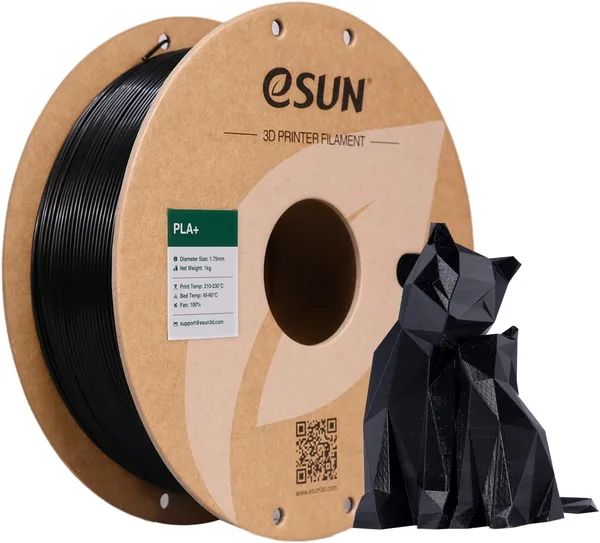
eSUN PLA+ 1.75mm Review: The Filament That Just Keeps Working
eSUN PLA+ isn't the cheapest or the flashiest spool out there, but it's one of the few you can load without recalibrating your printer for every roll. If you own an FDM printer and print regularly — figurines, brackets, prototypes — buy it. If you're after a specific matte or silk finish, look elsewhere; that's not what this spool is for.
There's a line that separates someone who's been printing for a month from someone who's been at it a year: the first still believes all PLA is basically the same, because "it's just plastic." The second already knows the cost of a bad spool — an hour of recalibration, a layer that delaminated 40% into a model, and filament that feeds unevenly because it soaked up moisture in some warehouse of unknown provenance. eSUN isn't a newcomer in 3D printing, and that's exactly why its PLA+ keeps coming up whenever someone in a printer community chat asks what to buy after they've burned through the stock spool that shipped with the machine.
What this filament is, and why the "plus"
Regular PLA is brittle. Knock a part off a shelf and a corner snaps clean off. eSUN PLA+ is a modified formula that adds some flex and impact resistance without sacrificing the easy printability PLA is known for in the first place. In practice, that means thin features — clips, headphone mounts, small gears — don't shatter the first time they hit the floor. That's the whole reason "plus" versions of PLA exist: plain PLA is cheaper, but for functional parts it's often just not practical.
The stated diameter tolerance is ±0.03mm, and that's not a marketing number for the spec sheet. Day to day, it means a stable extrusion flow — you won't hear that telltale clicking as the printer struggles to force a thickened section of filament through the nozzle, and you won't get under-extrusion where the strand suddenly thins out. Cheaper no-name brands get caught out here constantly — diameter can wander by 0.1-0.15mm, and it shows up on the very first layer.
How it behaves in real prints
It prints easy — which might be the single best compliment you can give a filament. Nozzle temp usually sits around 210-225°C, and the bed barely needs heating, if at all; adhesion holds up regardless. That matters for beginners: you're not stuck fiddling with a dozen profiles just to land one clean print.
Color lays down evenly, without the streakiness cheap batches sometimes show from poor pigmentation. The finish is glossy — classic PLA+ — with no matte or silk undertone (if you're after that specific look, you're shopping the wrong spool and setting the wrong expectations). Barely any smell while printing, which is nice if your printer lives on a balcony or in a bedroom rather than a garage.
One honest downside: eSUN's PLA+, like most brands', is still hygroscopic. It pulls moisture from the air, especially if a spool has sat open for a while. Depending on your climate — damp seasons, heating that dries indoor air unevenly — this becomes noticeable: the filament starts crackling and leaves tiny surface bubbles in prints if you don't store it in an airtight container with silica gel. It's not a problem unique to this brand, but it's not worth glossing over either.
What it's up against
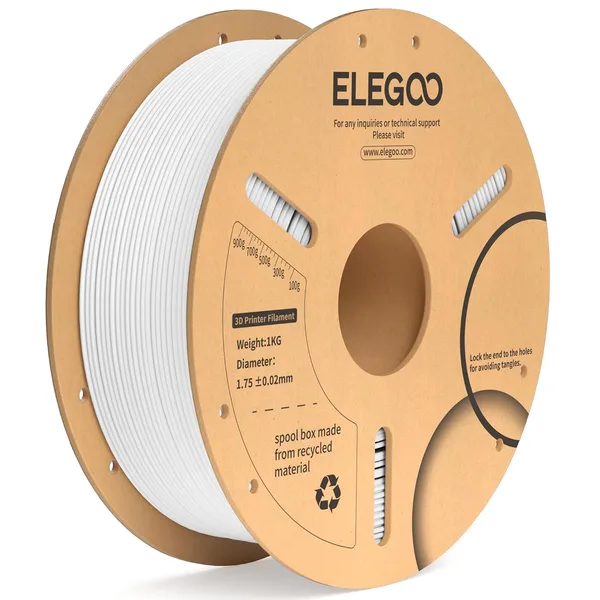
eSUN PLA+ most often gets compared to SUNLU and eLEGOO — three brands effectively fighting the same price-and-quality war in the "affordable but reliable PLA+" segment. The differences between them are mostly minor: one might have slightly better bed adhesion, another a wider color range. On paper they run neck and neck, so the choice usually comes down to which spool is in stock at a reasonable shipping price, and whether you trust that particular batch.
The eSUN PLA+ 1.75mm spool itself runs around $25 — a mid-range price for the category, not the cheapest option but no premium brand tax either. For that, you get predictability instead of surprises halfway through a twenty-hour print. See the full landed price to your country, item plus shipping plus duty, on dede.sh.
Who should buy it, and who shouldn't
If you're new and unsure what to buy after the stock filament that came in the box — get this without overthinking it. Stable diameter and easy printability forgive setup mistakes, which is exactly what you need when you're starting out. If you print functional parts — brackets, mounts, small mechanisms — it fits too, because PLA+'s impact resistance is something you can feel, not just read about on a spec sheet.
If you're after an aesthetic effect — silk, matte, pearlescent — this isn't that product; go look at specialized lines instead. And if you're already an experienced user with a dialed-in profile for a specific brand and no real reason to switch, there's nothing dramatically new here for you.
The main trade-off is moisture. The moment you buy a spool, think about dry storage — otherwise, a couple of months in, you'll get results that don't match what the "plus" formula promised.
FAQ
The difference is real, if not dramatic. Regular PLA shatters almost like glass when it hits a sharp edge; PLA+ tends to scratch or deform slightly instead. For decorative models that barely matters, but for parts that ride around in a pocket or rub against other surfaces, it's a noticeable upgrade.
Honestly, the difference is within margin of error. Both brands make a consistent product in this price segment. If you've already printed on one and you're happy with it, don't chase an ideal — just grab whichever one is cheaper to ship right now.
Yes, that's a genuinely solid figure for an FDM filament in this class. Most of the error in a finished part still comes from the printer and its calibration, not from diameter variance in the filament — eSUN does its part of the job well here.
Not from day one, but it's worth having an airtight container with silica gel for storage between print sessions. If a spool starts crackling as it prints, that's a moisture sign, and a dryer — even a DIY one made from a food container — genuinely fixes it.
Looking for something to compare it against before you buy? Here are a few options from the same segment.