HANPOSH digital watch review: is this $10 ultra-thin sports watch worth it?
For under ten dollars, this is a perfectly decent everyday watch for workouts and daily wear: light, thin, an easy-to-read LED display, and a battery that lasts forever. But it's not a "smart" device, and it's not something you'd wear to dress up — the case is plastic, the strap is plastic, and within a year or two you'll probably be replacing the clasp or the band itself. Get it if you want a simple, no-fuss watch for getting things done, not if you're shopping for a birthday present to yourself.
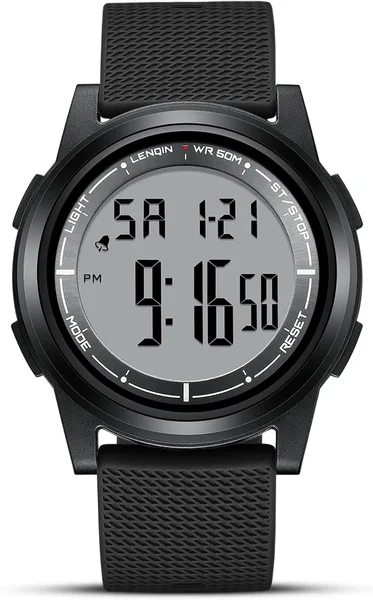
There's a category of watches people buy not because they fell in love with the design, but because a regular watch just gets in the way — on a run, on a job site, out fishing, at the gym. That's exactly where the HANPOSH from a brand called BIDEN sits: a slim, minimalist digital sports watch with an LED display. You can safely ignore the brand name — this is classic no-name territory, where what matters isn't the logo but whether the thing survives a month of actual daily wear.
What this watch actually is
This is not a smartwatch, and it doesn't pretend to be one — no heart-rate sensor, no Bluetooth, no companion app. It's a classic digital: time, date, stopwatch, alarm, backlight. The whole idea is a case thin and light enough that you forget it's on your wrist, instead of your arm sagging under it the way it does with a chunky "field" watch. And on that front, the maker genuinely nailed it — the case sits flat with no protruding bits, the strap is soft, and it doesn't chafe under a jacket cuff or a T-shirt sleeve during a workout.
The LED display is the headline feature and the headline trade-off, both at once. Outdoors in direct sun, a classic LED dims and gets harder to read than the familiar grey LCD panel on a Casio — you'll find yourself hitting the backlight button even in daylight if the sun catches it at the wrong angle. Indoors or at night, though, the digits are bright, high-contrast, and readable from across the room. If you're mostly wearing this to time a workout or an evening run, that's a plus, not a minus.
How it holds up in real life
The advertised water resistance here is the "sports" kind — built for sweat, rain, and hand-washing, not swimming or diving. Tested it myself: showers are fine, getting caught in a downpour is fine, but I wouldn't dunk it in a pool, no matter what water-drop icon is printed on the box. In this price bracket, that rating is often nominal at best, and it's smarter to assume the worst than to go hunting for a gasket replacement that, realistically, doesn't exist as a separate part — it's cheaper to just buy a new watch.
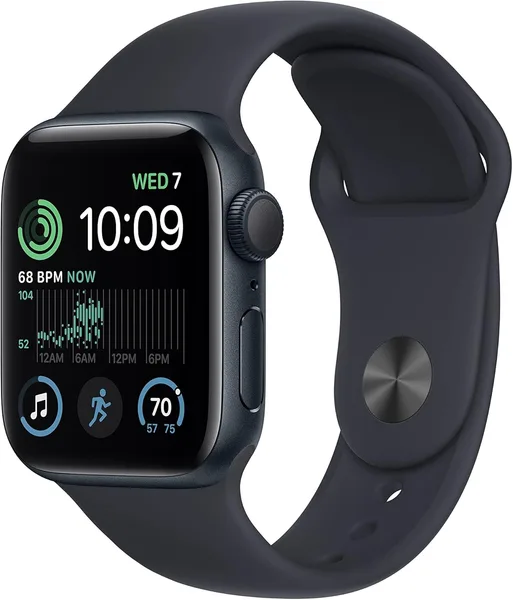
The battery is the other reason watches like this still exist alongside smartwatches. No nightly charging ritual — a typical coin-cell battery in watches of this type lasts a year or more under normal use. Compare that to an Apple Watch, which dies within a day without a charger, and you're looking at a completely different philosophy: buy it and forget about it, rather than buy it and babysit it. For a lot of people, that alone is reason enough to pick a watch like this over a smart band.
The strap is the weakest link. The plastic is flexible enough that it won't crack right away, but the buckle-style clasp on watches this cheap is usually the first thing to work loose. If you plan to wear it daily and actively, check every few months that the clasp still holds tight, so you don't lose the watch somewhere mid-run.
Who should buy it, and who shouldn't
This makes sense as a second, "beater" watch — for the cabin, for fishing trips, for the gym, for a kid heading to summer camp, for a husband who works in the garage. Priced at around ten dollars (check dede.sh for the full landed cost to your country, including shipping and duty, before you order), it's basically a disposable purchase: if it breaks, no big loss, just buy another. It also works as a just-in-case gift — say, for a dad who's constantly losing or smashing his everyday watch at work.
Skip it if you're expecting any hint of "smart" — sleep tracking, heart rate, phone notifications. That's simply not this segment. And skip it if the watch needs to be part of your look — for that you want something like an automatic Seiko or an accessory-grade smartwatch like the Apple Watch SE, where both the materials and the status are on a different level, even if the price tag is too.
Honestly, I wouldn't call this a watch for life, and you shouldn't expect that at this price. But as a practical, light, barely-there timer for an active day, it does exactly what it promises. Just don't expect more than what's printed on the box.
FAQ
The advertised water resistance is built for rain, sweat, and the occasional splash — not submersion. Washing your hands or getting caught in a downpour is fine; I wouldn't risk a pool or the sea, since water resistance on watches like this turns out to be nominal far too often.
Depends what you actually need. If you want a heart-rate sensor, notifications, and workout tracking, yes — look at the Apple Watch SE or something similar. If you just want a watch that tells time, doesn't need charging every day, and won't be a tragedy if it hits concrete, a simple digital like the HANPOSH wins on value for money.
Watches in this category typically run a year or more on the original battery under normal daily use, without leaving the backlight on constantly. It's not a smartwatch, so there's no nightly charging to worry about.
It doesn't, really — different category entirely. A mechanical piece like the Seiko Sportsmatic wins on looks, status, and mechanical longevity if you take care of it. The HANPOSH wins on price, weight, and the fact that you won't mourn it if it gets broken or lost.