HOMOTEK 12-Pack Spring Door Stops: Honest Review and Buying Guide
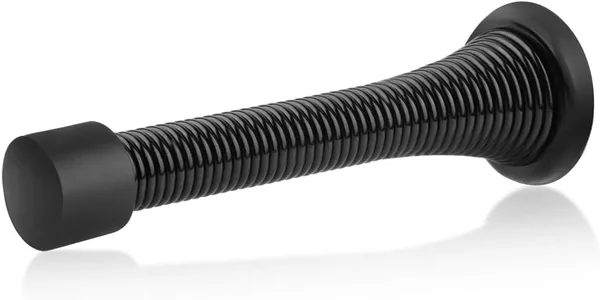
The HOMOTEK 12-Pack is the plain screw-mounted spring door stop — the same coiled metal "boing" you've seen behind a baseboard your whole life, just new and black. It absorbs door slams and saves your walls from scuffing reasonably well, and it lasts for years on wood or MDF trim. On tile or laminate, though, the screw has nothing solid to bite into, and within a couple of months the whole thing starts spinning loose. If your baseboards and door frames are wood or MDF, buy it without a second thought — a dozen for the price of one takeout coffee is a no-brainer. If you're hunting for something to protect bathroom tile, look at the adhesive kind instead.
You know the scene: you move into a new place, hang a door, and within a week the handle has already gouged a crater in the freshly painted wall. Or worse — a draft from the balcony keeps slamming a door so hard the downstairs neighbors start banging on the pipes. That was me with the door to my kid's room — the handle kept punching straight into wall paint I'd only just finished, and every bang was a little reminder of how much that paint job cost.
That's exactly what spring door stops were invented for — the little metal coil on a screw that everyone just calls "the spring." HOMOTEK sells them in a 12-pack, and it's about as unglamorous a product as you'll find on any marketplace — but unglamorous doesn't mean useless.
What this actually is
It's a black coiled spring roughly 3 1/8 inches long (about 8 cm), capped with a rubber or plastic tip, with a screw running through the middle for mounting into a baseboard or the bottom of a door frame. Installation takes about five minutes: position it, drive the screw in with a screwdriver, done. No glue, no drilling, no wall anchors — that's the entire appeal.
There's not much daylight between this and what you'd grab off the shelf at any hardware store — it's essentially the same generic part churned out by a dozen factories, sold under a dozen brand names. HOMOTEK isn't reinventing anything here; it's just bundling 12 of them into one listing, which pays off if you've got a lot of doors to cover — a whole apartment, a vacation house, an office.
How it actually holds up
The spring works by absorbing shock: the door doesn't hit the wall, it hits the rubber or plastic tip on the stop, and the spring's flex eats the impact energy. On a wooden baseboard or an MDF door frame, this works genuinely well — after six months of daily use, none of mine had loosened and the screws were still holding tight.
Tile or porcelain floors are a different story. There's simply nowhere solid for the screw to bite — you either drill into the tile itself (crack risk) or anchor into the grout line, where the hold is weak at best. One of mine, mounted in a bathroom, worked itself loose and was hanging sideways within two months. An adhesive door stop on 3M tape makes a lot more sense there — it won't last as long, but at least it doesn't require drilling into anything.
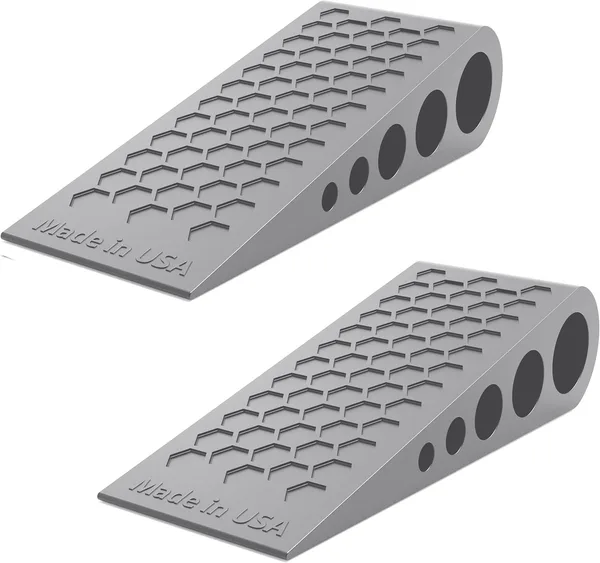
Compared to the classic wedge-style floor stop — that rubber triangle you kick under a door — the spring loses on one point: it doesn't lock the door open, it only cushions the impact at the extreme of its swing. If you need a door to stay pinned open and not budge, a spring stop won't do that job; these are two different tools for two different problems.
One more thing worth knowing: length. At roughly 8 cm including the tip, it sticks out noticeably, and if your baseboards are low or furniture sits close to the door, it can get in the way. In a narrow hallway I once caught one with a vacuum cleaner and nearly ripped it clean out, taking a chunk of baseboard with it.
Who should buy it, and who shouldn't
If you've got a normal apartment with wood or MDF baseboards and doors that regularly get flung wide open, this closes the problem for good — 12 stops is enough to cover a whole home with spares left over for a vacation place or a friend who's just as tired of the slamming. And the price is close to nothing per unit, so there's no real reason to hunt for anything cheaper — you can check the full landed price to your country, item plus shipping plus duty, right here on dede.sh before you decide.
Skip it if your place is mostly tile, porcelain, or poured flooring without baseboards — the mount will be unreliable there, and you'll be disappointed faster than you can write a review. It's also not the answer for heavy fire-rated or exterior doors in a stairwell or office — those slam with enough force and mass that you need a door closer, not a spring.
To be fair, this isn't a product worth overthinking. It's not premium hardware and it's not some clever engineering solution — it's a cheap little coil of metal that does one simple job and does it competently. Don't expect more than that.
FAQ
For a heavy entry door or a fire-rated door, this isn't the right tool — the mass and impact speed are far higher, and a standard spring will either bend or rip its screw out of the baseboard within a few months. For an interior wood door, no issues at all.
The adhesive kind. Bathrooms often have no baseboard at all, or a plastic one, tile won't hold a screw well, and humidity loosens the mount even further over time. The HOMOTEK spring isn't the best choice there, though it's not a disaster either.
Usually, yes — a typical home has somewhere around 6-8 interior doors, so the pack covers all of them with extras left over as spares or to hand off to a neighbor who's equally sick of the slamming.
All you need is an ordinary screwdriver — the screw is included. No drill, no specialty tools required; mounting one takes about a minute per door.