BLKE Max Mini Phone Review: Is the World's Smallest Smartphone Worth It
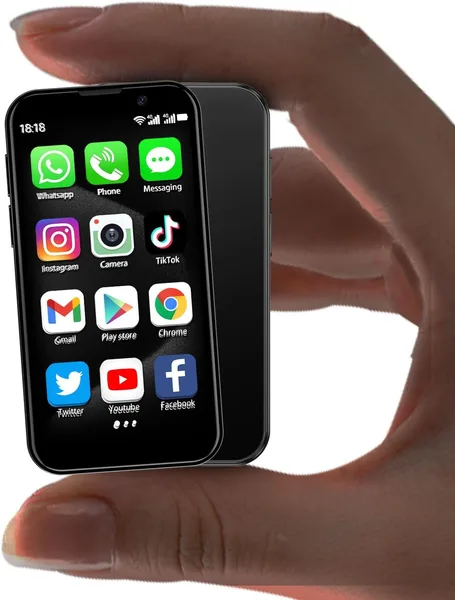
The BLKE Max Mini Phone isn't a replacement for your main smartphone — it's a small rebellion against it. A 3-inch screen, an Android-ish interface, a price low enough to be an impulse buy, and a pile of compromises you should know about before you click "buy." Get one if you want a second "dumbphone" for work, sports, or a kid's first phone. Skip it if you're planning to actually live on it day to day.
Picture this: you're heading out for a run, and instead of stuffing a 6.7-inch flagship into your shorts pocket, where it slaps against your thigh with every stride, you've got something the size of a matchbox in there instead. A call from your mom — answered. A verification code by text — read. And that's it, because that's all this thing ever promised to do. This is exactly the scenario devices like the BLKE Max Mini Phone were built for.
On paper, it's billed as the "world's smallest" touchscreen smartphone, with a 3-inch HD display. In practice, it belongs to a growing category riding the digital-detox and minimalism wave: people deliberately trading giant screens for something too physically awkward to doomscroll on for an hour, on purpose.
What it's actually like, not what the spec sheet says
First impression: it's genuinely, almost comically tiny. Holding it feels strange at first, and for the first few days your thumb keeps missing the icons. But it's one of those things you adapt to faster than expected — give it three or four days and your brain recalibrates; dialing a number or opening a messaging app starts to feel completely normal.
The main selling point — and the main trap — is that this is a real touchscreen smartphone shrunk down, not a button-mashing "grandpa phone" in the Nokia mold. So in theory you get app icons, some flavor of Android-like logic, the option to install a messenger. In practice, the processor and memory are sized for exactly one job: calls, texts, an alarm clock, maybe a music player. Try to install a full-fat Telegram or, heaven forbid, WhatsApp with video, and the phone starts chugging like it's not 2026 but 2013. That's not a bug — it's physics. A chip powerful enough to run modern apps smoothly simply doesn't fit in this body alongside a real battery.
The obvious comparison is the Motorola RAZR V3i, the iconic flip phone of the 2000s. The difference is that the RAZR was about status and design, while the BLKE Max is about pure utility — it isn't trying to be a stylish accessory, it's trying to take up as little space in your jeans pocket as physically possible. Its other neighbor in this niche is the HMD Touch 4G, pitched as the "first hybrid phone" chasing the same philosophy: less screen, less dependence. Both are fighting for the same buyer — someone sick of carrying a brick-sized smartphone everywhere.
Battery life is where the tiny size really costs you. A compact battery means a day of active use, maybe a day and a half on standby. That's fine for a backup phone sitting in a bag in case someone calls, and completely unworkable if you're hoping to make it your daily driver. There's technically a camera too, but don't take it seriously — it exists because it technically can, not because it's a real photography tool.
A 3-inch screen is the point past which anything longer than a text message turns into a squinting exercise. Reading news, or even a chat thread longer than a couple of lines, isn't for the faint of eyesight. But for what people actually buy this for — seeing who's calling, or reading "where are you?" — it's plenty.
Who it's for, and who should walk away
Let's be honest: this isn't a phone for most people, and the maker clearly knows it — hence a price low enough to feel like an impulse buy rather than a real gadget investment. Get one if you need a second number for work that you don't want to carry alongside your main phone. Or if you're buying a kid their first phone and want them to be able to call and text without being able to fall down a TikTok hole. Or if you're heading to a festival or on a hike where you'd rather leave your actual flagship safely at home.
Don't get one if you think it'll work as a "lighter" everyday smartphone. It won't. Navigation, banking, capturing important moments on camera, long video calls — all of that is either impossible here or so clunky you'll give up within five minutes. One more thing: this isn't a major brand with a service-center network behind it, so if something breaks, you're troubleshooting through the seller, not walking into an authorized repair shop.
There's really one core trade-off here, and it's a big one: you're paying rock-bottom for maximum pocketability, and in exchange you give up nearly everything that makes a modern smartphone a smartphone. The second trade-off: "unlocked" doesn't automatically mean it'll play perfectly with your local carrier on the first try — check the supported bands against your network before you buy if that matters to you.
FAQ
FAQ
You can technically install them, but using them long-term is a dubious pleasure. The memory and processing power are sized for the basics — heavy apps will lag and drain the battery twice as fast.
If maximum battery life and simplicity with zero touchscreen is the goal, a classic button phone still wins on endurance and reliability. The BLKE Max makes sense specifically for people who want a touchscreen interface in the smallest possible package, not for people trying to escape touchscreens altogether.
No, and don't try. There's no real navigation and no comfortable access to banking or bookings — this is a companion to your main smartphone, not a stand-in for it, even for a few days.
At this price point, chasing "official" pricing misses the point of the product entirely — this is a niche gadget without a big service-center network behind it. What actually matters is checking the seller's reputation, not hunting for brand-name warranty coverage. Compare full landed cost — item, shipping, and duty in one number — across sellers on dede.sh before you decide.
If you're eyeing something else in this same "minimalist phone" niche, or just want to see what else is nearby, check the picks below.