FLASHFORGE Rapid PETG Metallic Bright Gold: is it worth buying
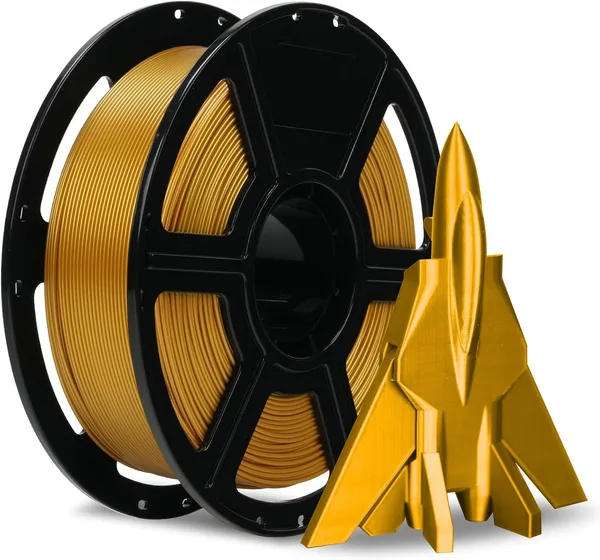
FLASHFORGE Rapid PETG Metallic Bright Gold is a PETG built for speed printing (the maker claims up to 600 mm/s) with a pleasant metallic gold sheen instead of the usual glossy plastic look. It prints steadily, the color doesn't disappoint, but it's still PETG with all the usual quirks — stringing, a need for drying, and so-so adhesion on certain bed surfaces. Worth buying if your printer can actually hit those speeds and you want the finished part to look pricier than it really is.
There's a moment that eventually ends every love affair with PLA: the first part that was supposed to sit on a windowsill or in a hot car, and a week later it's warped into a banana shape. That's usually when the search for something tougher and more heat-resistant begins — and nine times out of ten, it leads straight to PETG. The only question is which PETG to buy, because marketplaces are stuffed with hundreds of spools, half of them promising "premium quality" in the exact same words.
FLASHFORGE came at this from a specific angle: not just PETG, but "Rapid" — built around print speed, plus a metallic gold color that genuinely looks different from the typical matte plastic finish of other spools. I tested it on a printer capable of holding high speeds, so this review is going to be blunt about who actually needs this filament and who doesn't.
What's different from PLA — and that's fine
PETG is simply a different animal from PLA, and anyone switching over expecting it to "just be tougher" often gets a rude awakening on the very first layer. FLASHFORGE Rapid PETG is no exception: it's a bit more elastic, likes a steady nozzle temperature with no sudden swings, and — like almost all PETG — tends to leave thin spiderweb strings between parts if retraction isn't dialed in for your specific printer. That's not a flaw of this particular spool; it's just how the material behaves. But brands that slap "high speed" on the label owe you proof that their formula actually holds its viscosity at speed instead of turning to mush. And here FLASHFORGE Rapid PETG delivered: at 500+ mm/s the layers laid down evenly, no sagging, no fuzzy outer walls — the usual tell-tale signs of overheated or over-stretched PETG.
The headline feature is a claimed top speed of 600 mm/s. Honestly, most people will never see that number, because it takes a CoreXY-class printer with a proper hotend and a strong direct-drive extruder — something in the Bambu Lab league or similar. On a typical Ender-style machine you'll hit your ceiling long before 600, and "Rapid" becomes little more than a marketing word. But the material's core trait — not degrading, not "floating," staying consistent under acceleration — is noticeable even at the more modest 150–250 mm/s range where most home printers actually live.
A color that's genuinely nice to hold
Now, about the gold. Metallic Bright Gold isn't that garish "pearlescent" effect you sometimes get with cheap colored filaments that ends up looking like wet foil. Here the shimmer is softer, evenly distributed across the whole part, and on rounded shapes — enclosures, decorative pieces, stands — it genuinely looks expensive. Friends I showed a printed part to, with no context given, asked if it was cast bronze. It's nice when plastic surprises people in the right direction.
The downside of colored, and especially metallic, PETG is that it tends to clog cheap extruders more easily, thanks to the tiny metallic particles in the pigment that create the shine. In my case, a 0.4mm brass nozzle ran through the whole test with no issues, but if you're running an old nozzle that's already on its last legs, keep that in mind.
How it stacks up against what's already on the shelf
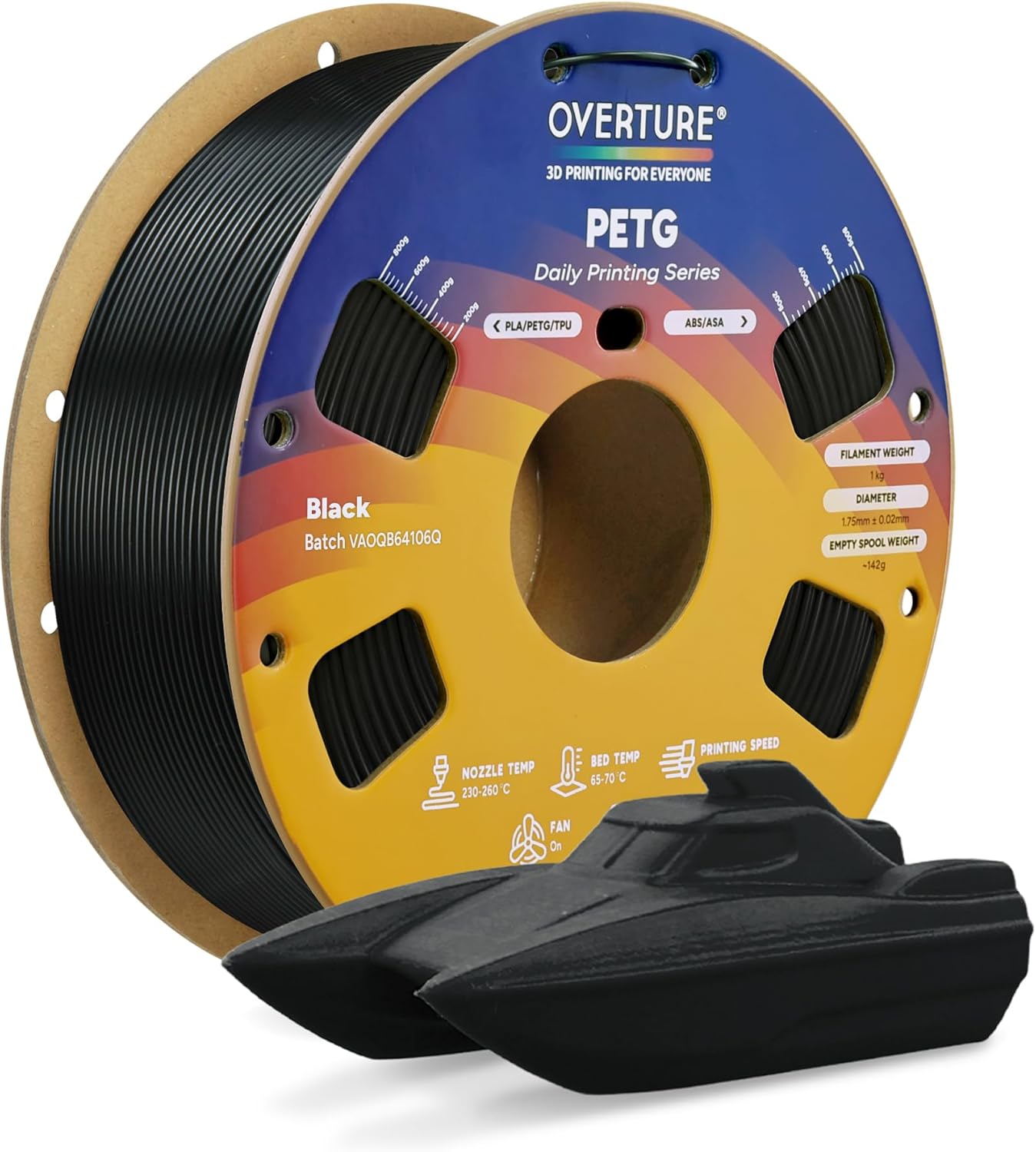
The obvious rival here is Overture PETG High Speed, which plays in the same "fast PETG" space and is the better-known name simply because the brand has been around longer. Overture is a bit more forgiving and easier to dial in straight out of the box — a solid pick when you don't want to spend an evening tuning retraction and temperature. FLASHFORGE, on the other hand, wins not on ease of use but on color and noticeably steadier behavior at genuinely high speeds, provided your printer can actually deliver them. If color doesn't matter to you and the priority is skipping the calibration headache, go Overture. If you want the finished piece to look premium and you've got a fast printer, FLASHFORGE takes it.
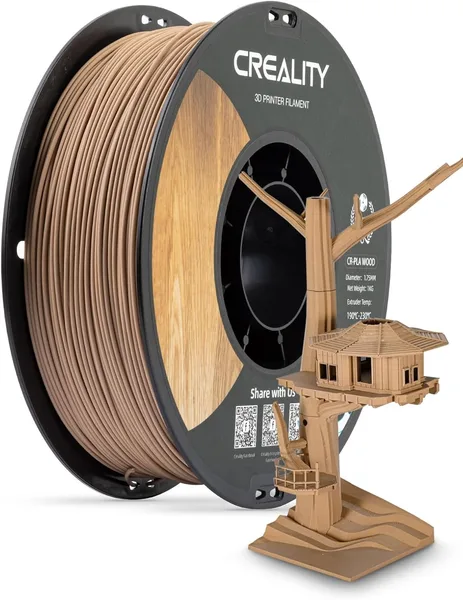
If you're after something with an entirely different texture — say, a wood-toned finish instead of a metallic shine, for decorative pieces — take a look at Creality Wood Filament, though that's PLA and a whole different story in terms of durability.
Who should buy it, and who should walk on by
The spool itself is priced in the normal range for PETG on the marketplace — even a touch below some "name brand" competitors with similar volume. Once you add forwarding and import duty for your own country, the number changes, so check the full landed price — item plus shipping plus duty in one figure — on dede.sh before you decide; it beats guessing at checkout.
Buy it if your printer can genuinely unlock that speed potential, and if you make gift or display pieces where looks matter as much as strength — keychains, phone stands, cosplay accents. Skip it if you're running a slow budget printer without direct drive — you'll pay the "Rapid" premium and never see the benefit, so grab a regular PETG without the speed markup instead. Also steer clear if you're completely new to PETG and haven't printed it before — this material needs drying (keep the spool in an airtight container with silica gel) and a bit of patience with settings, so your first experience with a metallic color might disappoint you not because of the filament itself, but because of the learning curve.
FAQ
Yes, like practically all PETG. If the spool has sat open for a week or two in a humid room, dry it before printing, or you'll get crackling and tiny bubbles on the surface. This isn't a quirk unique to this brand — nearly all PETG behaves this way.
No. 600 mm/s requires a direct-drive printer with strong cooling, in the new-generation CoreXY class. On a typical budget Ender-style machine you'll hit your ceiling long before that number, and in practice you're buying a solidly good PETG that just happens to look great.
Overture is easier to calibrate and more forgiving of first-timer mistakes. FLASHFORGE Rapid performs better at speed and wins on looks thanks to the metallic tint, but it demands a slightly more precise approach to retraction and temperature.
Yes — PETG is inherently tougher and more heat-resistant than PLA, so it holds up better for brackets, mounts, or parts that will sit in the sun or in a car. The metallic pigment has essentially no effect on mechanical properties.