MedPride Powder-Free Nitrile, Iris Blue, Medium (Box/100): Worth It?
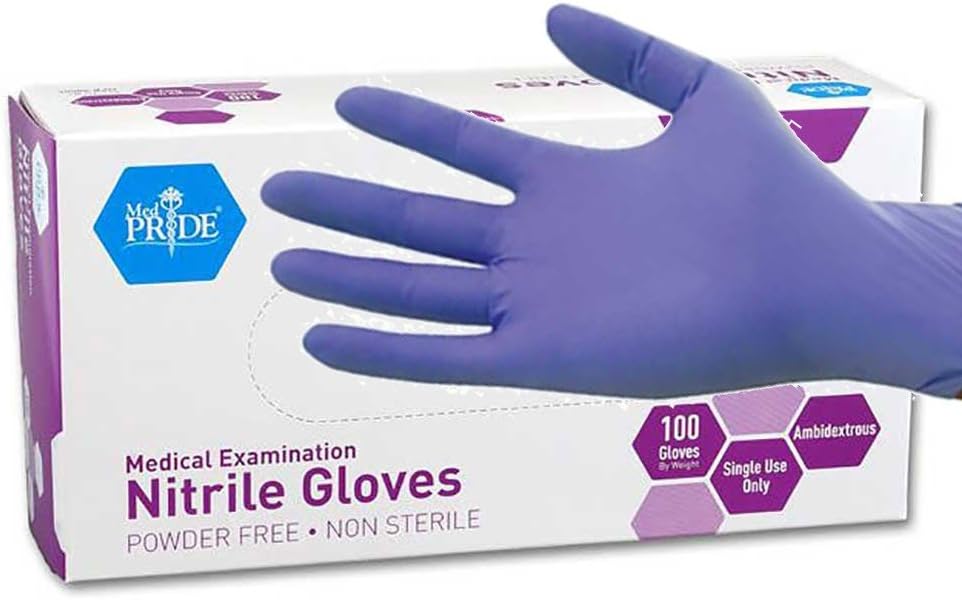
MedPride Iris Blue—regular powder-free nitrile gloves, box of 100, size M. Not medical premium and not the thinnest on the market, but they hold shape, don't rip at the first touch of sandpaper, and cost so little that buying them by the case becomes habit. Worth buying if you need a working version rather than a fancy one—for a garage, kitchen, workshop, or home medicine cabinet.
There's a category of products nobody thinks about until the box runs out at the worst possible moment. You're painting a fence—and the last three gloves tear one after another. You're changing the oil in your car—and all you have at home is that same pair of latex gloves you put on last Easter that now crack just from your fingers. That's what MedPride Iris Blue gloves exist for—not a heroic product, but the kind that just needs to be on hand in sufficient quantity.
Let me start with the obvious: these aren't premium medical gloves for surgery, though formally they're positioned as exam gloves—examination, medical-purpose. In reality, the lion's share of people buying these boxes aren't doctors. They're manicurists, auto mechanics, home workshop owners, people who paint, glue, unclog drains, or simply don't want to touch with bare hands what they pulled out of the trash bin. For all these scenarios, nitrile is better than latex—doesn't cause allergies in the vast majority of people and resists solvents, oils, and chemicals better. This isn't marketing spin, it's the real reason nitrile long ago displaced latex from garages and workshops.
What It's Actually Like to Use
The Iris Blue color—not just aesthetics. Bright blue is visible against dirt, metal, wood—if a glove tears and a piece is left in a wound or food, it's easier to spot than white or clear latex. A small detail, but a nice one.
Powder-free—this is now standard for any gloves that contact skin for more than a few minutes. Powder was once used to make the glove easier to put on, but it gets into pores, dries out skin, and with prolonged use really irritates hands. MedPride doesn't stand out here among competitors—it just does what a modern glove should. Size M in the box—this is the middle of the range, the most common size, which is why manufacturers always keep the largest stock of it. If you have noticeably large hands or a very narrow palm—better check the size chart separately, because "M" sometimes differs by half a size between brands.
What you definitely won't get—a feeling of "surgical" thinness, like with top brands such as Ansell or Microflex, where the glove fits like a second skin and is barely felt on your fingers during delicate work. MedPride are a bit thicker, a bit less tactile. For precise manipulation—tattooing, tiny electronics, work with pipettes—experienced practitioners often take something thinner and more expensive. But for regular household and work use this difference in tactility simply isn't critical, and there's no point in overpaying for it.
Puncture and stretch—the gloves behave quite decently here. Don't tear from careless pulling on wet hands, withstand contact with oil, household chemicals, alcohol. But these aren't industrial gloves for work with sharp metal edges or glass—if there's real risk of cuts, you need a separate class of protection, not examination nitrile from a box.
Who Should Buy, Who Shouldn't
Buy if: you need a large quantity of disposable gloves for regular household or work use—cleaning, minor repairs, cooking, painting, working with chemicals, home first aid. A box of 100 is designed so you don't think about supply for months.
Don't buy if: you work with sharp objects and need real cut protection, or if maximum tactile sensitivity is critical—then look at thinner and more expensive lines. Also don't expect a higher class of sterility—these are regular, non-sterile exam gloves, not intended for an operating room or serious medical procedures.
The main compromise here is obvious: these aren't the thinnest or most prestigious gloves on the market, but they're so cheap per piece that you don't think about them at all—just grab and use. For the final cost with shipping to your country, check the landed price on dede.sh. For a hundred gloves, that's pennies per piece, which is exactly why boxes like these are usually bought more than one at a time.
Honestly, I'd keep a box like this both at home and in the garage at the same time—they're so inexpensive that it makes no sense to skimp on them.
FAQ
No, for household tasks and light mechanical work they hold up fine. Problems only appear if you pull them on a sharp edge or tug sharply at the cuff—but that's a general trait of any disposable gloves, not a specific weakness of MedPride.
If your work is precise—manicure, electronics, tattooing—yes, the difference in tactility is noticeable and worth it. For cleaning, repairs, or cooking the difference is so small that the premium isn't justified.
Yes, this is the most universal size and that's why it's most popular. But if your palm is noticeably wider than average, better check the size chart rather than relying solely on the size name.
No, this is the powder-free option—no talc or powder inside, so hands don't dry out even with prolonged wear compared to old powder gloves.
If you're assembling a garage or workshop kit—also check what else you should have on hand for basic protection and diagnostics.