adidas Trionda review: is the official World Cup 2026 ball worth buying
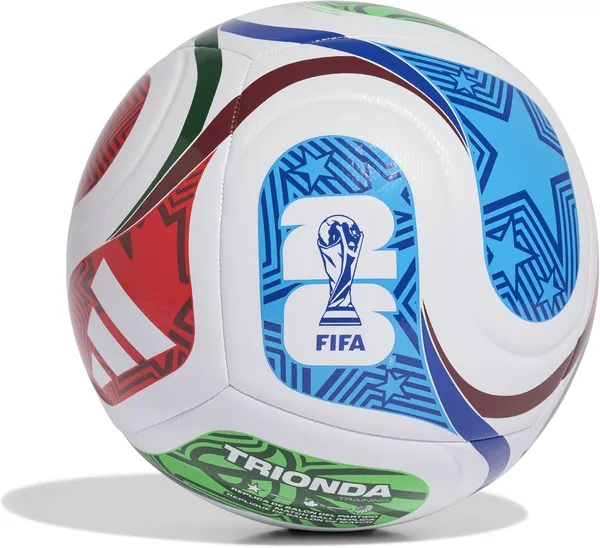
The adidas Trionda is the genuine match ball for the 2026 World Cup, not a bargain-bin training version. It flies true, holds its shape, and that's exactly why it costs noticeably more than your average kickabout ball. Get one if you play regularly or just want the actual ball the tournament will be played with — skip it if you need something for the odd weekend game in the park.
Every four years the same story plays out: a couple of months before the World Cup, adidas unveils a new ball, football blogs argue about whether it "flies right," and youth coaches quietly buy a couple extra per team because last season's balls are scuffed to death. For 2026 that ball is called Trionda — "three waves" in Spanish, a nod to the three host nations: the US, Canada, and Mexico. And yes, this is the actual ball used at the tournament, not some budget knockoff "in the style of."
Pick it up and the first thing you notice isn't the graphics — it's the surface. adidas has moved away from classic leather-look texture toward smoother thermally bonded panels, continuing the approach from recent World Cup balls (Al Rihla, Qatar 2022). That's not just a style choice: the seams on a ball like this don't come apart, it absorbs less water on a wet pitch, and it flies predictably even off a hard strike — what adidas engineers call "aerodynamic stability" and what regular players just call "goes where you kick it, not sideways."
That's where the gap with a $15 ball from your local sports shop becomes obvious. A cheap ball starts drifting out of shape after a month of regular use — the seam might separate, and in cold weather the rubber stiffens up so the bounce turns unpredictable. The Trionda sits closer to pro-level construction: the panels are bonded rather than stitched, the bladder holds pressure longer, and even after a hundred shots against the garage wall it doesn't start sagging. Honestly, for casual weekend football that's overkill — but if you're training two or three times a week, you feel the difference under your foot within the first few sessions.
The natural comparison is with two other options: a standard No. 5 training ball, and the "World Cup style" replicas flooding every marketplace right now. In photos, the replicas look almost identical — same print, same wave pattern. But this is exactly the case where details matter: replicas are often made from cheaper PU coating that stiffens up below about 5°C and loses its round shape within a couple of months. If you're buying for a kid to kick around the yard, a replica will do the job honestly and cost a third as much. If it's for a team, regular training, or you just want the same ball Messi or Mbappé (or whoever's playing in 2026) will actually kick — that's where the original earns its price.
One thing that mildly annoys me about every ball like this in recent years: it ships without a pump or needle. Small detail, but the first evening after unboxing usually turns into a hunt for something to inflate it with. Keep that in mind and grab a pump ahead of time, not after the ball has already arrived and there's nothing to play with.
The adidas FIFA World Cup 26 Trionda Soccer Ball starts at roughly $38 on the marketplace — but that's before shipping and import charges, which can add a meaningful chunk depending on where you live. Check the full landed price on dede.sh (item plus forwarding plus duty in one number) before you buy, rather than just going off the sticker price on the product page. It's not the cheapest ball in its class, but it's not premium-tier either — it sits somewhere between a "basic training ball" and the several-hundred-dollar match ball the pros actually play with on the pitch.
Who should buy this without hesitation: parents getting their kid their first "serious" ball before joining a club; fans who want to feel the tournament spirit before it even kicks off; and anyone who plays regularly and is tired of balls that lose their shape after one season. Who shouldn't bother paying extra: if you need a ball once every couple of weeks for the beach, or just want something to sit on a shelf as a souvenir — get something cheaper, because the difference underfoot won't have time to justify itself.
The main trade-off here is simple: it costs more than "just a ball," and you're paying specifically for flight stability and panel durability, not some magic bonus feature. The second trade-off is the missing pump — minor, but worth remembering ahead of time.
FAQ
It's the same model and the same panel design as the tournament's official match ball, but the retail version isn't always identical in bladder construction to the pro-level version used on the pitch. For amateur and even semi-pro play, the difference is unnoticeable.
If you play occasionally — no, a replica will do the job. If you train regularly or play in cold, wet conditions, the original holds its shape and pressure longer, and you'll genuinely feel it underfoot within a month or two.
The Trionda comes in size 5 — the standard for adults and teens from roughly age 12 up. For younger kids, look for a smaller ball (size 3 or 4) separately; the Trionda will be too big and heavy for them.
Yes, a pump and needle aren't included — that's a separate purchase, and it's worth picking one up ahead of time so you're not stuck waiting when it's time to play.