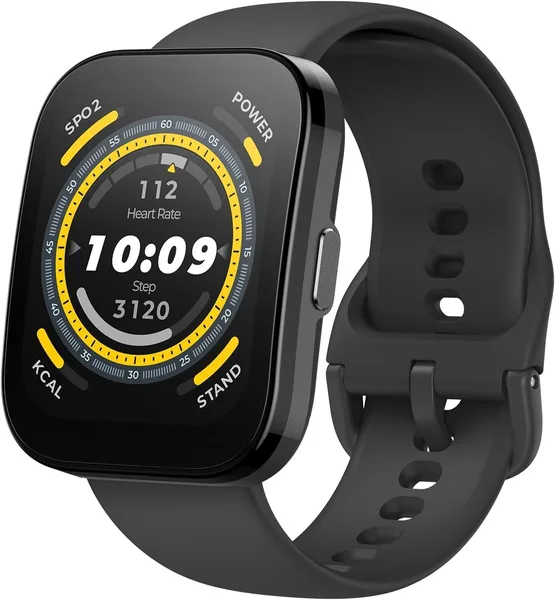
Amazfit Bip 5 review: worth it instead of an Apple Watch?
The Amazfit Bip 5 is a watch for people who want a big bright screen, calls from the wrist and a battery that lives a week or two, but aren't ready to pay for an Apple Watch or wrestle with Google's ecosystem. Not the most accurate GPS, not the prettiest body — but an honest workhorse for sensible money.
Similar options: the watch catalog on dede.sh.
Picture this: you need a watch that just works. Not one that demands charging every evening like a nervous little dog. Not one that costs a whole paycheck. And ideally one you can answer a call on when your hands are in dough or you're out on a run and left your phone at home. That's the request the Amazfit Bip 5 was born from — and honestly, it answers it better than you'd expect from a watch at this price.
The second reason people usually buy the Amazfit Bip 5 is battery life. The claimed "up to 10 days" in normal mode is of course a marketing figure from ideal lab conditions; reality is a bit humbler — with the always-on display, GPS workouts and notifications from a dozen apps you get about 5–6 days. But even that already sets it apart from an Apple Watch, which you have to clip to a charger every evening like a puppy on a leash. For someone travelling for work without reliable access to a socket, or who simply hates thinking about charging a watch, that's a real advantage, not a spec-sheet line for the sake of it.
GPS is built in, which is nice — you don't have to drag your phone along on every run for the track to record correctly. But accuracy is, honestly, middling: on open terrain it's fine, yet in dense buildings or under trees the track sometimes draws odd loops, as if you'd run over your own footprints rather than along the promenade. For pacing and distance on regular workouts it's enough. For serious trail running with navigation across unfamiliar terrain — no, that needs a tier above.
Bluetooth calls are what actually sets the Bip 5 apart from the mass of other budget watches. The mic and speaker work decently as long as it isn't too loud around you: in the kitchen, in the car in a parking lot, in an office corridor — fine. Outdoors in the wind or on the subway the other person will hear more noise than you. But the very fact you can take a call without pulling the phone out of your pocket while cleaning or working out is the kind of small thing that eventually starts to feel like a necessity rather than a bonus.
Alexa on board is an ambiguous thing. In theory it's handy: ask about the weather or set a timer by voice straight from the wrist. In practice, for many buyers it's more of a curiosity than a working tool — the assistant understands English best and localization isn't always great. Don't buy the Bip 5 for Alexa; buy it for everything else and treat Alexa as a nice bonus you'll use twice and forget.
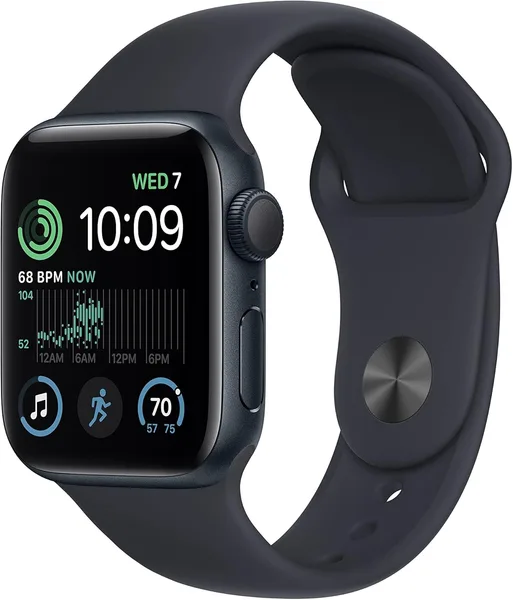
Compared with recent Xiaomi Mi Band generations, the Bip 5 wins by being a full watch body rather than a fitness-tracker band — there's a physical button, the strap swaps the standard way, and it looks more substantial on the wrist. Compared with an Apple Watch SE it's of course a different league: no App Store, a limited notification ecosystem, a less fluid interface. But the price is another story too. Abroad the model costs around $70.99. What that turns into once forwarding and duty to your country are added is a separate number — check the full landed price to your country on dede.sh. Either way it's a "buy it and forget the problem" watch, not a years-long investment.
Honest about the downsides: the software occasionally stutters for a second or two when moving between screens, especially with lots of widgets installed. The heart-rate sensor sometimes "floats" during intense workouts — the numbers jump more than you'd like to see during intervals. And the body materials are obviously plastic that looks decent but makes no claim to premium.
Who should buy it. Anyone who wants a simple, reliable watch for daily wear, workouts and calls, without being tied to a specific phone brand. Parents who want less charging fuss. People tired of hunting for a watch cable every evening. Who shouldn't: if you live in the Apple ecosystem and want full notifications from every app, or if GPS accuracy is critical for serious sport — look toward pricier models.
FAQ
If you have an iPhone and don't mind charging every evening — yes, the Apple Watch gives incomparably deeper integration. But if you just want a reliable watch for workouts and calls without the charging dance, the Bip 5 covers it for a third of the price.
With regular GPS workouts and constant notifications you realistically get 5–6 days without charging, still far better than most rivals in this price bracket.
For ordinary runs and pacing — enough. For trail running in a forest or dense city the track sometimes "floats," so serious runners should look at a tier above.
Calls only work over a Bluetooth connection to a phone nearby — there's no standalone SIM module. But you can leave the phone in a bag or on the kitchen counter.