Amazon Basics Leak-Proof Puppy Pads: Are They Worth Ordering
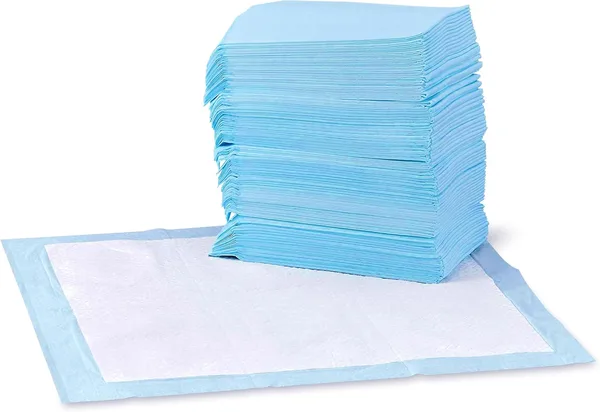
Plain 5-layer pads that genuinely don't leak onto a normal floor, as long as your puppy isn't stomping around on one for hours and you swap it out on time. No engineering marvel, but they do the one job they're sold for. The main reason to buy them: a fair price per pack and the fact that they actually hold liquid instead of just smelling "fresh" on the label.
If you've ever raised a puppy, you know that 6 a.m. feeling: the floor is wet, the dog is giving you the most innocent look in the world, and you're thinking, "why not the pad, buddy, why." The trouble is, not all pads are created equal. Cheap ones from the corner pet shop tend to soak straight through after the first "big" visit, and suddenly you're not just changing a pad — you're mopping the floor, scrubbing the rug, and losing your patience.
I tested these Amazon Basics pads with a young Labrador who drinks a lot and, unsurprisingly, "produces" accordingly. First impression: the absorption speed genuinely surprised me. Five layers do their job — liquid gets pulled downward instead of spreading across the surface the way it does with thin single-layer knockoffs. The top layer feels dry to the touch within five to ten minutes, so puppy paws don't track damp footprints across the apartment. Small victory, but if you've got light-colored laminate flooring, you'll take it.
How it actually works day to day
There's no magic here — it's cellulose padding backed by a polyethylene layer that keeps moisture from reaching the floor. In plain terms: if the puppy does its business roughly within the pad's boundaries (not five centimeters past the edge, which, honestly, happens more often than you'd like), the floor stays dry. The size is standard, and for larger breeds like Labradors or Border Collies, it's worth sizing up early — puppies grow fast, and what fit neatly on the pad a month ago no longer does.
Compared to reusable cloth pads — heavily marketed these days as the "eco-friendly alternative" — these disposables win on convenience during the first months of training, when accidents are frequent and washing something every single day just isn't realistic. Cloth pads are cheaper in the long run, but they need to go straight into the wash after each use, or your apartment starts smelling exactly the way you'd expect. If you've got a puppy and a work schedule, disposables are the more practical choice at the start, and you can switch to cloth later once the dog is mostly trained.
The main competitor on the shelf is generic diaper-style pads from local brands, sold individually in pet shops for a few cents to a dollar apiece depending on the market. The real difference shows up in volume — how much they absorb before they leak. With the Amazon Basics pads, I never had a single leak under normal use, meaning the pad gets changed after one or two visits rather than left "just in case" until evening. The one time I forgot to swap it and the dog went twice on the same pad, even the five-layer build gave up. So this isn't an all-day reservoir — it's a disposable solution for one, maybe two uses.
Odor-wise, there's almost none — no chemical "fresh out of the box" smell, and none of that specific stench cheaper pads develop once the pack has been open a while. Small detail, but when a pack sits in the bathroom or hallway for months, it matters.
Who should buy it, and who shouldn't
If you've got a puppy that isn't housebroken yet, or an older dog who — due to age or health — doesn't always make it to the door in time, this is a solid base to work from. It also works fine for cat owners who temporarily set a litter box on top of a pad for extra floor protection, even though the product is marketed for dogs.
But if you've got a big, healthy adult dog who just "likes to cause trouble," pads aren't the fix — training is, and no five-layer construction will substitute for it. Also don't expect a single pad to survive an unsupervised workday; that's what tray-style systems with raised edges and replaceable liners are for, and that's a different product category entirely.
Let's be honest about the main trade-off: per-unit cost runs higher than budget local alternatives if you're buying small packs. Ordering the pack on its own rarely pencils out once you add forwarding and import duties — it only makes sense when it rides along with other purchases in the same order. Check the full landed price to your country — item, forwarding, and duty combined — on dede.sh before deciding. Second trade-off: this is still a single-use plastic product, and if sustainability matters to you, reusable cloth pads are worth a look despite the washing hassle.
FAQ
Under normal use — yes, they hold up. But if you forget to swap a pad in time and the dog uses it twice, the five layers stop being enough. It's a one-or-two-use disposable, not an all-day reservoir.
Early in training, when accidents happen a lot, disposables are more convenient — no daily washing required. Cloth pads are cheaper over time, but only if you're disciplined about washing them immediately, or the smell in your home becomes a real problem.
No, this isn't built for continuous daily use by a large adult dog — you'd burn through a pack fast. It's more cost-effective to either train the dog to go outside or invest in a tray system with replaceable liners.
On its own — not really; forwarding and duties eat the savings. It makes sense if you add it to a larger order in the same pet-supplies category.
Looking for what else to add to a pet-supplies order? Check the picks below.