Amazon Basics Lightweight Microfiber Sheet Set: Honest Review
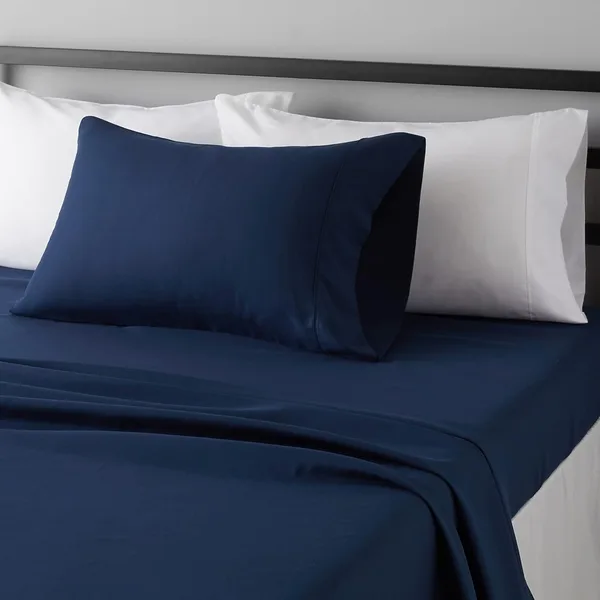
The Amazon Basics microfiber sheet set is that rare thing: a "basic" product that actually means what it says. It won't keep you warm in winter and it won't win over die-hard cotton people, but for the money it's about as safe a bet as sheet shopping gets — you make the bed, you forget about ironing for a year or two, and that's the whole story.
You know the scene: you've just moved, there's a bed frame, and no sheets. Or the old ones have gotten so tired you're embarrassed when someone stays over. So you go looking with one thought in your head — "I just need something decent, no drama." That's exactly the gap this Amazon Basics set is built to fill: a fitted sheet, a flat sheet, and a pillowcase, all in microfiber.
The first thing you notice pulling it out of the bag is how light it is. Genuinely light — closer to athletic wear fabric than the heavy, dense cotton most people picture when they think "good bedding." Some will call that a downside, missing the substantial feel against the skin. But it cuts both ways: in a +80°F apartment with a fan just pushing hot air around, heavy percale starts to feel like an enemy. Microfiber doesn't trap heat, doesn't cling, and turns out to be a genuinely nice call for summer — nicer, honestly, than the classic sateen or cotton percale that tends to hold warmth longer than you'd like.
Ironing is the whole reason a lot of people buy sheets like this in the first place, and here the "wrinkle-free" promise actually delivers. Out of the dryer, the sheet comes out nearly smooth — maybe a couple of soft creases that shake out once you're making the bed by hand. Compared to cotton, where you're either ironing or living with rumples, that's a real relief if you don't have the time or patience to stand there with an iron on a Sunday night.
The elastic on the fitted sheet deserves its own paragraph. On cheap sets it's often so weak it gives up within a week, leaving a mattress corner bare at 3 a.m. This one lists a 14-inch pocket depth (about 35 cm), so even a thicker mattress with a topper sits properly, no white-knuckle stretching involved. I wouldn't call it premium-grade elastic — this isn't the segment where the band survives for years — but for everyday use, it's plenty.
Now, the annoying part. Microfiber holds static. Especially in winter when heating dries the air out — you'll get zapped pulling the blanket off. Second, it doesn't breathe the way cotton does, so if you sleep hot or have sensitive skin, even this lightweight fabric can feel a bit stifling. And third, it's not the material you show off to guests as "check out our nice bedding." It looks tidy, but there's no wow factor — it's a workhorse, not a design statement.
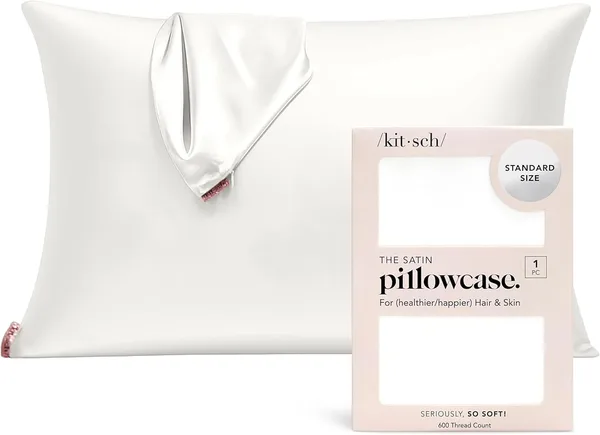
There's plenty to compare it against. Bedsure plays a different game entirely with its throws and blankets — that's about coziness and visual effect, not everyday practicality. Satin pillowcases like Kitsch are solving a completely different problem — hair and skin care — at a completely different price per item. Amazon Basics isn't competing on luxury here; it's competing on common sense: fabric that survives repeated washes without losing shape, that pills far less than the no-name cheap stuff, and that's priced sensibly.
On price: rather than quoting one number that won't mean much depending on where you live, check the full landed cost on dede.sh — item plus forwarding plus your local import duty, all rolled into one figure for your country. It's not the cheapest set on the market, but it's not a brand markup either — it sits squarely in the middle, where you're paying for consistent material quality and the fact that Amazon Basics rarely gets sizing or details like pocket depth wrong.
Who's it for? Renters who don't want to sink money into sheets they'll have to leave behind. Students, parents who change sheets weekly and are tired of ironing. Anyone who sleeps in a hot climate or just doesn't love heavy fabric against their skin. Who should skip it: anyone sensitive to static shock, anyone committed to natural fibers on principle, or anyone chasing a "luxury" bedroom feel as part of a bigger interior project. That calls for different materials — and honestly, a different budget.
The main trade-off comes down to one thing: you're choosing practicality over that expensive-fabric feel. A second, less obvious one — the Twin size in this particular listing won't fit every mattress, so double-check the measurements before you order, because returning international purchases is always a hassle.
FAQ
If you sleep hot or live somewhere warm — no, microfiber is actually the better call here since it's lighter and dries faster. But if you love the feel of dense fabric and don't mind ironing, sateen or cotton percale will give you that "hotel" feel microfiber never promises.
Microfiber generally holds its size better than cotton, which can shrink noticeably in the first few washes. Just avoid drying it on high heat — the fibers can "cook" a little and turn stiffer than they should be.
14 inches (about 35 cm) is generous for a basic set and handles even a mid-thickness mattress with a topper. But if your mattress plus topper adds up to more than about 12 inches combined, measure first — there's not much margin left.
Honestly, neither wins here. This microfiber is light and doesn't insulate — it's a summer or year-round-in-a-heated-apartment fabric. If your home actually gets cold in winter, flannel sheets or heavier cotton will serve you better.