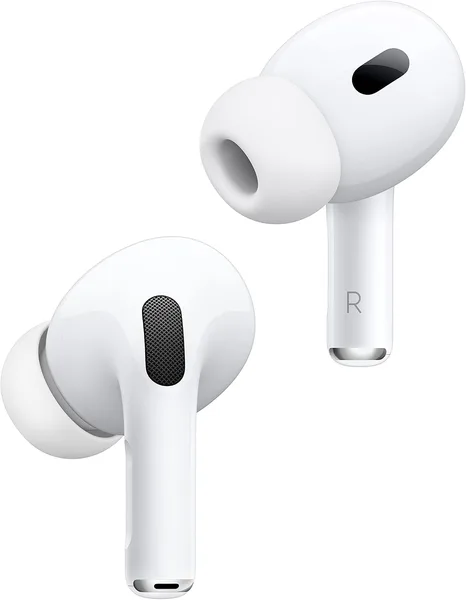
Apple AirPods Pro 2 Review: Still Worth Buying in 2026?
In 2026, the AirPods Pro 2 aren't a new toy anymore — they're a time-tested classic. The noise cancelling genuinely works instead of being a marketing checkbox, the battery covers a full workday, and pairing with an iPhone happens almost without you noticing. But if you're outside the Apple ecosystem, or you like tweaking an equalizer to taste, there's not much point paying the premium.
I put off buying AirPods Pro for a long time. Earbuds at that price — seriously? I had a pair of no-name true wireless buds sitting in a drawer that sounded fine right up until the battery died on day two of use, and the sound on the subway turned into a losing battle against the rumble of the train car. Eventually I caved and bought the Pro 2 — and understood exactly what you're paying for. It's not the logo.
Noise cancelling that actually cancels, not just mutes
This is the main reason to get the Pro version instead of the regular AirPods. Active noise cancelling here doesn't just shave off the high-frequency whine of a fan — it eats jet engine drone down to almost nothing, dulls open-office chatter, and turns a crowded subway car into something bearable. Compared to the previous Pro generation (the first one), the difference is obvious immediately — and that's not a marketing trick, it's the new H2 chip actually doing its job.
One catch: Transparency mode is so good it's almost unsettling — you hear your own voice so naturally it feels like you're not wearing earbuds at all. Handy when you need to say a quick word to a coworker without pulling them out. There's also a new hearing-assist feature — something like a light hearing aid for people who struggle to catch quiet sounds. It's a niche feature, but if you've got older parents who keep cranking the TV volume to max, it genuinely works better than it sounds on paper.
A full day on one charge, and you can just forget about it
The battery is what I respect these the most for. Six hours with noise cancelling on covers nearly a full workday without a recharge. The case tops you up further, and after a week of heavy use I honestly lose track of when I last plugged it in. No-name earbuds at bargain prices simply can't do this — either the battery dies by evening, or the sound quality degrades as the cell ages within half a year.
The case, by the way, now has a built-in speaker and a Find My button — a small thing, but when it rolls under the couch right before you're heading out the door, that little chirp saves you from a minor panic. Small detail, big relief.
And how's the sound, honestly
The sound is good — balanced, no muddiness in the mids. It's not an audiophile monitor, and if you're used to the deep bass of Beats or like dialing in an equalizer for every track, you'll have less freedom here, because Apple decided for you what "correct" sound should be. Spatial audio with head tracking looks impressive in a demo, but in real life I turn it on maybe once a month, tops. For most music and podcasts, it's honest, clean sound without surprises — and that's enough.
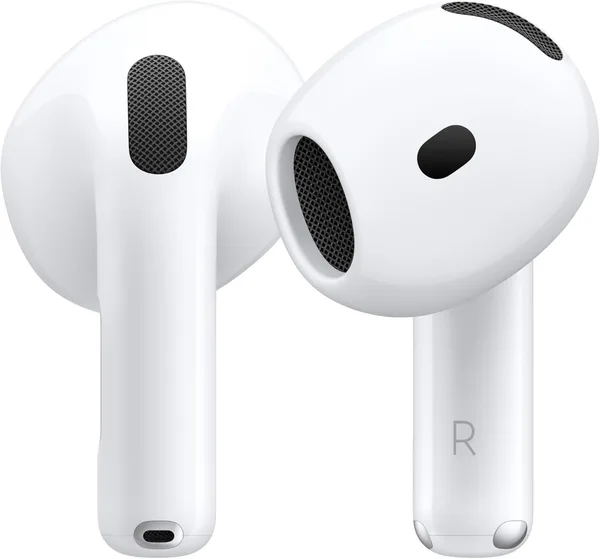
The real competition here isn't another brand — it's their own smaller sibling, the AirPods Pro 2 versus the regular AirPods 4. The price gap is noticeable, and if noise cancelling isn't critical for you, you can save some money. But if you've ever flown long-haul or ride the subway daily, the ANC earns its keep.
Who should buy these, and who shouldn't
If you're on iPhone, MacBook, iPad — buy without overthinking it. Switching between devices feels like magic: close the laptop, a call on your iPhone picks up automatically, no Bluetooth menu required. This is the rare case where "it just works" isn't an ad slogan — it's just true.
If you're on Android, I wouldn't recommend them. Half the features — spatial audio with head tracking, automatic device switching, fine-grained ANC tuning through the app — are either missing entirely or work clumsily through third-party apps. For the same money on Android, you're better off looking at Galaxy Buds or Sony — they fully open up on that platform in a way AirPods never will.
The main trade-off is price. In the US they list for around $269, and once you add shipping, forwarding, and import duty to your own country, that number climbs noticeably — check the full landed cost to your country on dede.sh before deciding. The second trade-off is fit. If you've got an unusual ear shape, even with three tip sizes the AirPods Pro can work loose during a run. Worth trying them on in person before you buy rather than trusting online reviews at their word.
FAQ
If noise cancelling isn't critical for you — no, the regular AirPods 4 cover 80% of what most people need, for less money. But if you're often on the subway, on flights, or in a noisy open office, the Pro 2's ANC isn't a luxury — it's daily comfort you genuinely feel.
Sony usually wins on raw noise-cancelling depth for flights and gives you more control through its app, but paired with an iPhone they behave like plain Bluetooth earbuds — no automatic-switching magic. For anyone in the Apple ecosystem, the Pro 2 is more convenient day to day; for audiophiles on Android, go Sony.
Six hours of continuous use with ANC on covers most short and medium flights, and the case gives you a few more top-ups right in your pocket. For a transatlantic flight, it's worth bringing a charger just in case, but mid-flight it's not an issue.
Cheaper Chinese true wireless earbuds often advertise ANC on the spec sheet, but in practice it's weak low-frequency suppression with no real effect on a subway or a plane. If noise cancelling is your top priority, cutting corners here tends to disappoint fast.