AquaBliss High Output Shower Filter Review: Does It Actually Fix Chlorine-Dry Skin
The AquaBliss High Output is a cheap multi-stage shower head filter that noticeably cuts chlorine smell and eases dry, itchy skin — especially if your water comes from a municipal supply that's heavy on chlorine. Don't expect miracles on genuinely hard water loaded with minerals; that's a different problem and needs a proper softener. But for the price and a five-minute, tool-free install, it's one of the smarter cheap bathroom upgrades out there.
There's a telltale sign you've just moved into a place with old pipes: you start sniffing the water. Seriously. You're in the shower and it smells like an indoor pool after winter break — chlorine, sometimes with a metallic edge. A week later your skin starts tightening like cling film, and your scalp develops something between dandruff and plain irritation. So you google "why does my skin itch after a shower," land on a dozen articles about "hard water," and hit a fork in the road: drop real money on a whole-house filter, or try something simpler first.
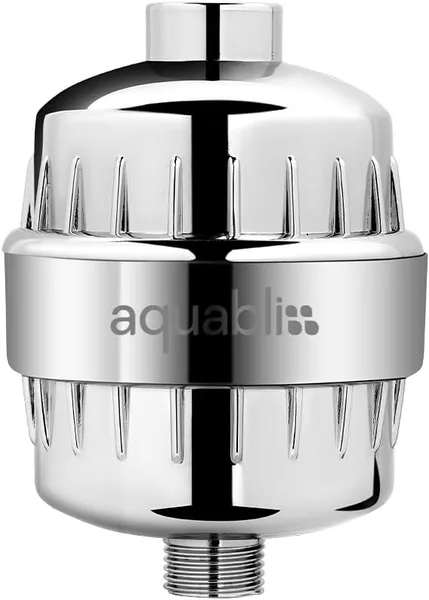
AquaBliss falls squarely in the "something simpler" camp. It's a filter cartridge that screws in between your shower hose and the head — no plumber, no drilling into tile. You unscrew the old shower head, screw the filter on, screw the head back on top. Five minutes, ten if the threads are old and slightly seized. Inside are several cartridge stages: KDF-55 for chlorine and heavy metals, coconut-shell activated carbon, calcium sulfite, and a couple more layers the manufacturer bundles under the label "filtration media." That reads like marketing copy, and partly it is — but the chlorine reduction is real, and you notice it by smell from the very first shower.
The question everyone actually asks is whether this is just placebo. Honestly — no, not really. Chlorine in tap water genuinely dries out skin and hair by breaking down the natural lipid layer, and any filter that reduces its concentration works in your favor. With AquaBliss the difference tends to show up around day three or four: less tightness after toweling off, hair that doesn't feel as "straw-like." People with eczema or sensitive skin often notice it more — across other marketplaces' reviews, that's the single most common thank-you: not less dandruff, but fewer eczema flare-ups. That said, if your actual problem is limescale on the tile and white streaks on the shower glass — real hardness from calcium and magnesium — this filter won't do much for you. It cuts chlorine and some metals; it doesn't soften water in the classic sense. That job belongs to a dedicated ion-exchange system, and that's a whole different budget and a whole different conversation.
Against its main rival in this space, the Culligan WSH-C125, AquaBliss is cheaper and claims stronger flow (the "High Output" name isn't just branding — pressure really does drop less than with the cheap single-stage filters you'll find for fifteen bucks on Amazon). Culligan's replacement cartridges are easier to source, though, and the housing itself feels a touch more polished. It really comes down to whether you're fine with a less common cartridge brand in exchange for a lower price and better flow.
Cartridge life runs roughly three to four months of daily use for a household of two or three, after which filtration efficiency drops off even though water keeps flowing normally — the chlorine just stops getting caught as well. That's the sneaky part of filters like this: they don't fail loudly, they quietly degrade. Skip setting a phone reminder for a cartridge swap and you'll eventually be showering under what's essentially a placebo shower head.
Water pressure deserves its own paragraph, because it's the number one reason people return filters like this. In apartments with weak flow already — older buildings, top floors without a booster pump — an extra filter stage eats into what little pressure you have, and the shower can end up noticeably weaker. If your water barely trickles out as it is, weigh that risk before ordering. In homes with normal mains pressure, the difference is barely noticeable.
On fitting different shower heads: the standard 1/2-inch thread covers the vast majority of shower systems sold anywhere, so compatibility usually isn't an issue. Where it gets tricky is wall-mounted shower systems with no detachable hose — there's simply nowhere to attach the filter, and that's worth checking before you order.
Who should buy the AquaBliss without hesitation: people on chlorinated municipal water dealing with noticeable dry skin or mild eczema, and anyone who wants to test the waters (sorry) before committing to a full whole-house filtration system. Who should skip it: anyone whose main issue is limescale and hardness rather than chlorine and smell, or anyone already living with weak water pressure they're not willing to sacrifice further.
The AquaBliss High Output Revitalizing Shower Filter runs around $54 at the listed price — check dede.sh for the full landed cost to your country, item plus forwarding plus import duty rolled into one number. It's not pocket change for a shower attachment, but it's not a price that should keep you agonizing either, not if chlorinated water is genuinely bothering you.
Questions people actually ask before buying
FAQ
It helps, but only if your dandruff is caused by a chlorine-dried scalp rather than a fungal issue or seborrheic dermatitis. In the second case, no shower filter is going to replace a ketoconazole shampoo or a trip to the dermatologist — don't expect it to.
Water pressure and cartridge lifespan. Cheap single-chamber filters tend to strangle your flow and burn out within a couple of weeks of regular use. AquaBliss's multi-stage design holds pressure better and lasts longer — that's exactly what you're paying the premium for.
For two or three people showering daily, yes — about three to four months before you need a new cartridge. With a bigger household, or anyone showering twice a day, cut that lifespan roughly in half.
No. It screws on by hand in a few minutes, same as swapping a shower head. The one exception is wall-mounted shower systems with no detachable hose — there's just no way to attach this filter to those.
Looking for other things to compare it against in the same home-goods price range? Check the picks below.