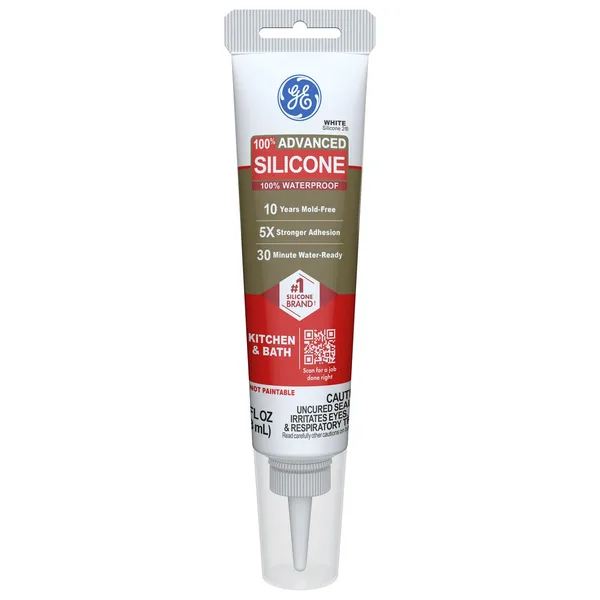
GE Advanced Silicone Caulk for Kitchen & Bathroom: Is It Worth Buying
A solid 100% silicone caulk for bathroom and sink joints: it won't yellow, it genuinely keeps water out, and it fights off mold longer than cheap acrylic. There's one real drawback — you can't paint over it — and the tube is small, so one won't get you through a full bathroom redo.
You know the scene: the joint between the tub and the tile has gone yellow, something suspicious is blackening in the corner by the sink, and you walk into the store for "the same caulk as last time" — only to face five kinds of white silicone, none of them labeled in plain language. I've been through this three times in the last two years, until I just started grabbing GE and calling it a day.
The gap between acrylic and silicone caulk isn't marketing — it's physics. Acrylic is cheaper and you can paint over it, but it soaks up moisture, and in a bathroom it starts darkening around the edges within a year or two. Silicone like GE Advanced Silicone Caulk is a pure elastomer — it sheds water instead of absorbing it, which is exactly why the tube says "kitchen bathroom" right on the label. Not for baseboards, not for decorative gaps — for wet zones where water sits day in, day out.
The difference is noticeable within the first week. The seam around the faucet doesn't yellow from splashes, and the tub edge that used to "sweat" and grow black mold stays clean noticeably longer — not forever, mold eventually colonizes any organic residue, but six to eight weeks later than with acrylic. This isn't a lab study, just what I've seen across three different apartments.
Applying it is trickier than the YouTube tutorials make it look. The tube holds 2.8 ounces (about 83 ml) — that's small, far less than a standard caulking-gun tube, and it's really meant for a spot repair on a single joint rather than re-sealing a whole bathroom. If you're mid-renovation and need to redo the tub perimeter, the shower stall, and the kitchen sink, grab two or three tubes upfront — one won't stretch across an average bathroom. Cut the nozzle at an angle and keep it narrow: a lot of people cut a fat opening and end up squeezing out a finger-thick bead when a thin, even line is what you actually want.
The main competition on the same shelf is Loctite Polyseamseal or generic no-name "aquarium-style" silicone sold for pennies. The real difference comes down to how honestly the maker discloses the formula and how consistent the texture is from tube to tube. I've never gotten a lumpy or runny batch from GE — with unbranded tubes that happens more often, especially if a batch sat in a warehouse too long. This isn't a product where it makes sense to chase the last few cents toward an unknown brand — you can check the full landed price to your door, item plus shipping plus duty, on dede.sh, but either way the payoff here lasts for years while the price gap is a one-time thing.
The main downside nobody bothers to mention in the listings: you cannot paint over silicone caulk. If you're planning to run wall-matching paint over the seam afterward, forget it — the paint won't stick and will flake off within a week. For that you need an actual acrylic or "paintable" silicone hybrid, which is a different product category altogether. The second downside is the smell during application — sharp, vinegary — and in a closed, unventilated bathroom it lingers for an hour or two after you're done. Crack a window; it's not dangerous, just unpleasant.
Layering new caulk straight over an old bead is a bad idea, by the way, even though the manufacturer doesn't explicitly warn against it. Fresh silicone bonds poorly to old silicone, especially once it's greasy with soap scum. Strip the old bead first with a utility knife or a dedicated scraper, wipe the area down with alcohol, and only then apply the new layer. Skip that step and within a couple of months the edge will lift, water will get back underneath, and the whole repair was pointless.
Who'll be glad they bought it: owners of older apartments where the joints around the plumbing keep blackening from moisture, and anyone doing a DIY bathroom touch-up without calling in a pro. Who'll regret it: anyone looking for something all-purpose for outdoor work — parapets, window frames, anywhere exposed to weather — that calls for a proper weatherproof construction silicone in a bigger gun-loaded tube, not this small household package.
FAQ
No, don't even try — this is a household caulk for bathroom and kitchen joints, not a certified aquarium-safe silicone free of toxic additives. Aquariums need a dedicated product with the right label; this isn't a place to cut corners on your fish's health.
The manufacturer recommends waiting a full 24 hours before full water contact, though it's dry to the touch within a couple of hours. Personally I always wait the full day — the one time I didn't, the bead slightly "moved" under hot water.
If the joint is in a wet zone and you're only doing this once every few years, the small price difference isn't worth agonizing over — cheap silicone tends to have inconsistent texture and yellows faster. For dry, out-of-sight spots, saving a bit makes sense.
No. 2.8 ounces (83 ml) is enough for a spot repair on one or two joints, maybe the perimeter of a small sink at most. Re-sealing an entire tub and shower needs at least two to three tubes.