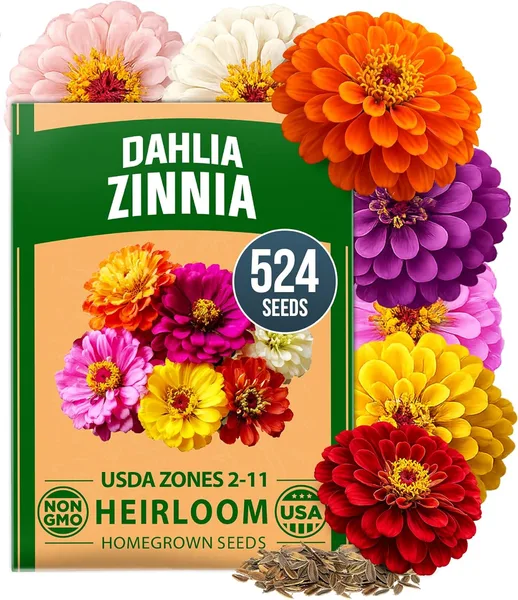
HOME GROWN Zinnia Dahlia Seeds Pack Review: Are 524 US Seeds Worth It
524 zinnia and dahlia-flowered seeds in one packet is genuinely a lot, they really are non-GMO, and germination is decent. But once you add shipping, forwarding, and import duty, the total lands well into "you could've just bought five packs at the local garden center and skipped the customs headache" territory. Only buy this if that exact color mix is something you specifically can't get nearby.
Picture it: spring, you're scrolling a US marketplace looking for something to fill a flower bed, and you land on a packet promising 524 zinnia and dahlia seeds in one go. Your brain does the math instantly — that's basically an entire flower garden for the price of one night out. Except that "one night out" turns out to be a lot pricier once the packet actually clears customs and lands on your doorstep.
I bought it and grew it — or tried to, since the cat decided the seedling trays were his new sandbox and I lost a chunk of the batch. More on that in a minute.
What's actually in the packet
HOME GROWN Zinnia Dahlia Seeds Pack isn't a single variety — it's a mix of several zinnia elegans types plus "dahlia-flowered" zinnias (yes, the "dahlia" in the name refers to the flower's shape, not an actual tuberous dahlia — a mix-up a lot of buyers make, and worth clearing up right away, because some people expect tubers and get tiny seeds instead). The maker claims non-GMO and a 2026 harvest, meaning the batch is fresh rather than sitting in a warehouse for three seasons, which genuinely matters for germination.
524 seeds is an impressive number on paper. In practice, zinnias germinate pretty densely, so that volume is enough to seed not just one bed but an entire border, with plenty left to hand out to neighbors "to try." Out of roughly a hundred seeds I planted, about 70 came up — a perfectly solid result for store-bought seed, no complaints about the product itself.
Zinnias bloom for a long stretch, from June right up to the first frost, they're low-maintenance about watering, love full sun, and hate sitting in wet soil — on that front this packet is no different from any decent zinnia seed sold at a regular garden center or hardware store back home. Worth keeping in mind as we get into the price.
Now the money part — and this is where it gets interesting
The seller is asking $67.79 for the packet. Sixty-eight dollars for seeds is already steep on its own, and that's before shipping, forwarding, or import duty. Once you run the full landed cost to your door — item plus forwarding plus any duty — the number climbs noticeably above the sticker price; you can see the exact figure for your country on dede.sh. For comparison: a pack of ordinary zinnia seed at a local shop runs a few dollars, and even buying five or six different varieties for the sake of color range still comes out far cheaper than one imported packet of 524 seeds.
Honestly, I spent a while trying to find a rational explanation for that price — some rare cultivar, an exclusive breeding line? Nope. It's a standard mix of popular colors sold worldwide for pennies. What you're actually paying for here is glossy packaging, English-language marketing copy, and a trip across an ocean.
Who this is actually for
If you're a seed collector specifically hunting American cultivar lines that aren't sold locally, it makes sense — and you already know what you're doing. If you're ordering several other things from the same marketplace anyway and want to toss a seed packet in "for the ride" without paying for separate shipping, that's logical too, since the marginal cost of adding one more item to an existing order is always cheaper than the first. But if the goal is simply to fill a flower bed with zinnias this summer, this is the most expensive possible way to do it.
Second downside, unrelated to price: the seeds arrive with zero guarantee on which colors actually show up in your mix. You get a vibrant photo on the packaging, and summer decides the rest. That's normal for any blended mix, but it's worth setting that expectation up front rather than being surprised later.
Bottom line
The seed itself works — it germinates, it blooms, it's non-GMO — no complaints about the product on its own merits. But economically, this only makes sense in a narrow set of cases. For most home gardeners and balcony growers, buying zinnia seed locally gets you the same result — a bright bed blooming from June through October — for a fraction of the cost.
FAQ
No. "Dahlia" in the name refers to the flower shape of a zinnia variety (sold as "zinnia dahlia flowered"), not a separate dahlia plant. There are no tubers in the packet, only small seeds.
No, and that's the packet's core problem. For the same money at a local garden shop you could pick up a dozen packs of different zinnia varieties and get a wider color range for less, with none of the cross-border shipping hassle.
More than enough. Even accounting for natural germination loss (about 70% in my case) that volume covers several medium beds or one long border along a fence.
For an annual ornamental flower like zinnia, non-GMO status doesn't really affect anything in practice — it's more of a marketing touch than a real advantage in the garden.
If the price tag still doesn't scare you off and you specifically want imported picks for your garden, take a look at a few related items for yard upkeep too.