Band-Aid Flexible Fabric Review: Are They Worth Importing From Amazon
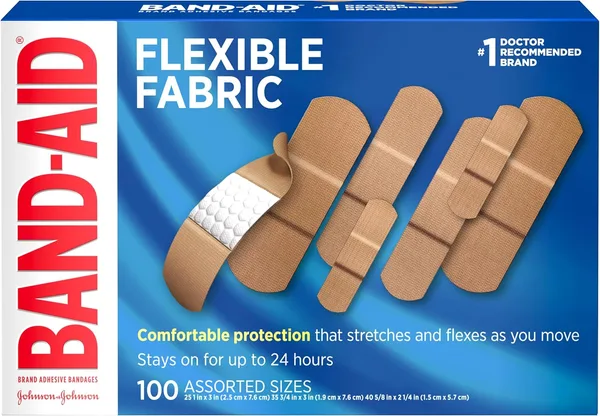
Band-Aid Flexible Fabric isn't the bandage you slap on and forget — it's the one that's actually still on your finger by the next time you wash your hands. Compared to typical drugstore knockoffs, the difference is obvious within the first day of wearing one. Ordering a single box on its own shipment is a bad trade financially, but tossing a few into a bigger order makes complete sense.
You know the drill: bandage a cut finger in the morning, and an hour later it's twisted into a sad little rubber band dangling somewhere near your knuckle. I've been through maybe a dozen drugstore brands, and they all fail the same way — either the adhesive base is too thin and stiffens the moment it touches water, or the glue is so weak it peels off after one trip to the sink. After re-bandaging the same paper cut three times in one day, I finally went looking for whatever people who'd already solved this problem were using.
The answer turned out to be almost embarrassingly obvious: people in the US have been reaching for Band-Aid since before most of our parents were kids getting patched up themselves. The brand hasn't reinvented anything groundbreaking — it's just spent decades refining the fabric backing until it actually moves with your skin instead of fighting it.
What sets it apart from the usual drugstore stuff
Band-Aid Flexible Fabric isn't made from thin plastic film or gauze on a strip of tape — it's a woven fabric backing that stretches in both directions. Sounds like a minor detail until you try bending a bandaged finger at the knuckle: a regular bandage just splits at the edge or peels from underneath, while the fabric one flexes right along with your skin and doesn't yank out arm hair when you pull it off, which is honestly its own small victory.
The adhesive strip runs evenly around the whole perimeter, without those dry patches near the edges where cheap bandages usually start peeling first. And it holds — I tested it on a paper cut I kept reopening while washing dishes and cooking, and it stayed put for two full days without lifting, versus at least twice-daily changes with the local stuff I was using before.
Inside, the pad is designed not to stick to the wound itself, so pulling it off a half-healed cut doesn't hurt nearly as much as it does with cheaper bandages where the pad fuses right onto the scab. Small thing, but it's exactly the kind of small thing that makes people swear by one bandage brand for years and throw out another after a single box.
Where it actually makes sense
The real competition here isn't another bandage brand — it's the "it's just a bandage, who cares" mindset. And that's the assumption I had to drop, because the difference is real, especially on high-movement spots: fingers, knuckles, heels. Stack it up against typical pharmacy brands or generic supermarket packs, and Band-Aid wins purely on fabric stretch and adhesive that doesn't dry out within a couple of hours. Compared to waterproof gel bandages made for blisters (think Compeed), though, it's a different category entirely — Flexible Fabric isn't built for wound healing gels or true waterproofing, it's built for everyday cuts and scrapes where the priority is simply staying put without irritating the skin.
If you're into hiking, cycling, fishing, or any kind of active outdoor time, these are worth keeping in your kit instead of the flimsy pharmacy strips that come loose at the first sign of sweat or rain. Not because they're waterproof in the "go swimming" sense, but because the adhesive holds up noticeably better under sweat and friction.
Who should buy, who should skip it
Get it if you're still fighting with bandages that curl into a useless tube within the hour, or if you're constantly nicking your fingers in the kitchen or the workshop — anywhere flexibility and long-lasting hold actually matter. It's also a solid thing to keep stocked at home as a baseline first-aid item, since it has a long shelf life and barely takes up any space.
Skip it if you're looking for something for serious wounds or burns — this is a household bandage for minor cuts and scrapes, not a medical product for anything more complicated, which needs a doctor and proper supplies. And honestly, if you only get the occasional cut every few months, the gap between drugstore and imported bandages won't bug you enough to ever think about it again.
The item itself costs next to nothing — a box runs a few dollars at most — so ordering it on its own and paying separately for international shipping doesn't add up: the shipping cost alone would dwarf the price of the product. But tucking a few boxes into a larger order from the outdoors category is a genuinely smart move, since you're only paying for forwarding once instead of per item. For the full landed cost — item, forwarding, and any import duty rolled into one number — check the listing on dede.sh.
FAQ
In my experience, yes, and the difference shows up on day one. The fabric backing stretches with your skin instead of peeling at the edges, so on knuckles or heels it clearly wins. Thin drugstore bandages just can't take that much bending for long.
No, this isn't the case for it. The bandages are cheap, and forwarding plus duty get calculated on the weight and value of your whole order — a standalone shipment for a box of bandages won't pay for itself. Add them to an order with other items, and the math works.
They solve different problems. Band-Aid Flexible Fabric is for everyday cuts and scrapes where flexibility and staying power matter. Compeed and similar gel bandages are built specifically for blisters and water resistance. If you're heading out with blister risk, go with the gel option; for everyday bumps and scrapes, the fabric one is plenty.
Yes, the size and shape are meant for minor everyday scrapes, which happen to adults and kids alike. Just check for adhesive sensitivity first — that applies to any bandage brand, not just this one.