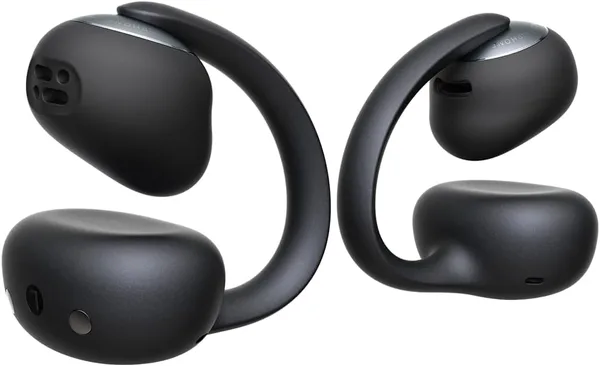
Baseus Bowie MC2 Review: Are These Clip-On Earbuds Worth It?
The Baseus Bowie MC2 are open-ear clip earbuds priced like budget TWS, yet they pack LDAC support that almost nothing else in this bracket bothers with. They stay comfortable for hours, your ears never ache, and the sound is livelier than you'd expect from an "open" design. Just don't expect closed-earbud bass, and if you're the type who whips your head around at the gym, this isn't the most secure fit.
Sore ears — that's what sent me looking at clip-on earbuds in the first place. Not from the music, from classic TWS tips that turn into torture after three hours on the move, especially if, like me, your ear canal isn't exactly textbook shape. So when the Baseus Bowie MC2 landed in front of me, I grabbed them without a second thought — not to chase a trend, just to stop suffering.
And here's the first surprise: you genuinely forget they're on your head. The clip hooks onto the outer ear instead of jamming into the canal, so there's no pressure, none of that "plugged" feeling that becomes unbearable after a while. I fell asleep in them once, mid-audiobook, and woke up to find them still perfectly in place. Not a recommendation to sleep in earbuds, but a decent measure of how light and unobtrusive the build actually is.
"Open-ear" usually means a sound compromise — the canal stays open, bass leaks into the air, and you're mostly left with mids and highs. The Bowie MC2 make that trade-off a lot less painful than most rivals in the same class. Baseus calls it CloudComfort 2.0, which basically boils down to shaping the clip so the driver aims straight into the ear canal instead of just hovering somewhere nearby. The difference is real: there's bass, it doesn't slam like closed earbuds, but it doesn't vanish either, unlike cheaper open designs that leave you with nothing but tinny highs.
Then there's LDAC — and honestly, that's a genuine surprise at this price point. LDAC usually shows up in flagship Sony gear or $150+ TWS models, not clip earbuds costing a fraction of that. Paired with an Android phone where LDAC works natively, the difference on a well-mastered track is audible: less smearing on the highs, cleaner detail in busy mixes. Plug into an iPhone, though, and that edge disappears entirely — Apple doesn't support LDAC at all, so you're stuck with plain AAC and a noticeably less impressive experience.
There's plenty to compare these against. The closest concept-wise is the Huawei FreeClip, which made the clip format fashionable a couple of years back — the fit is a touch more refined, the design more polished, but it costs noticeably more and skips LDAC entirely. Another direct rival is the Shokz OpenDots 2, traditionally strong on call clarity and workout stability, leaning on Dolby Audio and a three-mic array. But on price, Baseus wins by a wide margin — if your priority is sound quality per dollar rather than the logo on the case, the choice is pretty obvious.
Now for the downsides, because there are a few. First, this still isn't a pair of earbuds for jogging on uneven pavement — the clip holds fine through normal movement, but a sharp head jerk or an unlucky snag on a hood or hat can knock it loose. For yoga, walking, or working at a desk, they're great; for interval running or boxing, I'd reach for something with an in-canal fit instead. Second, there's essentially zero passive isolation, which is just how this format works: in a loud open-plan office or on a subway without ANC earbuds, a big chunk of the musical detail gets washed out by ambient noise. That's not a flaw specific to this model — it's the nature of open-ear design, and you need to go in knowing that.
Battery life is average for the category — enough for a workday with a couple of top-ups from the case, but this isn't a marathon runner. If you're planning a full day out with no outlet in sight, keep the case within reach.
As for price — rather than quote one number that won't mean much across different countries and currencies, check the full landed cost for your country on dede.sh: item price, forwarding, and import duty rolled into a single figure. See the complete breakdown on the Baseus Bowie MC2 page.
Who should buy these — and who shouldn't
If your main gripe is ear fatigue from classic tips after a long day commuting, at your desk, or on calls, the Bowie MC2 solve that problem about as well as anything on the market, with LDAC as a bonus if you're on Android. The price undercuts most clip-format rivals, and the sound compromise is minimal for the class.
But if you're after earbuds for intense training, running, or dead silence in a noisy environment, this format simply isn't for you — even the best clip earbuds lose to standard ANC-equipped TWS there. And if you're on an iPhone, you lose LDAC's main selling point entirely — worth weighing whether you want to pay for a technology you won't actually use.
FAQ
If you have an Android phone that supports LDAC and you listen to uncompressed audio, yes — the difference is audible on decent gear. On an iPhone this feature simply doesn't work, so there's no point paying extra; get a cheaper model instead.
On pure fit and design polish, the FreeClip edges ahead, but that shows up in the price too. The Bowie MC2 deliver nearly the same comfort and better-than-class sound thanks to LDAC, for noticeably less money. For most people, that's the smarter buy.
For strength training with moderate head movement, absolutely — the clip stays put. For running, jumping, or boxing, go with something that locks into the canal instead; the risk of the clip slipping at the worst moment is real.
You can, but there's essentially no passive isolation here — that's inherent to the format, not a flaw of this particular model. In quiet settings the sound is pleasant; in loud ones, ambient noise will swallow a lot of the detail.