Baseus Inspire XC1 review: are open-ear clip-ons worth paying for Bose-tuned sound
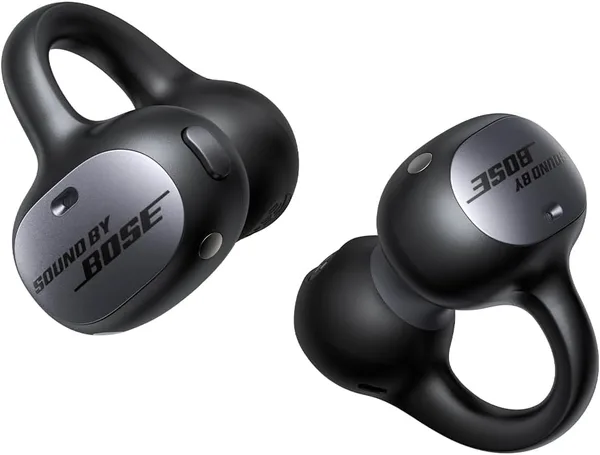
The Baseus Inspire XC1 are clip-ons that never go inside your ear — they perch on your earlobe instead — and thanks to Bose's tuning they sound noticeably better than most rivals in this format. Still, it's a niche pick: if you need to hear traffic on a run or stay tuned in at an open-plan office, grab them without a second thought. If you want thumping bass and noise cancellation, keep walking.
There's one thing nobody puts in the product description: classic silicone tips start to hurt after three hours in your ears. Not for everyone, but for a lot of people. That's exactly my story — and it's the reason I started looking at open-ear clip earbuds instead of buying yet another pair of TWS with silicone tips.
The Baseus Inspire XC1 are exactly that: clips. You hook them onto your earlobe like a tiny clothespin and forget they're there. No pressure, no foreign-object feeling jammed in your ear canal, none of that unpleasant vacuum "pop" when you pull a tip out. The format itself isn't new — Shokz, Huawei FreeClip and Bose Ultra Open already blazed this trail — but Baseus showed up with a trump card: the sound here was tuned by Bose's engineers, with Dolby Audio polishing the picture on top.
What it's actually like to use
The first impression is strange. Your brain is used to earbuds sealing off your ear, and here the sound seems to float somewhere in the space beside you, while you still hear absolutely everything around you — a friend saying something, a car honking, the coffee machine gurgling in the kitchen. For some people that's a dealbreaker; for me, it's exactly why I bought them. I run along the road every morning, and hearing traffic isn't a nice-to-have, it's a safety issue. With sealed TWS I always kept the volume low and still felt on edge.
The XC1 doesn't try to fake being a bass monster — the physics of an open design simply won't allow it, no matter how much you tweak the DSP. Mids are clean, vocals are intelligible, and there's a slight lift in the highs that makes podcasts and audiobooks pleasant for long listening sessions. But the moment you throw on something bass-heavy — drum'n'bass, hip-hop, whatever — the low end just "leaks" into the air, and you get more of a hint of bass than actual bass. That's not a flaw, it's physics: there's a literal gap between the driver and your eardrum. Adaptive Tuning acts as an auto-adjustment for volume and balance based on ambient noise — it turns things up outdoors and pulls back in a quiet room. It works decently, though sudden jumps in noise (stepping onto a subway platform) still come with a noticeable, if brief, lag.
Dolby Audio adds width to the stereo image when you're watching video — a movie or a YouTube review sounds a bit "wider" than the flat mono sound you often get from budget open-ear earbuds. It's a nice bonus, though not the reason you'd buy this particular model.
Next to the Bose Ultra Open, which cost two to three times more, the XC1 falls behind on detail and on how softly the clip sits — Bose somehow engineered an impossibly well-judged curve that just disappears on your ear. The Baseus clip is noticeable, if not uncomfortable. But for the price, the XC1 delivers about 80% of that experience for a third of the money, which is a real argument in its favor. Comparing it to classic TWS like the Skullcandy Sesh Evo doesn't really make sense — they're built on different philosophies: one isolates you, the other keeps you plugged into the world.
Battery life is typical for the clip format: the buds hold a decent charge, the case gives you a couple more top-ups, and across a full active day of workouts and calls, they never died on me once. Mics handle calls reasonably well, though a windy day outside is always a stress test for any open-ear design, and the XC1 is no exception.
Who should buy these, and who shouldn't
Get them if: you run or cycle and want to hear traffic coming; you spend your day in an open-plan office and don't want to tune out your coworkers completely; classic silicone tips leave your ears sore after long wear; you mostly listen to podcasts and audiobooks, and take more calls than you play music.
Skip them if: deep bass and subwoofer punch matter to you; you need active noise cancellation for a flight or a loud open office; you're used to cranking your earbuds to max volume and have no interest in hearing the world around you. Honestly — if your main use case is blasting heavy metal at the gym, the XC1 will disappoint you within the first five minutes.
There's really one core trade-off here: you're consciously swapping bass and isolation for comfort and situational awareness. A smaller, less obvious one — the clip fits small-to-medium earlobes best, and on very small lobes it can occasionally slip during vigorous head movement, though months of running haven't caused that for me.
Rather than quote a single price tag that won't mean much across different currencies and customs rules, check the full landed cost for your country on dede.sh — item price, forwarding, and import duty rolled into one number.
FAQ
If sound quality is the actual reason you're buying, then yes — the difference is audible right away: less tinny edge on the highs, a cleaner vocal. But if you just need something playing in the background while you clean the apartment, the premium isn't justified — grab the cheapest option in the format.
Depends on the office. In an open-plan space where you need to hear coworkers and phone calls, the XC1 wins — you stay "on the network" with what's around you. In a loud call center, or for deep focus work, classic ANC earbuds like the Sony WH-1000XM6 are the better call — they physically block out the hum.
In practice, yes — with the case, it covers a full active day with intermittent calls. But if you're running back-to-back Zoom marathons for six to eight hours straight with no breaks, keep the case nearby for a quick top-up at lunch.
The open-clip format typically offers sweat and splash resistance good enough for workouts and light rain, but these aren't earbuds for swimming or a downpour — don't deliberately dunk them in water.