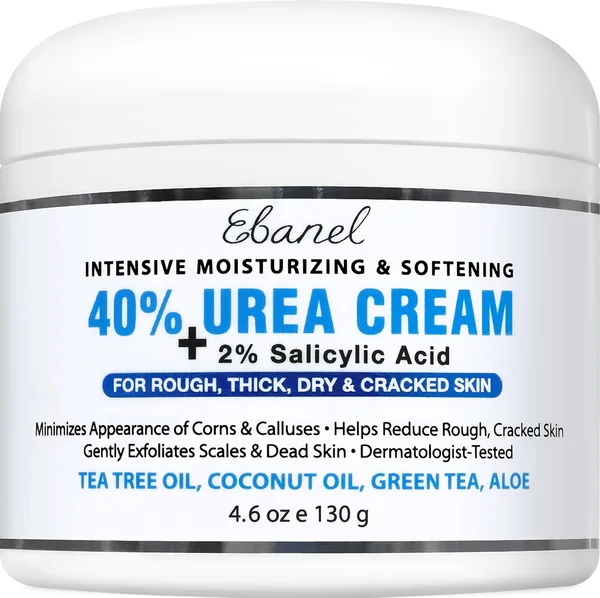
Ebanel Urea Cream 40% Review: Does It Actually Fix Cracked Heels?
Ebanel Urea Cream 40% with salicylic acid isn't a nice-smelling body lotion — it's a chemical peel in a tube. It genuinely softens thickened heel skin within a few days of use, but it stings on cracks and it's not for "just moisturizing my feet" duty. Get it if your heels are actually rough and cracked and you can tolerate a bit of tingling for results. Skip it if your skin is sensitive or your cracks are bleeding.
You know that moment in early summer when you kick off your sneakers and realize your heels look like you just walked the Camino de Santiago barefoot? That's usually when the "urgent cracked heel cream" search begins. It happens to me every year, and regular moisturizers with aloe or shea butter are useless here — they lay a film on top while the actual problem sits untouched underneath.
Urea in a high concentration isn't a marketing buzzword on the label — it's a genuine keratolytic. It breaks down the bonds between dead cells in the stratum corneum, and that layer literally sloughs off. 40% is nowhere near the "light moisturizing" territory; it's a dose you'll never see in a drugstore face cream (those top out around 10-15%). Add 2% salicylic acid for extra exfoliation, and you've basically got the cousin of those pedicure peel socks — minus the horror-movie effect of skin peeling off in sheets in the middle of your office.
How it actually works
First application, and you feel a light tingling right away, especially if there's even a hairline crack. That's normal — it's the salicylic acid announcing itself. By day two or three, the skin on your heels feels noticeably softer to the touch, and by day four or five you'll start seeing it flake — not dramatically, just small dry bits that rinse off in the shower or come away with a pumice stone. By the end of a week of regular use (twice daily, evening application under cotton socks works especially well), the thickness of the calluses drops noticeably.
Compared to a classic like O'Keeffe's for Healthy Feet — also a solid cream, for what it's worth — Ebanel works faster purely because of the urea concentration. O'Keeffe's is gentler, barely stings, and suits prevention and everyday wear. Ebanel is the "I already have cracks and need to fix this now" option, not a maintenance product. Different jobs, different creams — don't mix them up.
The texture is thick and greasy, somewhere between petroleum jelly and a regular cream, and it takes longer to absorb than a light lotion. On the plus side, you don't need to reapply every hour. The scent is neutral, fragrance-free, which I count as a win — I don't need my feet smelling like a bakery.
Where it falls short
The biggest annoyance is precision. The tube isn't built for dabbing a small amount exactly on your heel, so the cream often ends up on healthy skin elsewhere on the foot, where it works as a peel too — not that you needed it there. If you have sensitive skin or any open wounds, skip it entirely: it will sting badly, and the salicylic acid has no business being on broken skin. The manufacturer's warning against applying to damaged skin isn't just boilerplate.
Second thing: this isn't a one-and-done fix. The stratum corneum regenerates, so keeping the results means either continuing with less frequent applications (a couple of times a week) or accepting that your heels will roughen back up in a month or two. Think of it as a consumable you keep buying, not a shelf item you use once.
And honestly — if you have diabetes or circulation issues in your feet, I wouldn't recommend experimenting with 40% urea on your own. See a podiatrist first, not marketplace reviews.
Who should buy it, who shouldn't
Get it if your heels are genuinely rough and cracked and regular moisturizers aren't cutting it anymore. Especially relevant if you spend a lot of time barefoot or in open shoes during warm months — which, let's be honest, is most of us for half the year.
Skip it if your skin is sensitive, you're allergic to salicylates, or you're after everyday preventive moisturizing without the stinging — a plain foot cream without high acid content will serve you better.
The tube itself is cheap for how concentrated it is — you can check the full landed price to your country, item plus shipping plus any import duty rolled into one number, right here on dede.sh via the product page.
FAQ
FAQ
No, and that's not the manufacturer being overly cautious. Salicylic acid on an open wound means pain and a real risk of irritation. Let the crack close up a bit with plain panthenol first, then move on to the keratolytic.
If you already have a problem — cracks, calluses, thick rough skin — go with Ebanel. It works like a peel and gives visible results within a week. If your goal is prevention and comfort without the sting, O'Keeffe's is the easier everyday pick.
Noticeably softer skin shows up by day three or four of daily use. Full shedding of the rough skin is usually visible by the end of the first week; in more stubborn cases it can take two.
Applied daily to both heels, a tube lasts roughly a month to six weeks of active use. Once you switch to maintenance mode — two or three times a week — it stretches considerably further.
Worth comparing against a few other skincare picks before you decide: