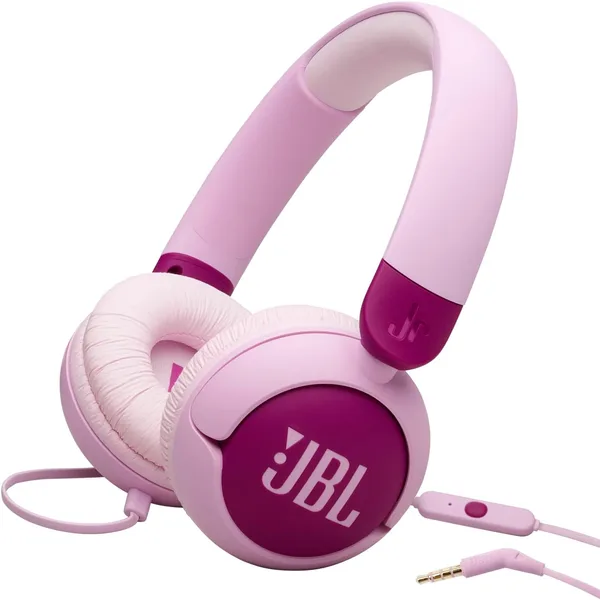
JBL Junior 320 review: are volume-limited kids' headphones worth it
The JBL Junior 320 is a wired kids' headset with a hard 85 dB volume cap, and it's genuinely hard to break in a week of daily use. The sound isn't thrilling and the fit isn't perfect on a small head, but it's safe for young ears and cheap. Check dede.sh for the full landed price to your country — item, forwarding, and import duty rolled into one number — and it's a fair trade for parental peace of mind.
Buy it if your kid is 4 to 10 and the main goal is protecting their hearing through online classes or cartoon marathons. Skip it if you're shopping for a tween who already wants real bass and a wireless setup.
A kid wearing headphones cranked to full volume is a sight every parent has lived through — the five-year-old watching the same cartoon for the twentieth time, sound "all the way up because it's more fun that way." I went through this myself: old headphones with zero limiter, and by nine at night I'd be repeating everything twice because my kid genuinely couldn't hear me anymore. That's what pushed me to start looking at kids' models with a decibel cap in the first place, and the JBL Junior 320 landed near the top of that list.
What this actually is
This isn't "regular headphones, just pink." The headline feature is a hardware volume limiter fixed at 85 dB, and you can't get around it even by cranking the source device — phone, tablet, whatever — all the way up. For context, ordinary headphones at full blast easily hit 100-110 dB, and that's a level where kids' hearing, with ear canals that haven't fully developed yet, takes real damage over sustained listening. Pediatricians and audiologists have been sounding the alarm on this for a while, and kids'-tech makers have gradually started building in limiters. JBL isn't the pioneer here, but it executed cleanly — no distortion or crackle right at the cap, which is a common complaint with cheaper rivals.
The wired connection is also a deliberate choice, not an afterthought. Cables don't vanish into couch cushions the way earbuds do (well, mostly), there's nothing to charge, and you're never tempted to leave the headphones "on the charger" overnight and forget to grab them before school. The obvious downside is the cord itself — kids love yanking it, stepping on it, tying it into knots that would impress a sailor. The box includes stickers for customizing the ear cups, a small touch, but my daughter spent a solid twenty minutes on them, and honestly that alone bought me twenty minutes of quiet at the table.
Living with them
The fit is built for a kid's head — the headband adjusts across a fairly narrow range, and if your child is already 11 or 12, the fit gets awkward and starts pinching at the sides. For the roughly 4-9 range, though, they sit well and don't slide off during a living-room sprint or a round of couch jumping (yes, field-tested).
The built-in microphone is a nicer bonus than I expected at this price. For a video call with grandma or a school Zoom session, voice comes through clearly enough, though it's obviously not studio quality. Overall sound is not what you'd buy these for: mids are a bit muffled, bass is thin, and to an adult ear it sounds flat. A kid absorbed in a cartoon or an audiobook, though, simply doesn't notice — the priority here is elsewhere.
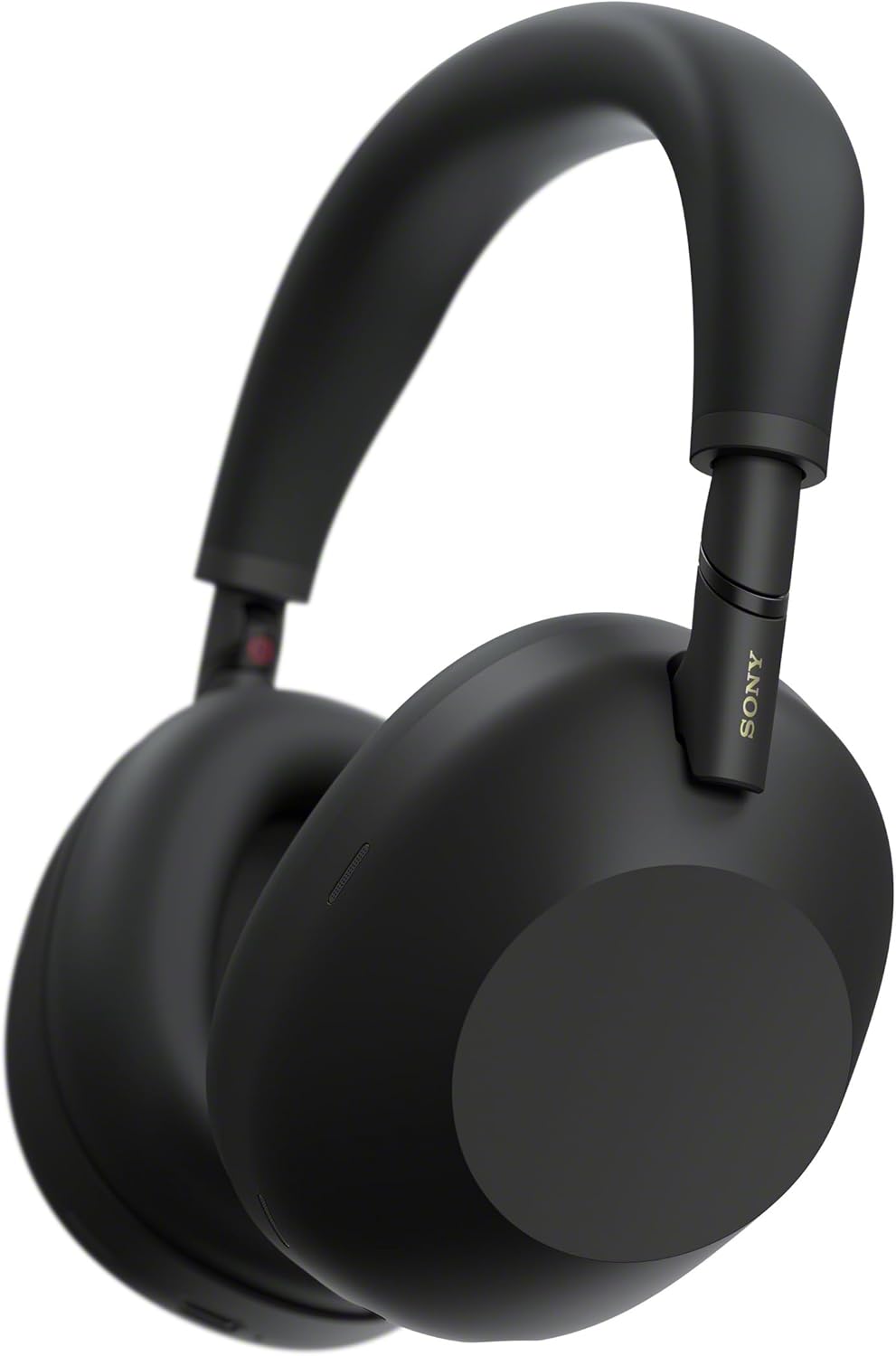
There's plenty to compare against. The closest competitor in this exact niche, UKELALA's boys' model, is also wired, also lightweight, similarly priced — but its volume limiter is either missing entirely or much softer, and the fit is usually less thought-through for kids' proportions. Stack it against a completely different category, like the flagship wireless Sony WH-1000XM6, and you're comparing apples to spaceships — one is for a seven-year-old on a walk, the other is for an adult on a long-haul flight at a serious price. That's exactly why people search for "kids' headphones" as their own category instead of just grabbing a regular pair and hoping it survives.
Build is simple — no metal, all plastic — and honestly, that's a feature, not a corner cut. Dropped on the floor? Doesn't shatter. Stepped on in the hallway? Survived (tested twice). They're light enough that kids forget they're wearing them, which matters a lot for long online lessons — heavy headphones start pinching and irritating after an hour.
Who should buy, who should skip
Buy these if you've got a preschooler or early-elementary kid and the main ask is hearing safety plus something that survives a fall off the couch. This is exactly the case where paying up for a brand name for its own sake makes no sense — JBL delivers a sensible balance of price, a well-tuned limiter, and something that just works out of the box, no fiddling required.
Skip it if your kid is already 11+ and wants "the grown-up version" — wireless, with real bass, no cord to tangle. At that point, look toward the tween/teen headphone category instead of stretching a kids' line past its intended age range. Also skip it if sound quality on its own is a hard requirement for you — it's clearly not this product's priority.
There's really one honest trade-off here: the sound is simple, no pretense of "musicality." The second, the cord, some parents will count as a downside; others (myself included) will count it as a plus, for safety and volume-control reasons alike.
Marketplace price runs around $19.95 — see the full landed price to your country on dede.sh, item plus forwarding plus import duty in one number, across the cheapest of three listed offers. Not bad for the peace of mind it buys during remote learning or a long car trip.
FAQ
FAQ
Yes, and it's not a marketing gimmick. Sustained exposure above 85 dB is a genuine risk factor for hearing that's still developing in kids. The hardware limiter here works even if the source device — phone, tablet — is maxed out; there's no way to bypass it through the device's own volume.
The premium here is small, and the difference is noticeable: the limiter is tuned cleanly with no distortion at the cap, the fit is designed around a kid's head, and the build holds up to actual kid use. With unbranded alternatives, disappointment often shows up within a month.
Honestly, neither. The Junior 320 is already too small and tight at that age, and the Sony sits in a completely different price and feature tier built for adults. For a tween, look for a dedicated youth model instead of a kids' pair or a premium adult one.
Yes — for Zoom classes or calls with relatives, voice comes through clearly enough. It's not studio quality and not built for streaming, but for everyday basic use it's plenty.