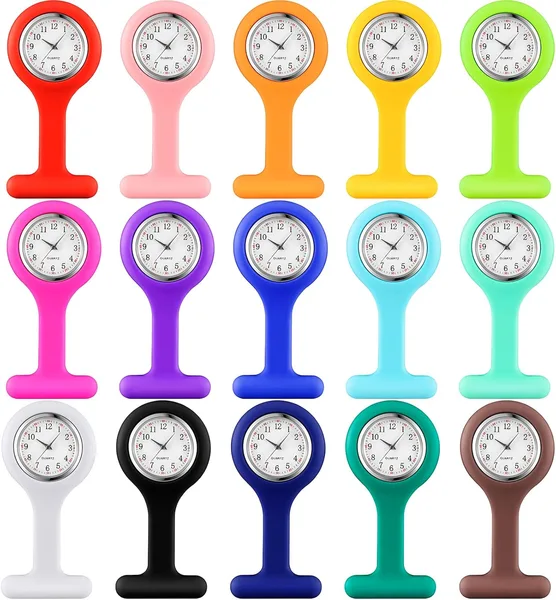
Kenning 15-Pack Clip-On Nurse Watches: a review for people who still carry a watch in a pocket, not on a wrist
A 15-pack of Kenning clip-on watches isn't about style, it's about logistics: hand them out to the whole shift, the charge nurse, the students on rotation, and stop dealing with "where's my watch" for the next six months. For the price of one decent wristwatch, you get fifteen units that shrug off alcohol wipes and survive being dropped on a tile floor. But the dials are basic, the clips are disposable by design, and if you want ONE nice watch for yourself, look elsewhere.
Picture a ward where a watch goes missing, breaks, or gets "temporarily borrowed" by a coworker at least once a week. Sound familiar? Nurses know this better than anyone: a wristwatch gets in the way during procedures, the strap collects everything you'd rather not think about, and bracelets are outright banned under plenty of infection-control protocols. So a clip-on pocket watch isn't some retro affectation — it's a working tool that has to survive conditions no ordinary watch was built for.
Kenning didn't bother selling these one at a time — they went straight to a fifteen-pack, and that's really the whole point of the product. You're not buying this for yourself; you're buying it for the charge nurse who hands them out to new hires against a signature, or the small clinic owner who's tired of hearing "I don't have a watch, forgot it at home." This set takes the whole issue off your plate for months with a single order.
What this actually is
It's a small round dial on a silicone pinch-clip that attaches to a scrub pocket, a badge, a bag strap, even a backpack loop. Analog hands, big numbers you can read even under the bad lighting of a break room at 3 a.m. No chrono, no heart-rate sensor, no Bluetooth — and honestly, that's exactly right for the job. A smartwatch on a pocket clip would look absurd, cost several times more, and it's only a matter of time before it meets a gurney and loses.
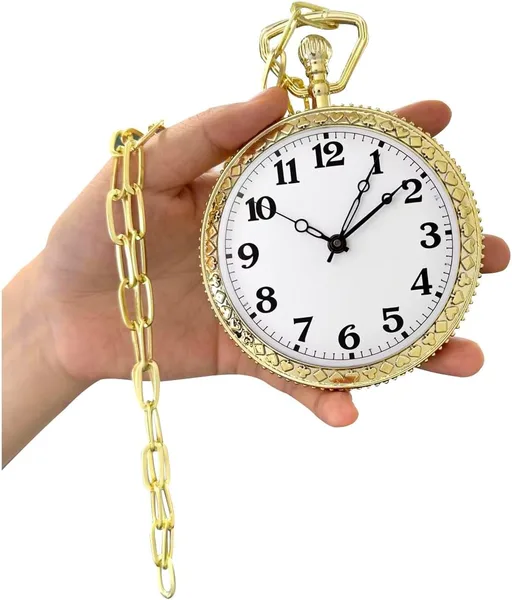
Compared with the classic fob watch on a chain that nurses wore twenty-odd years ago, the silicone clip wins on one count: it doesn't swing and it doesn't snag on everything. A chain looks nice, but in practice it has a knack for catching on a bed rail or an IV pole at the worst possible moment. The clip just sits there. That's the difference between "looks vintage" and "actually works on shift."
Where it earns its keep, and where it gets annoying
Fifteen units in a box is essentially a ready-made kit for handing out: an ER intake desk, a multi-chair dental practice, a nursing college that needs to issue something to students on rotation without worrying about losses. The color and design vary a bit unit to unit in the set — which is more of a plus than a minus, honestly: it makes it easier to tell at a glance whose watch is whose without writing names on them in marker.
But if you're after a single personal watch to wear every day and not be embarrassed by, you'll be disappointed. The movement is about as basic as it gets, "give or take a few minutes a month" accuracy is a realistic expectation, and the plastic crystal scratches the moment it rubs against keys in a pocket. This is a consumable for work, not an accessory. And changing the battery on one of these is its own kind of adventure — often it's just easier to grab a new one for the same money.
The second annoyance is that the clip mechanism isn't built to last forever. After a few months of daily clipping and unclipping, the spring loosens up, and the watch starts sagging or straight-up falling out of a pocket at the worst possible time. For a nurse wearing it every shift, that becomes noticeable somewhere around the six-months-to-a-year mark. But given there are fifteen in the box, swapping one out is a non-issue — you just grab the next from the pack.
Price, and whether it's worth it
Kenning sells the set for around $24.99 — under two dollars per unit, which is entirely reasonable for a disposable work accessory. Once you factor in shipping, forwarding, and import duty to your own country, the landed price for the full fifteen-watch set works out quite differently than the "price per unit" math suggests — check the full breakdown on dede.sh before you decide. Compared with what one decent wristwatch costs at a local shop, this looks like a genuinely good deal specifically as group inventory, not as a personal purchase.
Who should buy this: charge nurses and department heads who regularly have to replace staff watches that go missing; nursing-school instructors issuing equipment to students; owners of small clinics and vet practices. Who shouldn't: if you need one watch for yourself, take a look at the watches category instead — the selection there is far wider, with plenty of options built for years of daily wear rather than one shift every six months.
The main trade-off here is honest and obvious: you're paying for quantity and practicality, not for movement quality or the longevity of any single unit. This is a facility consumable, not a gift and not an investment.
FAQ
Depends on staff turnover and how carefully people treat the clips. On a calm ward, fifteen units will last a year or two with gradual individual replacements. In a busy intake unit with a lot of rotating students, a set can go through in a few months — and that's fine, that's exactly what it's for.
Technically yes, the clip grips onto any fabric. But the design and accuracy are built for work conditions, not everyday style. If you're looking for something for casual daily wear outside of work, this isn't it.
They solve different problems. A fitness band on the wrist is often banned outright by infection-control protocols in sterile areas, plus it costs more and you'd hate to ruin it with disinfectant. A clip watch is cheap, disposable without regret, and doesn't get in the way during procedures. For the pure function of "check the time," the clip wins.
For ICU work or procedures where seconds matter (pulse checks, injections), a second hand genuinely matters — check before buying exactly what's included in the set. For simply tracking your shift time, it's not critical.